Best beaches in Phuket
What is the single best beach in Phuket?
There isn't one — it depends what you want. Kata Beach is the best all-rounder for swimming, food and a manageable crowd. Nai Harn is the pick for a quieter, still-beautiful stretch. Patong wins only for nightlife proximity, and it's a mediocre beach otherwise.
Twenty beaches, and they are not interchangeable
“Best beach in Phuket” gets asked as if there’s one right answer, and the honest response is that Phuket’s west coast alone runs through a dozen-plus distinct beaches with genuinely different sand, crowd levels, vendor density and swimming conditions — a family day at Bang Tao and a sunset drink at Kamala are not the same trip wearing different clothes. This guide ranks them by what each one is actually good for, not by a single blended score, because the beach that’s perfect for one traveller (young, wants nightlife within walking distance) is often the worst pick for another (wants to read a book without a jet-ski tout interrupting every ten minutes).
Every beach below sits on this site’s own destinations pages with full logistics; this guide is the comparison layer that helps you choose between them before reading the detail.
How this ranking works
Beaches are grouped by Phuket’s own region system — west coast (the main tourist strip), north Phuket (quieter, closer to the airport), south Phuket (viewpoints and local character) — and rated within each on four things: sand and swimming quality, crowd and vendor density, what’s within walking distance, and who it actually suits. None of this is a “best of” popularity contest; a busy beach with great nightlife access isn’t a worse beach than a quiet one, it’s a different answer to a different question.
West coast: the main event
This is where most first-time visitors stay, and where the biggest gap opens up between beaches that look similar on a map and feel completely different in person.
Patong — busiest, not prettiest
Patong is Phuket’s best-known beach by reputation and its most crowded, most vendor-dense stretch of sand. The beach itself is unremarkable by island standards — decent width, average sand, a lot of jet-ski and parasailing operators working the shoreline — and its real value is proximity to Bangla Road’s nightlife and the island’s densest concentration of restaurants, malls and bars. Go for the location and the after-dark scene; don’t expect a standout swimming or sunbathing experience. Full nightlife detail is in the Bangla Road guide.
Karon — wide, less built-up than Patong
Karon is the second-longest beach on the island, genuinely wider than Patong in places, and noticeably calmer in tone — fewer touts, more resort-length stretches of open sand. It works well as a middle ground: walkable to some restaurants and shops without Patong’s density, better swimming conditions on calm days, still busy in high season but rarely to Patong’s level.
Kata Beach — the best all-rounder
Kata Beach is consistently the pick for travellers who want one beach to cover swimming, a manageable crowd, decent food options within walking distance, and a bit of surf when conditions allow (Kata gets some of the better beginner-friendly waves on the island in the May-October swell window — an unusual case where “monsoon season” isn’t purely bad news, if you’re a surfer rather than a swimmer). It’s smaller than Patong or Karon, which keeps it from feeling as anonymous, without being remote.
Bang Tao / Laguna — resort-scale, spacious
Bang Tao anchors the Laguna resort complex, and its beach reflects that: long, wide, backed by upscale hotels and villas rather than the dense guesthouse-and-bar strip of Patong. Good swimming, plenty of space even in high season, but a more insulated, resort-bubble feel — less street life, less walkable local character. Best suited to travellers prioritising space and resort comfort over an authentic beach-town buzz.
Kamala — calmer, family-leaning
Kamala sits between Patong’s energy and the quieter beaches further north — a real local fishing-village history still visible alongside the tourist development, calmer water most of the year, and a lower-key evening scene. A solid family pick that doesn’t require Bang Tao’s resort prices.
Surin — upscale, narrower window of calm
Surin Beach draws a slightly more affluent, beach-club-oriented crowd, with good beachfront dining but a narrower stretch of usable sand than Kamala or Bang Tao. Swimming conditions here are more monsoon-sensitive than most west-coast beaches — check conditions before counting on it outside the dry season.
Nai Harn — the quiet favourite
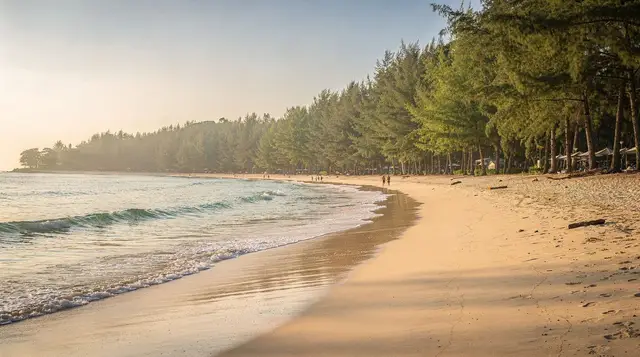
Nai Harn sits at the island’s southwest tip and regularly gets named among Phuket’s best beaches by people who’ve actually compared several — a genuinely striking bay, good swimming in the dry season, and a lower-key crowd than the main west-coast strip, partly because it’s a longer drive from the airport and cruise-ship-heavy central beaches. The trade-off: less within immediate walking distance, and a monsoon-season swell that can make it choppier than more sheltered spots.
Freedom Beach — the one you can’t drive to
Freedom Beach earns its name from its access: no direct road, reached by a longtail boat from Patong or Nai Harn, or a genuinely steep jungle trail. That access barrier keeps crowds down relative to its beauty — clear water, decent sand, a real sense of having made an effort to get there. Full access logistics are in getting to Freedom Beach.
North Phuket: quieter, closer to the airport
Nai Yang and Mai Khao — long, calm, near the airport
Nai Yang and Mai Khao run along the island’s northern stretch, both benefiting from lower development density and proximity to the airport (useful for a first or last night without the drive south). Mai Khao in particular is one of the island’s longest, least crowded beaches, and — notably — a nesting site for sea turtles in season; see sea turtles at Mai Khao for timing and etiquette if that’s part of the draw. Both beaches see stronger currents than the sheltered central west coast, especially in the May-October window — a genuine consideration, not a formality, given Mai Khao’s straight, current-exposed shoreline.
Nai Thon and Layan — quiet without the boat trip
Nai Thon and Layan Beach sit closer to the main resort belt than Nai Yang/Mai Khao but keep a genuinely lower profile than Bang Tao or Kamala just to their south. Good picks for travellers who want Freedom Beach’s calm without the longtail-boat logistics.
South Phuket: viewpoints over swim-up bars
Rawai and Chalong — local character, working piers
Rawai and Chalong are less about the beach itself — both have working piers and a rockier, less classically “postcard” shoreline — and more about local seafood, boat departures (Chalong Pier is the main jumping-off point for island boat trips), and a lower tourist density than the west coast strip. Not the pick for a swimming-focused day; a good pick for a seafood dinner and a look at how the island’s fishing and boat-charter economy actually runs. See the Rawai seafood market guide for specifics.
Promthep Cape and Cape Panwa — viewpoints, not swim stops
Promthep Cape is Phuket’s best-known sunset viewpoint rather than a swimming beach — arrive an hour before sunset in high season to find parking and a decent spot. Cape Panwa and Ao Yon/Khao Khad round out the island’s quieter southeastern corner, worth a visit for the drive and the views more than for beach time.
Beyond Phuket: island day trips worth knowing about
For travellers willing to add a boat crossing, Phi Phi, Racha Islands, Coral Island and the Similan Islands all offer clearer water and less-trafficked sand than anything reachable by road on Phuket itself, at the cost of a boat day and its own crowd dynamics once you arrive.
Phi Phi Island hopping day trip by speed boat from Phuket Phuket: Sunset cruise to Coral Island by catamaran yachtA sunset catamaran run is also one of the more relaxed ways to see several beaches from the water without committing to a full snorkelling day — worth considering for a first or last evening.
Beach clubs: the paid alternative to a public stretch of sand
Several beaches, Bang Tao and Surin especially, host beach clubs — paid day-bed and pool access, often bundled with a food and drink minimum — as an alternative to the free public sand. It’s a real option for travellers who want loungers, shade and a pool without hotel-guest restrictions.
Phuket: Day time beach club crawl with tipsy brunch Phuket: Kudo beach club entry with set menuFull comparison of the island’s beach clubs, pricing and which ones suit families versus a no-kids crowd is in beach clubs in Phuket.
Beach chairs, vendors and the “no free lunch” rule
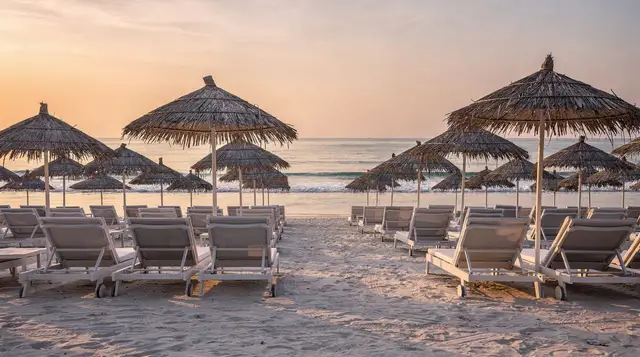
Free public beach access is standard across Phuket, but sunbeds and umbrellas on many of the busier stretches are run by concession operators, not free-for-all — expect a rental fee (often bundled with a minimum food/drink order) rather than assuming a chair is free simply because the sand is. Rules and typical pricing vary by beach and have shifted over the years as local authorities have periodically cracked down on unlicensed vendors; see Phuket beach chairs and rules for the current picture before you set up for the day.
Monsoon season, red flags and swimming safety
This is the section worth reading properly before anyone swims off Phuket’s west coast, especially outside the November-April dry season.
Phuket’s west-facing beaches take the direct brunt of the southwest monsoon roughly from May through October. During this window, swells increase, rip currents strengthen — particularly around headlands, river mouths and anywhere the beach narrows — and several people drown on Phuket’s beaches every year, almost always in conditions where a red flag was flying or should have been. Patong, Karon and Kata have all recorded monsoon-season drownings in past years, generally tourists who swam past the flagged safe zone or ignored a red flag altogether, not from unusually deep water but from being pulled by a current they didn’t see coming and couldn’t swim against.
The rules that actually reduce risk: never swim when a red flag is flying, regardless of how calm the surface looks from the sand — rip currents are often invisible until you’re caught in one. Swim within the flagged and lifeguarded sections where they exist, not off to the side where nobody’s watching. If you do get caught in a current, don’t fight it directly back to shore — swim parallel to the beach until you’re out of the pull, then angle back in.
Children should be within arm’s reach in any west-coast surf, not just “supervised” from a sunbed. None of this is unique to Phuket, but the specific combination of monsoon timing and west-facing exposure makes it worth repeating rather than assuming common sense will cover it. Full detail, including which beaches see the worst currents and how to read a flag system that isn’t always consistently staffed, is in Phuket beach safety and riptides.
Best beach by what you actually want
- Best all-round swimming and food: Kata Beach.
- Quietest without a boat trip: Nai Harn, or Nai Thon/Layan further north.
- Best for families with young kids: Kamala or Bang Tao — calmer development, more resort infrastructure.
- Best for nightlife proximity: Patong, accepting the beach itself is average.
- Best sunset: Promthep Cape (viewpoint, not swimming) or Surin’s beach-club sunset scene.
- Best for avoiding crowds entirely: Freedom Beach, or Mai Khao’s long northern stretch.
- Best for a boat-trip day away from the mainland altogether: Racha Islands or Coral Island.
For a broader single-page comparison of quiet options specifically, see quiet beaches in Phuket, and for how the west coast’s main three stack up head to head, Patong vs Kata vs Karon.
Frequently asked questions about Phuket’s beaches
Which Phuket beach has the calmest water for young children?
Kamala and Bang Tao generally offer the most consistently gentle conditions outside the May-October monsoon window, thanks to lower exposure and calmer average surf than beaches further south like Kata or Nai Harn. Always check for a red flag regardless of which beach you choose — “generally calm” isn’t the same as “always safe.”
Is Patong beach worth visiting if I’m not staying there?
Only briefly, and mainly for context — it’s Phuket’s busiest and most vendor-dense beach, and most visitors who aren’t staying nearby get more out of Karon or Kata for actual beach time, saving a Patong evening for Bangla Road itself rather than the sand.
Are Phuket’s beaches free to use?
Yes, all beach access is free — but sunbeds, umbrellas and shade are often run by paid concessions on the busier stretches, not free simply because the beach is. See beach chairs and rules for specifics.
When is the swimming season on Phuket’s west coast?
Roughly November through April is the calm, reliable swimming window. May through October brings the southwest monsoon, with rougher surf, stronger currents and periodic red-flag closures on the most exposed beaches — swimming is still possible on calmer days, but conditions should always be checked, not assumed.
Which beach is best for snorkelling directly from the sand?
Phuket’s west-coast beaches generally have limited reef directly offshore compared to the surrounding islands — for real snorkelling quality, a boat trip to Coral Island, Racha Islands or Phi Phi delivers noticeably better visibility and marine life than swimming out from any mainland Phuket beach.
Do I need to pay for a taxi or can I walk between beaches?
Some neighbouring beaches connect by a walkable headland path or a short scooter ride — Kata and Karon, for instance, are close enough for an easy walk between them — but most of the west-coast beaches are spread far enough apart that a taxi, Grab or scooter is the realistic way to beach-hop in a single day.
Is it safe to leave belongings unattended on the beach?
Not advisable on any of Phuket’s busier beaches — opportunistic theft from unattended bags does happen, particularly on Patong and Karon. Most beachfront restaurants and beach-chair vendors will keep an eye on things if you’re a paying customer, which is the more reliable option than leaving valuables on an empty towel.
Are jet skis and parasailing safe on Phuket’s beaches?
They’re widely available, especially on Patong, Karon and Kata, but the industry has a documented history of scam disputes over alleged damage claims. Photograph the equipment before and after use, deal only with operators displaying official licensing, and see jet ski scam Phuket before booking if this is part of your plan.
tours.beaches
Verified deep-linked GetYourGuide tours. Book through these links and we earn a small commission at no cost to you.
These are our own photographs of Phuket, not the operator's pictures of this tour — open the tour page to see those.