Patong vs Kata vs Karon
Should I stay in Patong, Kata or Karon?
Patong is Phuket's nightlife and shopping centre — busiest, loudest, most built-up. Kata is a middle ground: a genuine beach town with restaurants and a low-key evening scene, popular with families and couples, plus decent surf in monsoon season. Karon has the longest stretch of sand and the calmest, most resort-focused atmosphere of the three. None is objectively best; they suit different trips.
Three beaches, ten minutes apart, three completely different trips
Patong, Kata and Karon sit on the same stretch of Phuket’s west coast, close enough that a taxi between any two of them takes 15-20 minutes. That proximity is exactly why they get lumped together and compared constantly — and why the comparison matters, because despite sitting so close, they’re genuinely different places to base a trip. Patong is Phuket’s built-up centre of nightlife, shopping and 24-hour energy. Kata is smaller and calmer, with a real town feel and some of the island’s better surf conditions in the right season. Karon has the longest continuous beach of the three and the quietest, most resort-oriented atmosphere.
This guide breaks down what actually separates them — not just “Patong is busy, the others are quiet,” but specific differences in nightlife, family suitability, crowding, and cost — then gives a direct verdict by traveller type.
The headline differences, at a glance
| Patong | Kata | Karon | |
|---|---|---|---|
| Beach length | ~3 km | ~2.5 km | ~3.5 km (longest) |
| Nightlife | Very high — Bangla Road | Low-key, some bars | Very low-key |
| Crowds | Busiest by far | Moderate | Moderate-low |
| Family-friendliness | Lower — adult-oriented nightlife nearby | High | High |
| Shopping | Extensive (Jungceylon, street markets) | Limited | Limited |
| Surf (monsoon season) | Minimal | Good | Moderate |
| Accommodation range | Widest — hostel to 5-star | Mid-range to upscale | Mid-range to upscale, more resorts |
| Distance between them | — | ~4 km from Patong | ~2 km from Kata |
Patong: the island’s engine room
Patong is Phuket’s largest and most developed beach town by a wide margin — the biggest concentration of hotels, restaurants, shopping (Jungceylon mall and the surrounding streets) and, most famously, Bangla Road, Thailand’s best-known nightlife strip outside Bangkok. It’s also the most convenient base if you want everything within walking distance: ATMs, 7-Elevens, tailors, massage shops and restaurants open at nearly every hour. a Patong pub crawl covering rooftop bars and three clubs gives a structured way to see the nightlife scene without navigating it alone on a first night.
The trade-off is exactly what you’d expect: Patong is loud, busy, and the beach itself is more about people-watching and beach chairs than a quiet swim. It’s also where most of Phuket’s well-documented tourist-facing scams cluster — inflated tuk-tuk fares, aggressive touts, the odd dodgy jet-ski rental — covered honestly in our Phuket scams to avoid guide. None of that makes Patong a bad choice; it just makes it a specific one, better suited to travellers who want the energy than to those hoping for a quiet beach holiday.
Kata: the genuine middle ground
Kata is the town most people mean when they say they want “Phuket, but not too much Phuket.” It has a real neighbourhood feel — restaurants, a cinema, cafés, a Friday walking street — with an evening scene that exists but doesn’t dominate the way Patong’s does. Kata Noi, a smaller cove just south of the main beach, is one of the calmer swimming spots on this stretch of coast when conditions allow.
Kata is also Phuket’s best-known spot for surfing when the swell arrives during monsoon season (May-October) — the exact opposite of the island’s high tourist season, which surprises a lot of first-time visitors. a beginner surf lesson at Kata beach is a good way to try it if you’re travelling during that window; see our surfing in Phuket guide for the full seasonal picture.
Karon: the longest beach, the quietest atmosphere
Karon has the longest uninterrupted stretch of sand of the three, backed by a lower density of development than Patong and a slightly more spread-out, resort-focused strip than Kata. It sits between Patong and Kata both geographically and in character — closer to Patong for convenience, but without anything resembling Bangla Road’s energy.
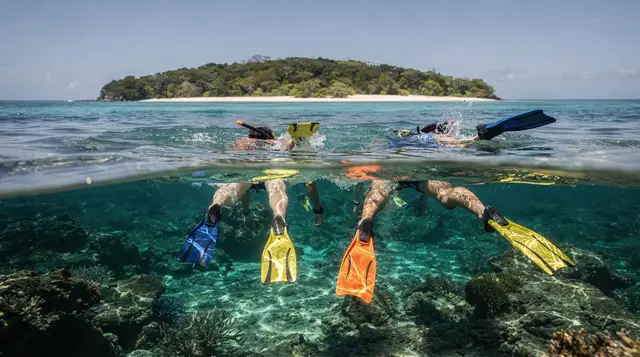
Karon’s beach itself is a genuine strength: wide, long, and less crowded per metre of sand than either of its neighbours, making it a solid pick for anyone who wants a straightforward beach day without a lot of noise around it. a Coral Island snorkeling and sunset catamaran cruise from Karon is a good way to pair a calm beach base with an active day out.
Safety note that applies to all three
All three beaches sit on Phuket’s west coast, which means all three are exposed to the same monsoon-season conditions: rougher surf, stronger currents, and the red flags that mark unsafe swimming days from roughly May to October. Drowning is the leading cause of tourist death on Phuket, and red flags are not a suggestion — treat them the same way at Patong, Kata or Karon. Our beach safety and riptides guide covers what to actually look for.
Getting between them
A taxi or Grab between any two of these towns runs roughly 150-300 B (~4-9 $) and takes 15-20 minutes depending on traffic, which makes it entirely realistic to base yourself in one and visit the others for a change of scene — an evening in Patong from a Kata base, for instance, or a quiet beach day in Karon from a Patong hotel. See our getting around Phuket guide for the full range of transport options.
Food and dining in each town
Patong has the widest range by far — international restaurants at every price point, from street-side pad thai stalls to hotel fine dining, plus the highest concentration of Western comfort food on the island, aimed squarely at a nightlife crowd that wants a burger at 2am as readily as a proper Thai dinner earlier in the evening. Kata has a smaller but genuinely good scene, with a mix of beachfront seafood restaurants and a growing café culture that fits its calmer identity.
Karon’s dining is the most limited of the three, leaning toward hotel restaurants and a handful of standalone spots rather than a dense strip of independent options — workable for a resort-based stay, less exciting if eating out somewhere new each night matters to you. Our Phuket street food guide covers island-wide options worth detouring for regardless of which town you’re based in.
A typical day in each town
A day in Patong tends to run late — a slow morning, an afternoon on the beach or by the pool, then an evening that stretches well past midnight around Bangla Road. A day in Kata runs more like a genuine holiday town: breakfast at a café, a morning swim, an afternoon browsing the Friday walking street or trying a surf lesson if the season’s right, and an evening that might include a bar but rarely goes past 1am.
A day in Karon is the quietest of the three by default — beach time takes up more of the day simply because there’s more beach and less competing for your attention, with evenings usually staying close to your hotel or a nearby restaurant rather than heading out. None of these rhythms is fixed, of course — a Patong-based traveller can absolutely have a quiet, early night, and a Karon-based one can taxi into Patong for a late one — but they describe the default gravity of each town reasonably well.
Sunset views
All three face west, so all three deliver a genuine ocean sunset most evenings outside monsoon season — this isn’t a real differentiator between them. What differs is the setting: Karon’s long, open beach gives an unobstructed horizon view with fewer people directly in your eyeline; Kata’s slightly more compact bay and the headland toward Kata Noi add some framing to the view; Patong’s beach works too, but the crowds and the beach-chair operators packing up for the evening make it a busier, less contemplative spot to watch it from. For a quieter sunset with more space, Karon or Kata edge out Patong; for a sunset followed immediately by a night out, Patong’s beach into Bangla Road is a genuinely convenient combination.
Accommodation styles in each town
Patong’s hotel stock spans the widest range of any beach town on the island — backpacker hostels and budget guesthouses a short walk from the beach, mid-range hotels along Rat-U-Thit Road, and international five-star chains directly on the sand, all within the same few square kilometres. That range is genuinely useful if your group has mixed budgets or you’re not sure what standard you want until you arrive.
Kata’s accommodation skews more consistently mid-range to upscale, with a smaller cluster of genuinely cheap options than Patong, but a noticeably higher average standard of small boutique hotels and family-run resorts. Karon has the strongest concentration of large beachfront resort chains of the three, suited to travellers who want a self-contained resort stay with pools, spas and multiple restaurants on site rather than venturing out for every meal.
Longer stays and repeat visitors
Travellers planning a longer stay — two weeks or more, or a repeat trip after already having “done” Patong once — increasingly gravitate toward Kata or Karon for exactly the reasons that make them less appealing on a first, activity-packed visit: less noise, a slower pace, and a beach you can actually get to know rather than pass through. Patong remains the default for a first trip or a shorter stay built around variety and nightlife, but plenty of returning visitors who loved Patong at 25 base themselves in Kata or Karon a decade later and prefer it. None of the three is a “beginner” or “advanced” choice exactly — it’s simply a matter of what kind of trip you’re on this time.
First trip, second trip: does it change the answer?
A first trip to Phuket often defaults to Patong simply because it’s the most heavily marketed and the easiest to find information about, and there’s a reasonable case for that — it’s the most forgiving base for figuring out how the island works, with the widest safety net of infrastructure if something goes wrong.
A second or third trip is where a lot of travellers actively choose Kata or Karon instead, having already experienced Patong and decided they’d rather trade some of its convenience for a calmer pace. Neither pattern is a rule, but it’s a genuinely common trajectory, and it’s worth knowing you’re not required to pick the “beginner” option just because it’s your first visit — if quiet is what you want from day one, Kata or Karon will serve you just as well on a first trip as a fifth.
Verdict by traveller type
Families: Kata or Karon. Both offer calmer beaches and a lower-key evening atmosphere; Kata edges ahead slightly for having more going on within walking distance of a hotel.
Couples: Kata, for the balance of a real town feel with restaurants and cafés, without Patong’s intensity. Karon is a close second if a quieter, more resort-style stay is the priority.
Fêtards / party-focused travellers: Patong, without much competition. This is genuinely the only one of the three built around nightlife at scale.
Divers: Little difference — all three are a similar taxi distance from Chalong Pier, the main departure point for diving trips, covered in our scuba diving for beginners guide.
Budget travellers: Patong has the widest accommodation range, including genuinely cheap hostel and guesthouse options that Kata and Karon have fewer of — though it also has more opportunities to overspend on nightlife and taxis.
First-time visitors to Asia: Patong, for the sheer density of accessible infrastructure — English-language menus, ATMs, pharmacies, tour desks — though travellers who find that overwhelming on arrival should consider Kata instead.
Frequently asked questions about Patong, Kata and Karon
Which is quieter, Kata or Karon?
Karon is generally the quieter of the two, with a longer beach and lower density of bars and restaurants, though both are calm relative to Patong.
Is Patong safe for families?
Patong’s beach itself is fine during the day, but the nightlife district right behind it is adult-oriented. Many families base themselves in Kata or Karon instead and visit Patong for an afternoon rather than staying there.
How far is Kata from Patong?
Roughly 4 km, about a 15-minute taxi or Grab ride depending on traffic.
Which beach is best for surfing, Patong, Kata or Karon?
Kata has the best-known surf conditions of the three, particularly during the monsoon season from roughly May to October.
Can I stay in one and visit the others?
Yes, easily. Taxis between them run 150-300 B (~4-9 $) and take 15-20 minutes, so basing yourself in one and day-tripping to the others is a realistic plan.
Which has the longest beach, Patong, Kata or Karon?
Karon, at roughly 3.5 km of continuous sand — the longest of the three.
Is Bangla Road in Patong, Kata or Karon?
Patong. Bangla Road is Patong’s central nightlife strip and has no direct equivalent in Kata or Karon.
Popular Phuket experiences on GetYourGuide
Verified deep-linked GetYourGuide tours. Book through these links and we earn a small commission at no cost to you.
These are our own photographs of Phuket, not the operator's pictures of this tour — open the tour page to see those.