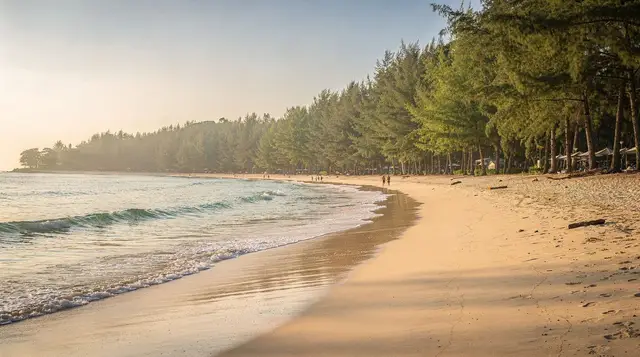
Karon has the reputation of being “the calm one” next to Patong — wider, quieter, less built-up. That reputation is true above the waterline and misleading below it.
Who Karon actually suits
Karon suits families and couples who want a proper beach — it’s the widest in Phuket, over 3km of open sand with room to spread out even in high season — without giving up restaurants, minimarts and a short taxi ride to Patong’s nightlife if they want it. It also suits budget-to-mid-range travellers: hotel rates here run noticeably below equivalent properties in Patong or Kata for a beach that’s arguably nicer to walk. Karon Circle at the north end has a cluster of shops and a small night market feel without Patong’s intensity.
It suits less well anyone chasing a resort-style beach club scene (Karon has few), and swimmers who assume “quieter beach town” means “safer water” — it doesn’t, and that gap between reputation and reality is exactly why Karon needs its own safety section rather than a generic one. Compare it directly against its neighbours in Patong vs Kata vs Karon if you’re still deciding where to stay.
For couples, Karon sits in an odd middle ground worth naming honestly: it’s calmer and cheaper than Bang Tao or Surin without matching their beach-club polish, and quieter than Patong without Kata’s surf-village character. That makes it a strong all-rounder rather than a beach with one standout reason to choose it — a fair trade for travellers who haven’t settled on a single priority yet.
What a day at Karon looks like
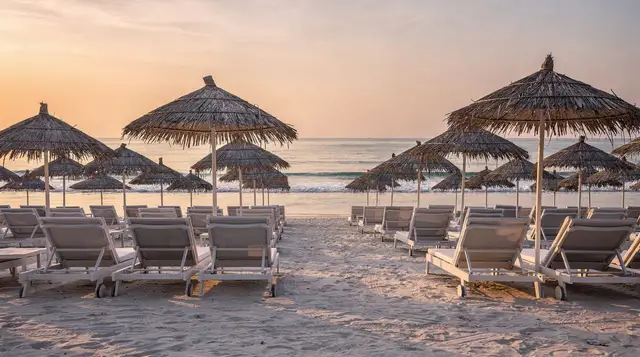
Karon’s size is its defining feature — even in the busiest weeks of high season, the beach rarely feels crowded the way Patong or Kata can, because there’s simply more sand to spread across. The northern end, closest to Patong, has the highest concentration of sunbeds, jet skis and beachfront restaurants. The southern end, toward Kata, is noticeably quieter, backed by a small headland and a nature trail that climbs toward a viewpoint over the bay.
A wide beachfront promenade runs behind much of the sand, popular with joggers and evening walkers once the heat drops after 5pm. Karon Circle, at the northern edge where the beach road meets the road to Patong, is the closest thing Karon has to a town centre — minimarts, a few bars, tailor shops and a strip of restaurants clustered within a few minutes’ walk of each other.
Unlike Patong, Karon goes quiet early. Most restaurants and bars wind down by 11pm-midnight, and there’s no equivalent of Bangla Road here — if a late night out is part of the plan, it means a taxi to Patong and back rather than anything within walking distance. For some visitors that’s the appeal; for others planning a full week here, it’s worth knowing in advance rather than discovering on night one.
Where to stay in Karon
Karon’s hotel stock leans toward mid-range beachfront and near-beachfront resorts, generally cheaper than equivalent Patong properties for a comparable or better beach. Budget options cluster slightly inland, away from the sea view but still within easy walking distance. As with the rest of this coast, high season (December-January, plus a smaller July-August peak) pushes rates up considerably compared with the quieter shoulder months. See where to stay in Phuket and Phuket’s trip budget guide for how Karon’s costs compare with its neighbours.
A brief history
Karon developed later than Patong as a tourism destination, growing through the 1980s and 90s as Patong’s rapid, dense development pushed some hoteliers and visitors toward a wider, less crowded stretch of coast. That later start is part of why Karon’s beach road feels less densely packed than Patong’s — fewer buildings were squeezed onto the same length of sand, and the beach itself was never narrowed by seawalls and reclaimed land the way Patong’s was in places. The result today is a beach that reads as more “natural” in shape even though the hotels behind it are just as modern as anywhere else on the island.
Packing and practical notes
Karon’s wide beach means less natural shade than Kata or Surin — a hat, reef-safe sunscreen and a rash guard for extended time in the water are worth packing if you’re prone to sunburn, since the open sand offers little relief at midday. Cash is still the norm at beach vendors and smaller restaurants, though larger hotels and restaurants along the beach road generally accept cards; carrying a mix avoids finding yourself short at a cash-only seafood shack. See Phuket’s packing list for the fuller rundown.
Sea conditions and safety, by season
This is the section to read before you swim at Karon, not after.
November to April: generally calm and swimmable, similar to the rest of the west coast in dry season.
May to October: Karon’s underwater shelf drops off faster than Patong’s or Kata’s in places, which produces a stronger shore break and rip currents that pull hard even a short distance from the sand. Karon is consistently one of the beaches Thai lifeguard and tourist police reports flag for drowning incidents during monsoon, and several of those cases involved visitors who ignored a raised red flag or swam at dusk after the lifeguard tower had emptied for the day.
If the flag is red, stay out — not “stay in the shallows,” stay out. If you’re caught in a rip, don’t fight it directly back to shore; swim parallel to the beach until you’re out of the current, then angle in. Details and month-by-month risk in Phuket’s beach safety and riptide guide and the monsoon season guide.
Getting to Karon
From Phuket Airport (HKT): Karon is about 45km from the airport, typically 50-70 minutes depending on traffic through Phuket Town or over the hill roads. The airport’s fixed-price taxi counter charges roughly 800-950 baht (23-27 USD) to Karon. A pre-arranged private transfer runs similar, with the benefit of a price locked in before landing — see Phuket airport transfers and the HKT airport guide for the full comparison, including the shared minibus option at roughly 200 baht (6 USD) per person.
From other beaches: Kata is the closest, 5-10 minutes and around 100-150 baht (3-4 USD) by metered taxi or Grab — many visitors walk or scooter between the two along the connecting road over Kata Hill. Patong is 15-20 minutes and 200-300 baht (6-9 USD). Bang Tao or Surin run 30-40 minutes and 400-500 baht (11-14 USD). Tuk-tuks charge more than metered options for all of these — see taxis, tuk-tuks and Grab in Phuket.
Where to eat and drink
Karon’s dining sits a notch calmer and cheaper than Patong’s. Home Kitchen, just back from the beach road, is a long-running local favourite for Thai home-style dishes rather than tourist-menu versions — expect 150-250 baht (4-7 USD) per dish. Along the beach road itself, a string of open-front seafood restaurants sell grilled fish and prawns by weight; ask the price per 100g before ordering to avoid a surprise bill.
The Karon Plaza/Kata Karon area has a scattering of Western-style cafés and bakeries aimed at the resort crowd, and a small night market runs seasonally near the Centara end of the beach with street-food stalls similar to what’s covered in Phuket’s night markets and food guide. For a broader island-wide list, see Phuket’s street food guide.
What’s actually worth booking
Karon itself is quieter on activity operators than Patong, but it’s a good base for boat trips heading to the same islands.
- Coral Island snorkelling with a sunset catamaran finish: a full day on the water followed by a scenic sail back, departing from this stretch of coast: Coral Island snorkelling and sunset catamaran cruise
- Racha Island snorkelling and diving: Racha’s water is noticeably clearer than the mainland coast and it’s a popular half-day or full-day trip from this side of the island: Racha Island snorkelling and scuba diving
- Sunset viewpoint tours: Karon sits close to some of Phuket’s best west-coast viewpoints, worth doing as a half-day trip if you don’t have your own scooter: Phuket viewpoints sunset trekking tour
- Ethical elephant sanctuary visit: an observation-only sanctuary with hotel transfer, a better alternative to any operator still offering elephant rides: Ethical elephant sanctuary tour with transfer
For island hopping further afield, see island hopping from Phuket and Phi Phi day trips, both bookable with pickup from Karon hotels.
Traps to know about
Karon runs the same beach chair and umbrella system as the rest of the west coast — expect to pay 100-150 baht (3-4 USD) if you sit in a managed zone, detailed in Phuket’s beach chair rules. Tuk-tuks between Karon, Kata and Patong routinely charge two to three times a metered taxi or Grab fare for the same short hop; agree a price before getting in, or use the app instead.
Scooter rental shops along the Karon-Kata connecting road sometimes push a pre-existing-damage deposit claim similar to Patong’s jet-ski scam — photograph the bike before you ride off, covered in scooter rental in Phuket and jet-ski scam Phuket (the same deposit trick applies to jet skis on this stretch too). General list in Phuket scams to avoid.
Shopping and quieter daytime options
Karon has a small night market that runs on a few evenings a week near the Centara end of the beach, selling clothing, souvenirs and street food at prices generally below Patong’s more tourist-geared stalls — bargaining is normal and expected. For a bigger shopping trip, most visitors take a short taxi or Grab ride into Patong for Jungceylon or continue to Phuket Town, compared in central Phuket vs Jungceylon. The viewpoint trail at Karon’s southern end toward Kata is worth the walk on a cooler morning for a wide shot over both bays, and it connects to the broader network of west-coast lookout points covered in Phuket’s viewpoints guide.
Families and longer stays
Karon’s width and relatively gentle slope in dry season make it a popular choice for families with young children, and its hotels tend to have more of the pool-and-kids-club infrastructure that Patong’s high-rises often lack. That said, the monsoon caution above applies just as much to children as adults — a red flag day is a pool day, not a “supervise closely in the shallows” day. For a longer stay, Karon’s relative quiet in the evenings suits families better than Patong’s late-night noise, and its proximity to Kata means a change of scenery is a short trip away without needing to switch hotels. See Phuket with kids and is Phuket safe for families for the wider picture.
More on eating in Karon
Beyond Home Kitchen and the beachfront seafood grills, Karon’s back streets have a scattering of Indian, Italian and Japanese restaurants aimed at the resort crowd, generally 250-450 baht (7-13 USD) per main — a reasonable break from Thai food on a longer stay. Fresh fruit stalls and juice stands along the beach road are a cheap, reliable option through the heat of the day, typically 40-60 baht (1-2 USD) for a fruit shake. For a sit-down breakfast away from a hotel buffet, a handful of cafés near Karon Circle serve Western breakfasts alongside Thai options, generally 150-250 baht (4-7 USD).
More on traps and etiquette
Beyond beach chairs and tuk-tuks, Karon sees the same low-level restaurant scams found across the west coast — a bill arriving with an unrequested “service charge” or a seafood dish priced by weight without the price confirmed upfront. Ask the per-100g price before ordering seafood anywhere it isn’t printed on a menu, and check a printed bill against what you ordered before paying. As with the rest of Phuket, modest dress away from the beach itself and a calm, unhurried tone in any price disagreement go further than confrontation — see Thai etiquette mistakes to avoid for the wider context.
How Karon compares to its neighbours
| Karon | Patong | Kata Beach | |
|---|---|---|---|
| Beach width | Widest on this coast | Wide, busy | Moderate |
| Nightlife | Limited, quiet by midnight | Extensive, late | Limited, casual |
| Typical price level | Mid-range | Wide range, high-rise heavy | Mid-range |
| Best for | Families, first-timers | Nightlife, convenience | Surfers, younger travellers |
| Monsoon swimming risk | High — treat flags seriously | High — treat flags seriously | High, plus active surf |
This kind of side-by-side is a starting point rather than a verdict — plenty of travellers split a trip across two or three of these beaches precisely because each does something different well. Patong vs Kata vs Karon goes into more depth on each comparison.
Frequently asked questions about Karon
Is Karon Beach better than Patong?
“Better” depends on what you want. Karon is quieter, wider and generally cheaper to stay at; Patong has more restaurants, shops and nightlife within walking distance. Neither is objectively better — see Patong vs Kata vs Karon for a direct comparison.
How far is Karon from Patong?
Around 15-20 minutes by taxi or Grab, roughly 200-300 baht (6-9 USD), making an evening trip to Patong’s nightlife easy without staying there.
Does Karon have a night market?
A smaller, seasonal night market runs near the Centara end of the beach on select evenings — check current schedules locally, as it isn’t a fixed nightly fixture the way Patong’s Bangla Road is.
Is Karon good for a first trip to Phuket?
Yes — its combination of a genuine beach, moderate prices and easy access to Patong and Kata makes it a reasonable, low-risk first choice, provided you take the monsoon swimming advice seriously.
Where this fits in a trip
Karon works well as a one-day stop paired with Kata, or as a full base for a calmer, family-oriented week — see Phuket with kids in 5 days and best family beaches in Phuket. If you decide the water’s too rough for young children in monsoon, Bang Tao/Laguna and its calmer resort pools are worth comparing, and how many days to spend in Phuket helps with the wider trip-length decision.