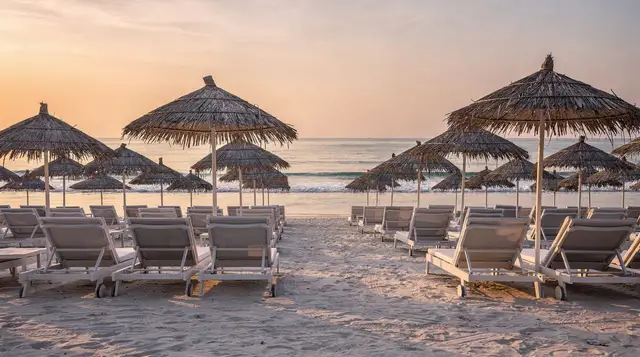
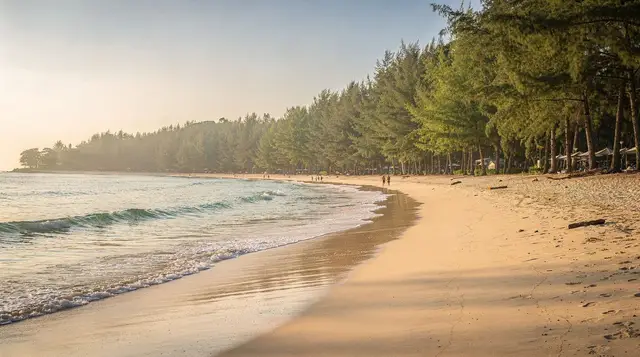
Phuket beach chairs, umbrellas and the rules behind them
How much do beach chairs cost in Phuket, and can I sit for free?
A chair and umbrella typically costs around 100–200 B (roughly $3–6) for the day on the main beaches. You can always sit for free on the sand — beach chairs are optional, and Thai regulations require a stretch of open beach with no vendor structures at all, so free space is guaranteed by law, not just by luck.
Yes, there are rules — and they exist for a reason
Phuket’s beach chairs look casual — rows of loungers under umbrellas, a vendor wandering over to collect payment — but they sit on top of an actual regulatory system, introduced after years of beach chairs, umbrellas and vendor stalls sprawling across most of the usable sand on the busiest beaches. The rules that followed are worth understanding both because they affect what you’ll pay and where you can sit for free, and because they’re the reason no resort or business can ever legally claim a stretch of Phuket sand as private.
The legal vendor zone
Thai municipal regulations, applied across Phuket’s main tourist beaches, restrict beach chairs, umbrellas and vendor stalls to a defined strip of the beach — generally set back from the waterline, arranged in orderly rows rather than scattered, and limited to a portion of the total beach width.
A meaningful stretch of open sand, free of any chairs or structures, is required to remain between the vendor zone and the water, and on some beaches, another free zone is set aside entirely separate from the paid rows. In practice this means you should always be able to find a strip of genuinely public, chair-free sand to lay a towel on, even on the busiest beaches — it just might not be the closest patch to a beachfront restaurant or the shadiest spot under a tree.
Enforcement varies by beach and by how recently authorities have run inspections, and it isn’t unusual to see the zoning bent slightly in practice — a few extra rows here, an umbrella closer to the water than it should be there. But the underlying principle holds across the island: chairs occupy a limited, defined strip, not the whole beach, and free sand always exists.
What a chair and umbrella actually costs
Prices are broadly standardised across Phuket’s main beaches, though they vary somewhat by location and season.
| Item | Typical price | In dollars |
|---|---|---|
| Chair and umbrella (per set, full day) | Around 100–200 B | About $3–6 |
| Chair only (no umbrella) | Around 50–100 B | About $1.50–3 |
| Half-day rate (afternoon only) | Sometimes offered at a discount, ask directly | — |
These figures apply to the busiest beaches — Patong, Karon and Kata — where the vendor system is most established. On quieter beaches like Nai Yang or Mai Khao, chair rental is more limited or informal, sometimes tied to a specific beachfront restaurant rather than an independent vendor row, and prices can vary more. Treat every figure here as a planning range rather than a fixed rate — ask before you sit down, and confirm the price covers the whole day if that’s your intention.
No beach in Phuket can be privatised
This is the rule that surprises visitors most: regardless of how upscale the resort behind a beach is, Thai law treats the entire foreshore — the sand between the high and low tide marks — as public land. No hotel, resort or beach club can legally fence it off, charge an entry fee to access it, or reserve it exclusively for paying guests. What a resort controls is its own property line and anything built on its own land — a pool deck, a private garden, a restaurant — not the public sand and water in front of it.
In practice, some resorts create the impression of a private beach through landscaping, private-feeling pathways, or staff who discourage outsiders from using loungers set out for guests, and it’s worth knowing that discouragement isn’t the same as a legal right. You can always walk the open sand along any Phuket beach, including the stretch directly in front of the most exclusive resort on the island — you just can’t use their private loungers, pool or facilities without being a guest or paying customer. For a deeper look at the businesses that do sell a premium, curated version of beach access legitimately — through their own pool decks rather than the public sand — see the beach clubs guide.
Why the rules exist: the vendor crackdown
Phuket’s current, more orderly chair system followed a period, particularly noticeable through the 2010s, when unregulated vendor stalls, chairs and umbrellas had spread across a large share of the usable sand on the busiest beaches, crowding out free public space and creating inconsistent, sometimes inflated pricing that varied wildly between vendors and seasons.
Provincial and municipal authorities responded with zoning rules limiting vendor structures to a defined strip, standardising much of the pricing, and mandating open, chair-free public sand elsewhere on the beach. The system in place today — imperfect and unevenly enforced as it can be — is a direct result of that reclamation effort, and it’s worth keeping in mind next time a beach feels more crowded with chairs than expected: what you’re seeing is already a reduced, regulated footprint compared to a decade earlier.
What to do if you’re overcharged or pressured
Overcharging and pressure tactics do still happen, particularly on the busiest beaches during peak hours. A few practical points:
- Confirm the price before sitting down, not after — vendors are required to quote clearly, and agreeing verbally first avoids disputes later.
- You are never required to rent a chair to sit on the beach — declining and moving to open sand is always an option, and a vendor pressuring you to pay simply for being nearby is overstepping.
- Ask what the price includes — whether it’s a half-day or full-day rate, and whether an umbrella is bundled with the chair or charged separately.
- If a beach has posted official pricing — some do, particularly since the vendor reforms — that posted rate is the one to reference if a vendor quotes something noticeably higher.
- Beach patrol or tourist police can help with genuine disputes; the national tourist police line is 1155, useful for anything beyond a minor pricing disagreement.
For the broader landscape of common overcharging and scam patterns beyond just beach chairs, see scams to avoid in Phuket.
Bringing your own chair or setting up on the free sand
Nothing in Thai beach regulation prevents you from bringing your own beach mat, towel or portable chair and setting up on the free public sand rather than renting. This is common practice, particularly among longer-stay visitors and Phuket residents, and it’s the most straightforward way to avoid the rental question entirely. The trade-off is comfort and shade — rental umbrellas provide real relief from Phuket’s midday sun that a towel on open sand doesn’t, so factor that into the decision, especially for a full day rather than a short visit.
When a beach club is the better option
If the appeal of a rented chair is really about comfort, shade and a bit of service — someone bringing drinks over, a proper lounger rather than a basic plastic chair — a beach club day pass is worth considering instead of the public chair system.
A Kudo Beach Club entry with a set menu near Patong or a day experience at YONA floating beach club both bundle a genuinely comfortable lounger with food and drink service into one price, which for some travellers works out to better value than the basic public chair setup once you account for the extras. The full beach clubs guide compares several options and typical pricing in more depth.
A quick reference for planning
| Question | Short answer |
|---|---|
| Do I need to pay to sit on the beach? | No — free open sand is guaranteed by regulation |
| What does a chair and umbrella cost? | Around 100–200 B ($3–6) for the day on main beaches |
| Can a resort block public beach access? | No — the foreshore is public land everywhere in Thailand |
| Can prices be negotiated? | Limited room — prices are broadly standardised |
| What if I’m overcharged? | Confirm price before sitting; escalate to tourist police (1155) if needed |
How the rules differ from beach to beach
Enforcement of the vendor-zone rules isn’t identical across the island. Patong and Karon see the most regular inspection and the most standardised pricing, largely because of their sheer visitor volume and the political attention that follows it. Kata generally follows a similar pattern with slightly less density of chairs.
On Bang Tao, much of the chair provision is tied directly to the beach clubs and resorts along that stretch rather than an independent vendor row, which changes the pricing model to something closer to the beach-club minimum-spend system than a simple daily chair rental. On the quieter beaches — Nai Yang, Nai Thon, the south-coast stretch near Cape Panwa — formal vendor rows are thin or absent altogether, and any chairs available tend to belong to a specific restaurant rather than an independent rental system.
What the umbrella colour and row layout usually signal
On the more organised beaches, umbrella colour and row layout aren’t random — they typically indicate which vendor or vendor cooperative operates that section, a system that also makes it easier for beach patrol and municipal inspectors to track compliance with the zoning rules. If a chair in one colour row is unattended and you’re unsure who to pay, it’s generally safe to wait for a vendor to approach rather than assume it’s free to use, since even an apparently empty chair usually belongs to an active rental block.
A note on umbrellas versus natural shade
Rented umbrellas remain the most reliable shade option on Phuket’s busiest beaches, since most of the sand along Patong, Karon and central Kata has little natural tree cover directly on the beach itself. The quieter north-coast beaches covered in the quiet beaches guide are the exception — casuarina pines along parts of Nai Yang provide genuine natural shade without needing to rent anything, which is worth factoring in if avoiding the whole chair-and-vendor system entirely is part of the appeal of visiting a quieter beach.
Beach chairs and the low season
Vendor density on the paid rows drops noticeably during the rainy season, roughly June through October, as fewer visitors mean less demand and some vendors reduce their stock of chairs or don’t set up at all on quieter weekdays. This can make negotiating a lower price more realistic than during high season, since the standardisation that holds prices firm in the busy months relies partly on steady demand. It also means the free, open sand required by regulation becomes even easier to find, since fewer paid rows are actively operating on a given day.
What changes if you’re travelling with young children
Families often want more shade and a more stable base than a single rented chair provides, particularly with young kids who need somewhere to nap or be changed out of the sun. Renting two adjoining chairs with a shared umbrella, or asking a vendor directly whether a larger family set-up is available, is common and usually accommodated without issue on the busier beaches. For beaches with limited or no vendor rows, bringing a portable pop-up shade tent is a practical workaround that isn’t restricted by the same rules that limit permanent vendor structures, since it’s your own equipment rather than a fixed commercial installation.
Comparing a rented chair to bringing your own set-up
A rented chair and umbrella costs little enough on a single-day basis that it rarely makes sense to buy your own for a short trip, but for a longer stay, the maths shifts. Renting a chair and umbrella every day across a two-week trip adds up to a meaningful sum compared with buying an inexpensive folding mat or lightweight beach shade locally, which several shops around the main tourist strips sell cheaply. For a short visit, though, the convenience of not carrying gear to and from a beach usually outweighs the modest savings of bringing your own.
Frequently asked questions about Phuket beach chairs and rules
Do I have to rent a chair to sit on a Phuket beach?
No. Sitting or laying a towel on the sand is free and always available — Thai beach regulations specifically require a portion of every public beach to remain open and free of vendor structures. Chairs and umbrellas are an optional paid convenience, not a requirement to access the beach.
Can a hotel or resort claim a section of public beach as private?
No. Every Thai beach below the high-tide line is public land, and no resort, hotel or business can legally block or reserve it for guests only. What resorts control is their own land and pool deck behind the beach — the sand and sea in front remain open to everyone.
Why did Thailand crack down on beach vendors?
Following a period where chairs, umbrellas and vendor stalls had spread across much of the usable sand on beaches like Patong, authorities introduced zoning rules to reclaim open public space, limit vendor structures to a defined strip, and standardise pricing after years of inconsistent, often inflated rates.
Is it normal to be asked to pay for a chair I didn’t rent?
No — you should only pay for a chair or umbrella you’ve actually agreed to use. If a vendor tries to charge for simply sitting nearby on the open sand, or for a chair you didn’t request, that’s outside the rules and worth politely declining or raising with beach patrol staff if present.
How much should I tip or negotiate on beach chair prices?
Prices are generally standardised and posted or well known locally, so there’s usually limited room to negotiate on the main beaches — a small amount of flexibility exists on quieter beaches or in low season, but treat posted or commonly quoted prices as close to fixed rather than an opening bid.
tours.beaches
Verified deep-linked GetYourGuide tours. Book through these links and we earn a small commission at no cost to you.
These are our own photographs of Phuket, not the operator's pictures of this tour — open the tour page to see those.