Patong is the beach most people picture when they hear “Phuket,” and it’s also the one long-term visitors tend to warn you about. Both reactions are correct — it depends entirely on what you came for.
Who Patong actually suits
Patong works well for first-time visitors who want everything within a five-minute walk: restaurants, pharmacies, ATMs, tailors, dive shops, massage parlours and 7-Elevens on every corner. It suits groups and solo travellers who want nightlife without a taxi ride, and it suits anyone who values convenience over calm. If your trip includes a night at Bangla Road as a one-off experience, basing yourself here removes the need for a late-night ride home.
It does not suit couples looking for a quiet, romantic beach, families with young children who want to swim without dodging jet-ski traffic and beach-chair touts, or anyone sensitive to noise — Patong’s soi (side streets) run bars, karaoke and go-go venues until the early hours, and the sound carries into mid-range hotel rooms a block or two back from the beach road. If that describes you, read quiet beaches in Phuket or compare Patong vs Kata vs Karon before booking.
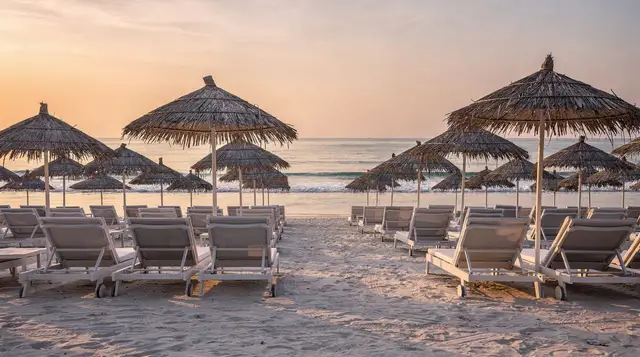
The beach itself is a 3km sandy arc, wide and clean by mid-morning (it’s raked overnight), backed by high-rise hotels, malls and the Jungceylon shopping centre. Sunbeds and umbrellas line almost the entire shore in high season, run by vendors who expect payment even though the beach itself is public land — more on that below.
What Patong looks like by time of day
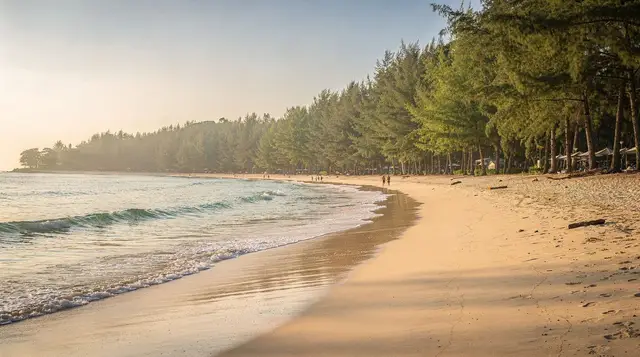
Patong changes character completely depending on when you show up, which is worth knowing before you judge it from a single visit. Early morning, from around 6am to 8am, the beach is close to empty — joggers, a handful of monks on alms rounds along the beach road, and vendors setting up sunbeds for the day. Locals and long-term residents often say this is the best hour to actually enjoy the sand. By mid-morning the beach fills with sunbathers and the first jet-ski and parasailing operators are running.
Afternoon brings the heaviest beach crowds and the most persistent touts. From around 6pm, the beach empties and the town’s centre of gravity shifts inland to Bangla Road and the surrounding sois, which stay loud until 2-4am depending on the venue and the night of the week. If you’re staying in Patong specifically to sleep well, a hotel a few streets back from Bangla Road, or on the quieter northern end of the beach road, makes a real difference.
Where to stay in Patong
Patong’s accommodation spans budget guesthouses on the sois behind the beach road, mid-range hotels along Thaweewong Road facing the sand, and a run of larger resort-style properties toward the beach’s northern and southern ends, which tend to be calmer than the central strip near Bangla Road. Prices swing hard with season — expect roughly double the room rate in December-January high season compared with the April-October low season outside of major holidays.
If nightlife noise matters to you, ask specifically how far a hotel is from Bangla Road rather than trusting “central” in a listing description; a few hundred metres makes a large difference to what you’ll hear after 10pm. See where to stay in Phuket for how Patong’s options compare island-wide, and Phuket’s trip budget guide for what a realistic daily spend looks like here versus quieter beaches.
Sea conditions and safety, by season
Patong faces the Andaman Sea directly, and conditions swing hard between the two monsoon halves of the year.
November to April (dry season): the sea is generally calm, clear and safe for swimming most days. This is when Patong earns its reputation as an easy, family-friendly stretch of water.
May to October (southwest monsoon): this is a different beach. Swells build, rip currents form (especially where the beach curves near the northern and southern ends), and Phuket’s west-coast beaches — Patong included — account for the majority of the island’s tourist drownings each year. Red flags go up when lifeguards judge conditions unsafe, and they are not a suggestion: people who swim past a red flag on Patong are the ones who end up in the news.
Rip currents here can pull a strong swimmer out faster than they can swim back in; if you’re caught in one, swim parallel to the shore rather than against it, and raise an arm for help. Lifeguard towers cover the main stretch in season, but coverage thins at the far northern and southern ends of the beach. Read the full picture in Phuket’s beach safety and riptide guide and the monsoon season guide before you swim in low season.
Getting to Patong
From Phuket Airport (HKT): Patong is around 40km from the airport, roughly 45-60 minutes depending on traffic on the hill road. The airport’s official taxi counter runs a fixed price (not a meter), typically 700-900 baht (about 20-26 USD) to Patong. A pre-booked private transfer runs similar money with the advantage of a fixed price agreed before you land — see Phuket airport transfers.
Grab works from the airport in theory but pickup can be restricted to a designated zone away from the arrivals curb because of friction with the local taxi association; budget 500-700 baht (14-20 USD) if it’s available. The cheapest option is the shared minibus, around 180-200 baht (5-6 USD) per person, but it stops at multiple hotels before yours. Full comparison in the HKT airport guide.
From other beaches: a metered taxi or Grab from Karon or Kata is 15-20 minutes and 200-350 baht (6-10 USD). From Kamala it’s 10-15 minutes, around 150-250 baht (4-7 USD), though the coastal road between the two has a run of sharp bends where scooter accidents cluster — go slow if you’re riding yourself. From Bang Tao or Surin, expect 25-35 minutes and 350-500 baht (10-14 USD). Local tuk-tuks (the modified pickup trucks, not Bangkok-style three-wheelers) charge considerably more than metered taxis or Grab for the same trip — see the pricing breakdown in taxis, tuk-tuks and Grab in Phuket and getting around Phuket generally.
Where to eat and drink
Patong’s food scene runs from street-cart pad thai to genuinely good seafood. Bangla Road itself is mostly bars and clubs rather than food, but the streets around it — Soi Bangla, Rat-U-Thit Road, Thaweewong Road (the beach road) — are lined with restaurants. Savoey Seafood on the beach road is a reliable, if touristy, pick-your-own-fish seafood restaurant with a long track record in Patong. For beach-club dining with a pool and loungers included, Kudo Beach Club sells day access with a set menu (bookable in advance — see the tour box below).
For something calmer, the streets just east of Rat-U-Thit have quieter Thai restaurants aimed at residents rather than tour groups, generally 150-250 baht (4-7 USD) for a rice or noodle dish versus 300-500 baht+ on the beach road itself. For a wider tour of what to eat across the island, see Phuket’s street food guide and night markets and food.
Drinking in Patong ranges from beach bars with 150-baht (4 USD) Chang beer to rooftop cocktail bars charging Bangkok prices. Bangla Road’s go-go bars and ping-pong show touts will approach you repeatedly after dark — a firm “no thanks” and continuing to walk works better than engaging. See rooftop bars in Phuket for the quieter end of Patong’s drinking scene.
What’s actually worth booking
Patong is Phuket’s easiest base for booking water activities and shows, since operators cluster here and hotel pickup is simple.
- Jet skis: legitimate to ride, but Patong Bay’s informal beach operators are the source of most of Phuket’s jet-ski deposit scam stories (see below). Booking a guided session through a platform with a fixed price and no passport-as-deposit demand removes that risk: Patong Bay jet ski rental with guide
- Parasailing: a 10-minute lift over the bay, generally the safest of Patong’s adrenaline options since it doesn’t involve driving a vehicle yourself: Patong Bay parasailing adventure
- Diving and snorkelling day trips: boats leave Patong for Racha and Coral Island, both under an hour offshore with clearer water than the mainland coast: Racha Island and Coral Island scuba beach dive
- Muay Thai: Patong Boxing Stadium runs regular fight nights and is the most convenient venue on this coast to see a live match: Muay Thai fight at Patong Boxing Stadium
Spa and massage shops line almost every street in Patong, from 300-baht (9 USD) foot massages at open-fronted shopfronts to hotel spa packages several times that price — there’s no shortage of options, so it’s worth reading a few reviews rather than walking into the first shop you pass. See Thai massage in Phuket and best spas in Phuket for how to tell the difference.
For trips further out, Patong hotels also handle pickup for Phi Phi day trips, James Bond Island and Racha Island day trips departing from Chalong or Rassada Pier.
Traps to know about
Jet-ski deposit scams are Patong’s best-documented tourist trap. The pattern: rent from an unbranded beach operator, they hold your passport or a large cash deposit as security, then claim pre-existing hull damage when you return the ski and refuse to give it back until you pay. Photograph and video the ski from every angle before you get on, never hand over your passport, and prefer operators bookable in advance with a fixed price and reviews attached — see the dedicated jet-ski scam guide.
Beach chairs and umbrellas are run by vendors in informal zones along the sand. Even though Thai law technically keeps beaches public, in practice you’re expected to pay 100-200 baht (3-6 USD) per chair if you sit in their patch, or move to an unmanaged stretch. Full breakdown in Phuket’s beach chair rules.
Tuk-tuk fares in Patong are fixed by an informal cartel and are usually double or triple what a metered taxi or Grab charges for the same short hop — a 200-300 baht (6-9 USD) tuk-tuk ride can be 80-100 baht (2-3 USD) by Grab when it’s available. Touts on the beach road sell everything from boat trips to tailored suits to “closed today, follow me” gem-shop detours; walk on. See Phuket scams to avoid and Phuket’s tourist traps for the full list.
Shopping and daytime options beyond the beach
Jungceylon is Patong’s main shopping mall, air-conditioned relief from the heat with a cinema, supermarket and a mix of international and Thai brands. Outside the mall, the streets around Bangla Road and Thaweewong Road run stalls selling clothing, souvenirs and copy goods where bargaining is expected — starting an offer at roughly half the asking price is a reasonable opening move.
For something more structured, Phuket’s souvenirs guide and bargaining in Phuket’s markets cover what’s worth buying and how hard to push. Central Phuket vs Jungceylon compares Patong’s mall against the larger shopping centre in Phuket Town if you want a fuller retail day.
Patong also works as a base for day trips that don’t involve the beach at all — Phuket Old Town’s Sino-Portuguese architecture is around 30-40 minutes away by taxi or Grab, and several of Phuket’s temple and viewpoint sights are reachable within an hour. If you want a full day away from the beach scene entirely, pairing Patong’s convenience with an inland day is a common way to break up a longer stay here.
Solo travellers and general safety notes
Patong is generally manageable for solo travellers of any gender during the day, with plenty of foot traffic and open businesses. After dark, the same advice that applies to any nightlife-heavy area applies here: stick to well-lit main streets, keep drinks in sight, and be skeptical of anyone who’s unusually friendly unprompted, since a share of Patong’s low-level scams (overpriced drinks, added “service” charges, staged bar bills) target people drinking alone late at night.
None of this is unique to Patong or to Phuket, but the concentration of bars and touts here makes it worth a specific mention. If you’d rather skip this entirely, a quieter base with a single evening visit to Patong covers the experience without the exposure — see Phuket solo travel for a broader take. Basic etiquette also goes a long way here: cover up when you step away from the beach itself, and keep public displays of affection modest, as covered more generally in Thai etiquette mistakes to avoid.
Weather-wise, Patong’s exposed, built-up layout means it can feel noticeably hotter at midday than a shaded beach further from the concrete — carrying water and timing beach time for morning or late afternoon is a small adjustment worth making, especially with kids in tow.
Frequently asked questions about Patong
Can you swim at Patong Beach year-round?
Physically yes, but it isn’t advisable year-round. November to April is generally safe swimming; May to October brings monsoon swells, rip currents and red-flag days where lifeguards actively discourage swimming. Check the flag on the day rather than assuming.
How many nights do you need in Patong?
One or two nights is enough for most visitors to experience Bangla Road, eat at a few restaurants and book a boat trip or two. Longer stays tend to suit visitors specifically prioritising nightlife over beach quality.
Is Patong walkable without a scooter or taxi?
The core area — beach road, Bangla Road, Jungceylon and the surrounding sois — is entirely walkable. You’ll want a taxi, Grab or scooter for day trips to islands, viewpoints or Phuket Old Town.
Is Patong safe for families with young children?
It can work for a short stay, but Patong isn’t purpose-built for families the way Bang Tao or Karon are — noise, nightlife proximity and heavier beach-vendor traffic make it a less relaxed choice for a full family week.
Where this fits in a trip
Most itineraries use Patong for one or two nights of nightlife and shopping rather than a full beach holiday base — see how it slots into a 5-day Phuket itinerary or 7-day itinerary. If nightlife isn’t the goal, Bang Tao/Laguna or Kata Beach make calmer alternatives a short taxi ride away, and Phuket’s neighbourhoods explained covers how all of them compare before you book a hotel.