James Bond Island tour guide
Is a James Bond Island tour worth it from Phuket?
Yes for the limestone scenery of Phang Nga Bay, but Koh Tapu itself is a small rock you view from a jetty for 15–20 minutes among crowds; the sea-cave canoeing add-on is usually the better part of the day.
What you’re actually visiting
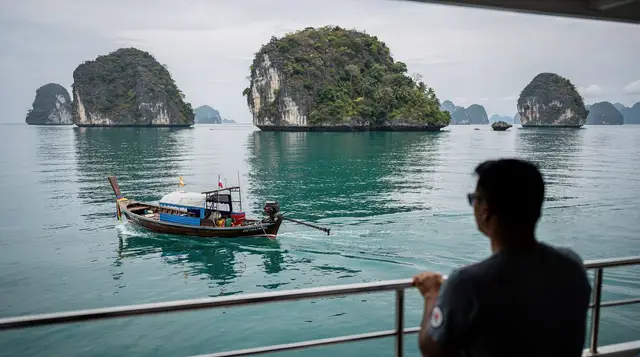
“James Bond Island” is the tourist name for Koh Tapu, a slender limestone spire jutting out of the water off Koh Khao Phing Kan in Phang Nga Bay, north of Phuket toward the mainland. It appeared briefly in The Man with the Golden Gun (1974), and the name stuck hard enough that it’s now the main draw of the tour, even though the rock itself is small and the on-site visit is short. The real reason this excursion is worth doing is the bay around it — around 40 limestone karsts rising straight out of flat, often glassy-calm water, honeycombed with sea caves and hidden lagoons.
Most operators bundle Koh Tapu into a longer Phang Nga Bay itinerary that also includes a stop at Koh Panyi, a stilted Muslim fishing village built entirely over the water, and — on the better tours — sea-cave canoeing through tunnels and into hidden lagoons called hongs. If your itinerary is canoe-focused, the Phang Nga Bay sea canoe guide covers that half of the day in more depth.
What the Koh Tapu stop actually feels like
Big boats and longtails moor near Koh Khao Phing Kan, and everyone walks up a short path lined with souvenir stalls to a viewing area facing the rock. You get roughly 15–20 minutes here — a photo stop, not an exploration. By late morning this spot is genuinely crowded: multiple tour boats converge on similar schedules, so expect to be one of a few hundred people photographing the same rock at the same time. It’s worth doing once for the “I’ve seen it” factor, but manage your expectations — this is the least impressive 20 minutes of a day that’s otherwise full of striking scenery.
Koh Panyi floating village
Most James Bond Island tours also stop at Koh Panyi, a village of a few hundred families built on stilts over the water at the base of a limestone cliff, originally settled by Muslim fishermen. It has a mosque, homes, restaurants and a school, all connected by wooden walkways — genuinely lived-in, not a recreation, though the tourist economy (souvenir stalls, seafood lunch stops) is heavily built around visiting boats now. Lunch here is common on full-day itineraries; it’s decent but tourist-priced, so don’t expect the best seafood of your trip here.
The Phang Nga Bay national park fee
As with almost every boat excursion in this part of Thailand, the Ao Phang Nga National Park entrance fee is charged separately from your tour price, in cash, usually collected on board. Budget around 300 THB (roughly $8–9) per adult and around 100–200 THB (roughly $3–6) per child — it varies slightly by operator and whether canoeing is included, since canoe operators sometimes fold a small additional canoe-use charge into the same collection. Bring small notes. This is the same pattern as Maya Bay and the Similan Islands: assume the park fee is extra unless your booking explicitly says “all fees included.”
James Bond Island longtail boat and sea canoe tourBig boat vs longtail vs speedboat for this route
Phang Nga Bay is sheltered and generally calmer than the open crossing to Phi Phi, which changes the calculus compared with speedboat vs longtail boat elsewhere. A few common formats:
| Format | Pace | Best for |
|---|---|---|
| Big boat with canoe add-on | Slower, more stops, buffet lunch | Groups, families, first-timers |
| Speedboat combo (James Bond + canoeing + lunch) | Faster, covers more ground in a day | Travellers short on time |
| Private longtail charter | Flexible timing, fewer crowds at each stop | Couples, photographers, anyone avoiding the midday rush |
Because the bay is largely sheltered by the surrounding karsts, seasickness is less of an issue here than on the Phi Phi or Similan crossings, even in shoulder season. That makes this one of the more forgiving boat trips on the island for anyone nervous about open water.
The canoeing: what actually happens
Nearly every operator markets “sea canoeing” or “sea kayaking” through Phang Nga Bay’s hongs — hidden lagoons reached through narrow, low sea caves in the limestone. Here’s the detail that catches people off guard: on the great majority of tours, a local guide paddles the canoe, not you. Two or three passengers sit in an inflatable canoe while a guide sits at the back and does the paddling, timing the entry to match the tide, since these caves are only passable near low tide when the ceiling clears the water.
If you specifically want to paddle yourself, ask before booking — some operators offer a self-paddle option, but it’s the exception, not the rule, and inexperienced self-paddlers are rarely allowed into the tighter caves regardless.
James Bond Island kayak tour with snorkeling and lunchWhat’s included and what isn’t
- Usually included: boat transport, life jacket, a guide, and on canoe-inclusive tours, the canoe and paddling guide.
- Usually NOT included: the national park fee (see above), and on some budget listings, the canoeing itself is a paid add-on rather than bundled — read the listing carefully.
- Often included: lunch, either at Koh Panyi or as a boxed meal, on full-day tours; half-day tours may skip lunch entirely.
What to pack
- Cash in small baht notes for the park fee
- A dry bag for phone and camera — canoeing means real water contact
- Reef-safe sunscreen and a hat; there’s little shade at the Koh Tapu viewpoint
- Water shoes or sandals that can get wet, useful for the canoe entry/exit
- Modest clothing if you’re visiting Koh Panyi, out of respect for the working mosque and village
Best time to go
Morning departures (7–8am) beat the midday crush at Koh Tapu and give calmer light for photos in the bay generally. Because the sea-cave canoeing depends on low tide to clear the cave ceilings, some operators time their whole itinerary around the tide table rather than a fixed clock hour — if canoeing is your main reason for going, ask whether the tour’s schedule is tide-adjusted, since a badly timed visit can mean caves are simply not passable that day. November through April brings the calmest water and best visibility across the bay; expect more haze and occasional rain interruptions from roughly May to October, though the sheltered bay handles rain better than open-water routes.
Who should skip this tour
If you’ve already done extensive limestone-karst boating elsewhere in Thailand (Krabi, Railay, Ao Nang), Phang Nga Bay will feel familiar rather than novel. Anyone expecting to swim at Koh Tapu itself will be disappointed — there’s no beach there, just a jetty and viewing platform. And travellers who want to paddle their own canoe rather than be paddled should confirm that option exists before booking, since most operators default to guide-paddled canoes.
Combining James Bond Island with other Phang Nga stops
Because the crossing to Phang Nga Bay takes time regardless of which single sight you want to see, almost every operator packages Koh Tapu with at least one or two other stops rather than selling it alone — usually Koh Panyi and, on the better itineraries, sea-cave canoeing through the bay’s hidden hongs.
Some full-day combination tours also fold in a brief stop near Krabi’s Railay side of the bay or a viewpoint over the karsts, since the geography puts several well-known Andaman landmarks within a similar radius. If you’re deciding between a bare-bones Koh Tapu tour and a fuller day, the canoeing add-on is consistently the part travellers rate highest — the rock itself is the photo, the bay is the actual experience.
How this compares with a Phi Phi or Similan day
Phang Nga Bay sits in a different category from the open-water routes to Phi Phi or the Similan Islands: shorter transfer, calmer water, lower risk of a cancelled or shortened itinerary, and a lower national park fee. What it doesn’t offer is a swimmable, postcard beach — there’s no equivalent of Maya Bay’s sand or the Similans’ granite coves here, since the appeal is entirely about the karst scenery and the caves rather than a beach stop. Choose this route if dramatic limestone scenery and an easy day matter more than beach time; choose Phi Phi or the Similans if a swim is the point.
Booking tips specific to this route
Because Phang Nga Bay tours are sold under dozens of near-identical names — “James Bond Island tour,” “Phang Nga Bay canoeing,” “James Bond and canoeing combo” — read the stop list on the listing itself rather than relying on the title. Confirm explicitly whether canoeing is bundled or a paid add-on, whether Koh Panyi is included, and whether lunch is provided, since all three vary between otherwise similar-looking listings at similar prices. If you’re travelling with young children, ask about the canoe age minimum; some operators cap solo seating in the canoe for safety and put younger kids in with an adult and the guide instead.
Where boats depart from and how long the road transfer is
Most James Bond Island tours don’t depart from a Phuket pier directly — Phang Nga Bay sits north of the island, close to the mainland, so the standard format is a road transfer of roughly 1–1.5 hours from your Phuket hotel to a pier near Phang Nga town, followed by the boat portion of the day.
This is worth knowing upfront because it changes the shape of the day compared with, say, Coral Island, which leaves directly from a Phuket pier with no road transfer at all. Factor the drive into your total day length: a “half-day” James Bond Island tour that excludes canoeing can still run five to six hours door to door once the transfer is included, and a full-day version with canoeing and lunch commonly runs eight to ten hours.
What makes this route distinctive within Phuket’s boat trips
Where Phi Phi and the Similans are defined by open-water crossings and beach time, Phang Nga Bay’s whole identity is the landscape itself — dense clusters of vertical limestone karsts rising straight out of flat water, many undercut at the base by tidal erosion into overhangs and arches you cruise directly beneath. It’s a photogenic, slow-moving kind of tour, closer in spirit to a scenic cruise than an island-hopping beach day, and it reads differently in person than in photos of Koh Tapu alone — the bay’s scale, once you’re inside it, is the real payoff of the day.
A note on managing expectations at Koh Tapu itself
Set expectations correctly for the rock itself and the day tends to land well: Koh Tapu is a brief, crowded photo stop, not a destination to linger at, and the real value of the day is the bay around it plus the canoeing, if you’ve booked it. Travellers who go in expecting a quiet, exclusive moment with the famous rock are usually the ones who come away underwhelmed; travellers who go in treating it as one striking five-minute stop within a much bigger, calmer bay tour tend to rate the day highly.
Weather and rain in Phang Nga Bay
Because the bay sits close to the mainland and is largely sheltered by the karsts themselves, rain showers here tend to be shorter and less disruptive to the itinerary than an equivalent shower on an open-water route — boats often simply continue cruising between islands during a passing squall rather than cutting the day short. That resilience is one more reason this route makes a reasonable choice on a day when the forecast looks marginal and you’d rather not gamble a full-price Phi Phi or Similan booking on the weather holding.
Frequently asked questions about James Bond Island tours
Do I paddle the canoe myself at James Bond Island?
Usually not. Most operators have a local guide paddle while you sit and take in the caves and hongs. Self-paddle options exist with some operators but aren’t the default — ask before booking if it matters to you.
Is the Phang Nga Bay park fee included in the tour price?
Almost never. Budget around 300 THB (about $8–9) per adult in cash, collected on the boat, separate from what you paid to book.
How long do you spend at Koh Tapu itself?
Roughly 15–20 minutes at the viewing jetty. The rock itself is a short stop within a longer bay tour, not the main event time-wise.
Is James Bond Island tour better by speedboat or big boat?
Both work well since Phang Nga Bay is sheltered. Speedboats cover more stops in less time; big boats are steadier and usually include a proper lunch, often at Koh Panyi.
Can you visit James Bond Island without the canoeing?
Yes, many tours are boat-only, viewing the karsts and Koh Tapu without the sea-cave canoe segment. If the caves and hongs are your main interest, check that canoeing is explicitly included.
Is Koh Panyi worth visiting?
It’s a genuine, lived-in floating village and worth the stop for the setting, though lunch and souvenirs there are tourist-priced. It’s usually bundled in rather than optional.
What’s the best time of year for Phang Nga Bay?
November to April for the calmest water and clearest views of the karsts. The bay’s shelter makes it more forgiving in shoulder months than open-water routes like Phi Phi or the Similans.
Is this trip suitable for people who get seasick?
More so than most Phuket boat trips, since Phang Nga Bay is largely sheltered from open swell. It’s a reasonable pick for nervous sailors compared with the Phi Phi or Similan crossings.
tours.islands-boat-trips
Verified deep-linked GetYourGuide tours. Book through these links and we earn a small commission at no cost to you.
These are our own photographs of Phuket, not the operator's pictures of this tour — open the tour page to see those.