Two islands, one name, very different purposes
“Phi Phi” refers to two islands, and mixing them up leads to real confusion when planning a trip. Phi Phi Don is the inhabited island — a town built around Tonsai Bay, guesthouses, dive shops, restaurants and a nightlife scene that runs late. Phi Phi Leh, a short boat ride away, is uninhabited, protected as part of a national marine park, and has no accommodation, no shops and no permanent population. Maya Bay, the famous crescent of white sand and turquoise water on Phi Phi Leh, sits on the second island — not the one with hotels.
Nearly every visitor arriving from Phuket does so as a day trip that touches both: a stop or two around Phi Phi Leh’s cliffs and bays, a look at Maya Bay under its current access rules, then either a few hours on Phi Phi Don’s beaches before heading back, or an overnight stay if time allows. Understanding which island does what saves a lot of confusion when comparing tour itineraries that all use the single name “Phi Phi.”
Maya Bay: reopened, but not a free beach anymore
Maya Bay closed entirely in 2018 after years of overtourism had visibly damaged the coral reef and eroded the beach — over-anchoring boats, unmanaged crowds and unlimited swimming had taken a measurable toll on a small, enclosed bay never built to handle thousands of daily visitors. It reopened with a structured management system that remains in place today, and it is worth understanding before you book, because it changes what a Maya Bay visit actually looks like.
Access now runs on a daily visitor quota and fixed entry time slots rather than open all-day arrival. Boats dock at a rear pontoon rather than anchoring directly off the beach, cutting hull damage to the reef. Time on the sand is limited rather than open-ended — tour operators build a specific window into the itinerary, typically somewhere in the range of 30 to 60 minutes depending on the operator and the day’s schedule.
Swimming in the bay itself is banned; the water closure is meant to let the reef recover and to manage the sheer number of people the bay can safely hold at once. None of this makes Maya Bay a bad stop — the setting is still genuinely striking, with limestone cliffs rising almost vertically around a curve of pale sand — but it is not the wander-in, swim-all-day beach shown in the film that made it famous. Go in with the right expectations and the visit works; go in expecting free rein and it will not feel like what you pictured.
For the full detail on quotas, timing and how tours structure the visit, see our dedicated Maya Bay visiting guide.
Phi Phi Leh beyond Maya Bay
Phi Phi Leh has more to offer than its one famous bay, and most day tours build in additional stops around the island’s edges. Pileh Lagoon is a nearly enclosed cove ringed by sheer cliffs, with water so clear and calm it functions almost like a natural swimming pool — many operators stop here specifically because swimming is allowed, unlike in Maya Bay itself. Viking Cave, on the island’s eastern side, is a limestone cavern historically harvested for swiftlet nests used in bird’s nest soup, a trade that still continues on a smaller scale under licence. Neither stop takes long, but together with Maya Bay they round out a half-day loop around the uninhabited island before boats typically head to Phi Phi Don or back to Phuket.
Phi Phi Don: where people actually stay
Phi Phi Don is built around a narrow isthmus connecting two headlands, with Tonsai Bay’s pier, restaurants and dive shops on one side and Loh Dalum Bay’s beach — the more scenic, swimmable stretch — on the other. The island has no roads for cars; movement is on foot, by longtail boat, or occasionally by bicycle on the flatter sections, which gives it a genuinely different pace from the mainland’s scooter-and-taxi culture.
The nightlife here has a reputation, and it’s largely earned: bars along the walking streets run fire shows, bucket cocktails and loud music well into the night, drawing a young backpacker-heavy crowd. It’s a different atmosphere from anywhere on Phuket itself, closer in spirit to a full-moon-party scene than a family beach resort. If that’s not the trip you’re after, Phi Phi Don still works as a day-trip stop for lunch and a swim at Loh Dalum before your boat heads back, without needing to engage with the evening scene at all.
Ferries, speedboats and getting there
Rassada Pier, on Phuket’s east side near Phuket Town, is the main departure point for both scheduled ferries and most speedboat tours heading to Phi Phi. Large ferries run multiple times daily and take roughly 1.5 to 2 hours each way, are the cheapest option, and are the standard choice for travellers heading to Phi Phi Don to stay overnight rather than joining an organised day tour. Speedboats, used by most day-tour operators, cut the crossing to around 45 minutes to an hour, cost more, and typically include stops at Phi Phi Leh’s bays and sometimes other islands as part of a packaged itinerary rather than dropping you at the pier to explore independently.
Sea conditions matter more here than on a short beach-hopping trip along the coast. During the southwest monsoon, roughly June through October, rougher water can mean a bumpier crossing, occasional cancellations on the smaller speedboats, and reduced visibility for snorkelling stops. If you’re prone to seasickness, the ferry’s larger hull rides noticeably more steadily than a speedboat.
Book a day trip combining Phi Phi, Maya Bay and James Bond Island See the Phi Phi island-hopping day trip by speedboatDay trip or overnight stay?
A single day trip from Phuket is enough to see Maya Bay, Pileh Lagoon, Viking Cave and a few hours on Phi Phi Don, and it’s what the large majority of Phuket-based visitors choose — no packing, no changing accommodation, and a return to your existing hotel by evening.
Reserve the Phi Phi and Maya Bay day trip with lunchStaying overnight on Phi Phi Don changes the experience meaningfully. Day-trip boats arrive in waves through the late morning and clear out again by mid-afternoon, which means the island empties out considerably by early evening — a version of Phi Phi that day-trippers never see. An overnight stay also opens up sunrise or early-morning boat trips to Maya Bay and the lagoons before the day-tour fleets arrive, when both the light and the crowds are at their best. The trade-off is cost, packing for an extra night, and, if nightlife isn’t your scene, accepting that Tonsai’s walking streets get loud after dark regardless of where you’re staying on the island.
Book the Phi Phi and Maya Bay speedboat tourFor a direct comparison with the other major boat-trip island near Phuket, see our Phi Phi vs Similan Islands guide — the two draw a different kind of traveller and rarely fit into the same day.
Snorkelling and diving around Phi Phi
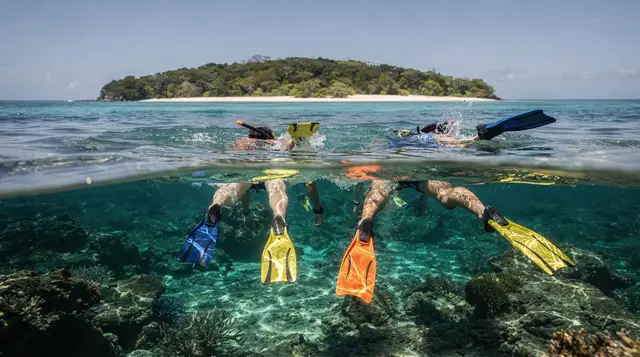
The waters around Phi Phi Leh, and the smaller Bida Nok and Bida Nai islets further south, are among the more reliable snorkelling and diving spots reachable from Phuket, with a decent chance of spotting reef sharks in deeper channels and consistently good coral in the more sheltered bays. Visibility is generally best outside the rainy season. If diving interests you beyond a single day trip, our scuba diving in Phuket guide and best snorkelling spots guide cover how Phi Phi compares with other dive sites around the island, including the more advanced King Cruiser wreck.
Crowds, timing and managing expectations
Phi Phi is one of the most heavily visited day-trip destinations in Thailand, and Maya Bay’s reopened, quota-managed system exists precisely because of how much pressure the site was under before. Even with the new limits, boats converge in numbers through the late morning, and a “quiet” visit to Maya Bay simply isn’t part of the deal anymore — arrive expecting other groups on your timed slot, not solitude.
Early-morning departures from Phuket, or the overnight-stay approach above, are the two realistic ways to reduce how many other boats you’re sharing the water with. Booking through an operator that clearly follows the pontoon and quota system, rather than one vague about how it handles Maya Bay access, is also worth checking before you pay.
Planning around a Phi Phi trip
If Phi Phi is one stop on a wider island-hopping plan, our island hopping from Phuket guide and speedboat vs longtail boat guide help with the logistics of comparing it against James Bond Island or Phang Nga Bay, which run as separate day trips rather than combining easily with Phi Phi given the distances involved. For a multi-day plan that includes an overnight on Phi Phi Don, our Phuket island-hopping week itinerary lays out a realistic pace across several islands.
A short history of the name and the tourism boom
Phi Phi’s Thai name, more accurately transliterated as Pee Pee, comes from a mangrove tree species that once grew abundantly along the islands’ shores, not from any connection to the English pronunciation that gives visitors a chuckle on arrival. Phi Phi Don was a working fishing community long before it became a tourist destination, with a small population — many originally Muslim fisherfolk — living around what is now Tonsai Bay. Tourism began building through the 1980s and 1990s, and the islands’ profile jumped again after they featured in the 2000 film The Beach, which was actually filmed on Maya Bay itself and set off the surge in visitor numbers that eventually forced the 2018 closure described above.
The 2004 Indian Ocean tsunami hit Phi Phi Don especially hard, given the island’s low-lying isthmus geography between Tonsai and Loh Dalum bays, and the rebuilt town reflects lessons learned since — better evacuation signage, raised structures in places, and a community that takes tsunami-warning drills seriously. None of this affects a modern visit in any practical sense, but it’s part of understanding a place that’s easy to see purely as a postcard backdrop.
Where people stay on Phi Phi Don
Accommodation on Phi Phi Don ranges from simple backpacker guesthouses clustered around Tonsai’s walking streets to a handful of more comfortable resorts spread along Loh Dalum Bay and on quieter headlands away from the town centre. There’s a genuine split in atmosphere depending on where you base yourself: stay near Tonsai and you’re in the middle of the bars, restaurants and nightly noise; stay on a quieter stretch of Loh Dalum or a headland resort and you get a calmer evening at the cost of a short walk or longtail-boat ride into town for dinner. Prices vary enormously by season, with the driest, busiest months commanding a real premium over the quieter shoulder months.
Frequently asked questions about visiting Phi Phi
How long does the boat trip to Phi Phi take from Phuket?
A speedboat from Rassada Pier typically takes 45 minutes to an hour to reach Phi Phi Don or the bay areas around Phi Phi Leh. A standard ferry takes roughly 1.5 to 2 hours each way and is the cheaper, if slower, option.
Can you swim at Maya Bay?
No. Swimming inside Maya Bay itself is currently banned as part of the park’s recovery and management plan. Nearby Pileh Lagoon, also on Phi Phi Leh, does allow swimming and is one of the stops most day tours include specifically because Maya Bay’s water is off-limits.
Is one day enough to see Phi Phi properly?
A single day trip covers the highlights — Maya Bay under its timed-entry system, Pileh Lagoon, Viking Cave and a few hours on Phi Phi Don — reasonably well. An overnight stay adds the early-morning and evening version of the islands that day-trippers miss, but isn’t essential for a first, highlights-focused visit.
Do I need to book Maya Bay access in advance?
Individual travellers don’t book Maya Bay access directly — tour operators and boat licences manage the quota system on your behalf as part of the standard day-trip package. Booking your boat trip in advance, particularly in high season, is still worth doing, since operator capacity itself sells out on popular days even though you aren’t booking the beach quota yourself.
Is Phi Phi safe for solo travellers?
Yes, in the general sense that applies to well-trodden tourist areas across Thailand — usual precautions around drinks, valuables and late-night walking apply, and Tonsai’s nightlife area can get rowdy later in the evening. The island has a strong flow of solo backpackers, and the hostel and guesthouse scene around Tonsai is set up well for solo travel and meeting other visitors.
How does Phi Phi compare to the Similan Islands?
They’re built for different purposes. Phi Phi combines beach scenery, boat sightseeing and a lively onshore town; the Similan Islands are almost entirely about diving and snorkelling, sit further from Phuket, and close completely for roughly five months of the year. See our Phi Phi vs Similan Islands guide for a fuller comparison.
Budget and pricing expectations
A standard day trip from Phuket to Phi Phi and Maya Bay generally runs somewhere in the range of 1,800–3,500 B (roughly 50–100 $) per person for a shared speedboat itinerary, with National Park entry fees, lunch and snorkelling gear usually included, though it’s worth confirming exactly what’s bundled since packages vary between operators.
Ferry-only travel for those staying overnight is considerably cheaper, typically 500–900 B (15–25 $) each way, with accommodation on Phi Phi Don ranging from around 600 B (17 $) for a basic guesthouse bed to several thousand baht a night for a resort room with a sea view. Private speedboat charters, which let a small group set their own itinerary and skip some of the queuing at popular stops, cost considerably more but remove the fixed schedule that shared-boat tours run on.
Meals and drinks on Phi Phi Don itself run close to Phuket’s beach-town prices rather than Kathu or Phuket Town’s more local rates, since the island imports almost everything by boat. Budgeting a little extra for food and drink here than you might elsewhere on a Thailand trip is realistic, particularly for anything imported or specialty rather than basic Thai dishes.