Phi Phi vs Similan Islands
Should I do a day trip to Phi Phi or the Similan Islands?
Phi Phi is closer (roughly 1.5-2 hours by speedboat), open all year, and built around Maya Bay's fame — but it's genuinely crowded. The Similan Islands are further (2-3 hours, often via Khao Lak), have noticeably clearer water and better coral, but are closed by national park rules from roughly mid-May to mid-October. If both are open when you're travelling, pick Similan for snorkelling and diving quality, Phi Phi for the iconic scenery and a shorter day.
The two biggest island day trips from Phuket, and they’re not really substitutes
Ask about the best island day trip from Phuket and two names come up constantly: Phi Phi and the Similan Islands. Both get sold hard by tour operators, both appear on nearly every “top things to do in Phuket” list, and both are genuinely worth doing — but they’re not interchangeable, and picking between them (or working out whether to fit in both) comes down to a handful of real trade-offs: distance, season, crowd levels and what’s actually under the water.
The one fact that decides half of these trips: Similan closes for the season
The Similan Islands are a national park, and national parks in this part of Thailand close to visitors for roughly five months a year — mid-May to mid-October — to let the ecosystem recover from monsoon conditions and tourist pressure. Phi Phi has no equivalent closure and is a viable day trip year-round, though sea conditions and visibility both get noticeably worse during the same monsoon window. If you’re travelling between mid-May and mid-October, Similan simply isn’t an option regardless of preference, which makes this the first and most decisive filter before anything else. Check the current dates before booking either trip; see our Similan Islands day trip guide for specifics.
Head-to-head comparison
| Phi Phi | Similan Islands | |
|---|---|---|
| Distance from Phuket | ~40-48 km, 1.5-2 hrs by speedboat | ~130+ km, 2-3 hrs, often via Khao Lak |
| Open season | Year-round (quality drops in monsoon) | Roughly mid-Oct to mid-May only |
| Crowd level | High, especially Maya Bay | Lower, capped by park quotas |
| Water clarity / coral | Good but pressured by tourism | Noticeably clearer, healthier coral |
| Typical day trip cost | 1,800-3,500 B (~52-100 $) | 3,000-5,500 B (~87-160 $) |
| Best for | Scenery, first-timers, shorter days | Diving, snorkelling quality, fewer crowds |
| National park fee | Included or paid on arrival, cash | Included or paid on arrival, cash |
Phi Phi: the iconic scenery, the real crowds
Phi Phi’s draw is largely one place: Maya Bay, the limestone-walled cove made famous by the film “The Beach.” It’s genuinely spectacular, but it’s also tightly managed these days — timed entry slots, a daily visitor quota, boats required to dock at Loh Samah rather than the bay itself, and swimming restricted or banned in parts of the bay depending on current rules.
Go in expecting a managed, somewhat crowded experience rather than a private-beach fantasy, and it won’t disappoint; go in expecting the untouched scene from two decades ago, and it will. a Phi Phi and Maya Bay day trip with lunch covers the standard version of this trip, while a Phi Phi island hopping day trip by speedboat spreads the day across more stops beyond just Maya Bay.
Phi Phi’s shorter transfer time makes it the easier day trip logistically — realistic for a shorter stay, and less of a wipeout day if you’re prone to seasickness. The trade-off is crowd density: expect other tour boats at every major stop, particularly around midday.
Similan Islands: further, quieter, better underwater
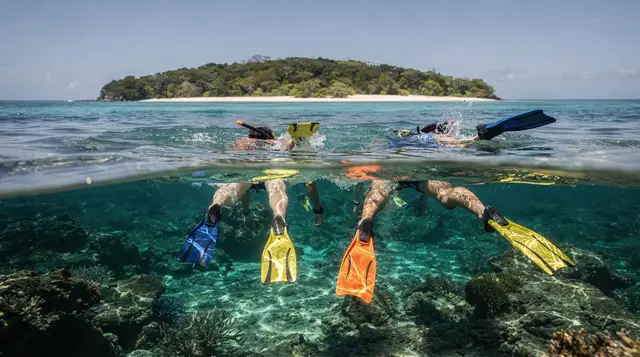
The Similans reward the longer transfer with noticeably better water clarity, healthier coral, and a lower density of boats and swimmers per site, since the park caps daily visitor numbers. This is the destination of choice for anyone prioritising the actual quality of what’s under the water over convenience. a Similan Islands day trip from Phuket covers snorkelling at the main sites, while a full-day Similan Island scuba diving day trip is the option for certified divers who want to go beneath the surface rather than snorkel it.
The cost is a longer, more tiring day — many trips run via Khao Lak rather than directly from Phuket’s own piers, adding transfer time on both ends, and the crossing itself can be rough outside the calmest stretch of the season. Seasickness is a real consideration; anyone prone to it should factor that in before committing to a full-day Similan trip over a shorter Phi Phi one.
Diving specifically: no real contest
For certified divers, the Similans are the clear pick over Phi Phi for a single day trip — better visibility, healthier reef structure, and dive sites built around exactly this kind of pressure-managed marine environment. Phi Phi does have its own dive sites (including Shark Point nearby), but divers travelling to Phuket specifically for diving quality generally prioritise the Similans, or go further still with a multi-day liveaboard. Our diving season in Phuket guide and Similan liveaboard guide cover both options in more depth.
Can you do both on one trip?
Not on the same day, and not really back-to-back either — both are full-day commitments on their own, and stacking two long boat days in a row is a genuinely exhausting way to spend a Phuket holiday. If your trip is long enough and the Similans are in season, doing Phi Phi earlier in the trip and the Similans later (or vice versa) works fine as two separate days with a rest day or land-based activity in between. Our island hopping from Phuket guide and how many days in Phuket guide help with sequencing a longer itinerary around both.
What a typical day trip actually includes
Most Phi Phi day trips follow a similar shape: an early pickup (often before 7am) from your hotel, a transfer to Rassada Pier or Chalong Pier — see our ferries from Phuket guide for how these departure points work, then a full day split across Maya Bay, Pileh Lagoon, Monkey Beach and a couple of snorkelling stops, with lunch served on board or at a beach stop, returning to Phuket by late afternoon.
Similan day trips run on a similar early-start structure but with a longer transfer, sometimes including a stop in Khao Lak to switch boats, and typically 3-4 snorkelling or diving stops across the island group rather than a single headline site. In both cases, confirm before booking whether the national park fee, lunch, snorkelling gear and hotel transfer are actually included in the advertised price, since these get added as extras by some operators and not others.
National park fees: budget for them separately
Both Phi Phi and the Similan Islands charge a national park entrance fee that’s frequently not included in the advertised tour price, paid in cash on arrival or collected by your guide during the trip. This is one of the most common sources of “hidden cost” complaints about Thai island day trips — not because it’s hidden exactly, but because it’s easy to overlook when comparing prices between operators. Budget for it as a separate line item on top of whatever you paid for the boat trip itself, and keep small baht notes on hand since change isn’t always readily available at the collection point.
If your first choice is closed or fully booked
Season and demand don’t always cooperate. If the Similans are closed for the year, Racha Island and Coral Island are the closest substitutes for good snorkelling water without the Similans’ distance — not quite the same clarity, but a real step up from anything directly off Phuket’s own beaches, and covered in our best snorkelling spots guide.
If Phi Phi’s Maya Bay slots are fully booked or you’d rather skip the crowds entirely, James Bond Island and Phang Nga Bay offer a genuinely different kind of scenery — limestone karsts rising out of calmer, more sheltered water — as a solid alternative day trip in either direction.
Booking tips that apply to both
Book directly with a reputable operator or a well-reviewed platform rather than the cheapest street-side tour desk, since boat quality, life jacket provision and group size vary enormously at the bottom of the market. Ask specifically about group size — a boat carrying 60 people delivers a very different day from one carrying 20, even on an identical route — and check recent reviews for complaints about rushed stops or overcrowding rather than relying on the marketing photos alone. If you’re prone to seasickness, request a seat toward the centre of the boat when you board, and take medication before departure rather than waiting for symptoms to start.
Photography and the best time of day
Both destinations photograph best earlier in the day, before the midday sun flattens the water’s colour and before the bulk of the day’s boats arrive. On a Phi Phi trip, that generally means Maya Bay is calmer and better lit in the first hour or two after the park opens, before the majority of tour boats reach it — worth asking your operator whether their itinerary front-loads Maya Bay or saves it for later.
On a Similan trip, the outer islands and their granite boulder formations photograph particularly well in the soft light of mid-morning, and the water clarity itself is usually at its best before wind picks up later in the day. Neither destination rewards a lazy late-morning start if photography matters to you — both are better on an early trip than a leisurely one.
Extending into a multi-day trip
A single day trip only scratches the surface of either destination, and travellers with more time and a serious interest in diving or photography sometimes extend beyond the standard day format. For the Similan Islands, that usually means a liveaboard — typically 2-4 nights aboard a dive boat working through multiple sites across the island group, covered in our Similan liveaboard guide — a completely different experience from a single rushed day trip, with far more time in the water and none of the long return transfer eating into your day.
Phi Phi has a smaller overnight option too: staying a night or two on Phi Phi Don itself, the main inhabited island, lets you see Maya Bay and the surrounding bays outside the day-tripper window, before and after the bulk of the boats arrive.
Weather windows within the season
Even within Phi Phi’s year-round availability and the Similans’ open season, conditions vary meaningfully month to month. Both destinations are at their calmest and clearest in the heart of the dry season, roughly December through March, when seas are flattest and visibility peaks. The shoulder months — April and the run-up to the Similans’ mid-May closure, or October and November as Phi Phi comes out of the wettest stretch — can still deliver good days, but with more day-to-day variability, so it’s worth checking a short-range forecast rather than assuming the calendar month alone guarantees conditions.
Booking a day or two ahead rather than weeks in advance gives you the flexibility to shift dates if a forecast looks poor, which most reputable operators will accommodate without penalty. Our best time to visit Phuket guide covers this month-by-month in more detail.
Verdict by traveller type
Families: Phi Phi. The shorter transfer is easier on kids, and Maya Bay’s scenery is a bigger, faster payoff than the Similans’ longer crossing.
Couples: Either works, but the Similans’ lower crowd density makes for a more romantic, less shoulder-to-shoulder day if the season allows it.
Divers: Similan Islands, without much competition, when in season. Outside the season, Phi Phi’s own dive sites are the fallback.
Snorkellers prioritising water quality: Similan Islands, for noticeably better clarity and coral health.
Budget travellers: Phi Phi. It’s shorter, cheaper, and doesn’t require the added Khao Lak transfer that pushes up the cost of many Similan trips.
First-time visitors: Phi Phi. It’s the shorter, more forgiving introduction to island day trips from Phuket, with the Similans as a strong second trip if time and season allow.
Frequently asked questions about Phi Phi vs the Similan Islands
Which is better, Phi Phi or the Similan Islands?
Neither is universally better — Phi Phi wins on convenience and iconic scenery, the Similans win on water quality and lower crowds. Season often decides it outright, since the Similans close roughly mid-May to mid-October.
When are the Similan Islands closed?
Roughly mid-May to mid-October each year, as part of the national park’s seasonal closure. Always confirm current dates before booking.
Is Phi Phi open all year?
Yes, though sea conditions and water clarity are noticeably worse during the monsoon season, roughly May to October.
Which is more crowded, Phi Phi or the Similan Islands?
Phi Phi, particularly at Maya Bay. The Similans are less crowded because the national park caps daily visitor numbers.
Which is better for diving, Phi Phi or the Similan Islands?
The Similan Islands, when in season — better visibility and reef health than Phi Phi’s own dive sites.
How long does a day trip to the Similan Islands take compared to Phi Phi?
Similan day trips typically run 2-3 hours each way and often route via Khao Lak; Phi Phi trips are usually 1.5-2 hours each way directly from Phuket’s piers.
Can I swim at Maya Bay?
Swimming is restricted in parts of Maya Bay under current park management, with boats docking at nearby Loh Samah rather than the bay itself. Check current rules before your trip, as they’re periodically updated.
Popular Phuket experiences on GetYourGuide
Verified deep-linked GetYourGuide tours. Book through these links and we earn a small commission at no cost to you.
These are our own photographs of Phuket, not the operator's pictures of this tour — open the tour page to see those.