Two islands, usually sold as one name
Most boat operators just say “Racha Island,” but there are two: Racha Yai, the larger and closer of the pair, and Racha Noi, smaller, further south and noticeably wilder. They get bundled together on marketing pages because most day trips only visit Racha Yai, and it’s easy to book a “Racha Island” trip without realizing you’re only seeing half the story. If clear water and reliable snorkeling are what you’re after, that’s fine — Racha Yai delivers. If you’re diving and want depth, drop-offs and a better shot at bigger fish, Racha Noi is the one worth asking for by name.
Both islands sit south of Coral Island and further offshore, which is exactly why the water here is clearer than almost anywhere else easily reachable from Phuket — less coastal runoff, less boat traffic close to shore, and a seabed further from the mainland’s sediment.
Why divers rate Racha so highly compared to other easy day trips
Ask a Phuket-based dive instructor where they’d send a first-timer, and Racha Yai comes up more often than any other single-day option — not because it’s the most visually dramatic site in the region, but because it consistently delivers on the basics that actually matter for a good first underwater experience: predictable conditions, good visibility, and a shallow, gently sloping reef that doesn’t punish small mistakes the way a stronger-current site would. That reliability is worth more to most first-time divers than a more dramatic but riskier alternative, which is exactly why so many PADI courses and discover scuba sessions in Phuket are built around this specific island.
Getting to the Racha Islands
Speedboats from Chalong Pier reach Racha Yai in about 45-60 minutes, depending on sea conditions. Racha Noi adds another 20-30 minutes past Racha Yai, which is why some day-trip itineraries skip it entirely — it’s not that it’s uninteresting, it’s that the extra crossing time cuts into the day. Dive operators running two or three dives typically build the itinerary around Racha Yai’s two main bays, Ao Kon Kae (also called Patok Bay) and Ao Siam, then decide on the day whether conditions allow a run out to Racha Noi.
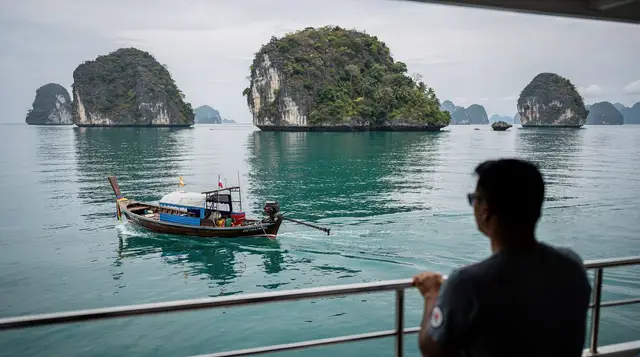
Longtail boats can reach Racha Yai but the trip takes considerably longer and is less common for this route than for closer islands like Coral Island — most people go by speedboat.
Racha Yai: the diving and snorkeling standard
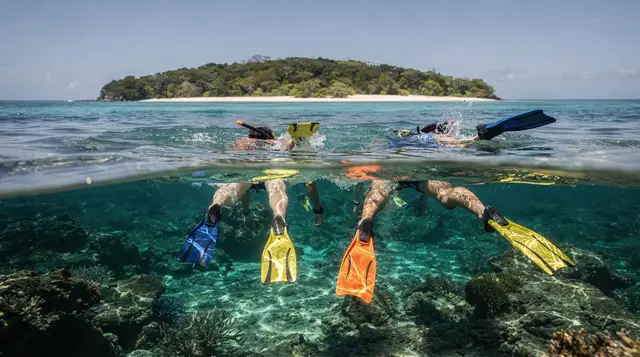
Racha Yai’s water clarity is the main draw, with visibility commonly reaching 15-20 meters in the dry season, better than almost any other easily accessible site near Phuket. The reef around Ao Kon Kae slopes gently from the shore, which makes it approachable for snorkelers and beginner divers alike, while Ao Siam on the island’s north side has a sandier bottom and calmer water, often used for PADI try-dives and open water training.
This is genuinely one of the better places in the region to learn to dive or take a discover scuba session, precisely because the conditions are forgiving — good visibility, mild current, and a shallow shelf before any real depth. It’s not exciting in the way a wall dive or a wreck is, but it’s a solid, low-stress place to get comfortable underwater for the first time.
Book a discover scuba diving day at Racha YaiFor snorkelers, the same shallow reef works well without any gear beyond a mask and fins — you’ll see soft coral, parrotfish, clownfish and, with some luck, small reef sharks resting in the sand.
Join a Racha Island snorkeling boat tourRacha Noi: deeper, wilder, further out
Racha Noi is a different proposition. The island itself is smaller and largely undeveloped, with granite boulders running underwater into steeper drop-offs and depths reaching 30 meters or more at some sites, compared to Racha Yai’s gentler 5-18 meter range. Currents are stronger and less predictable, the crossing is rougher, and the marine life reflects the deeper water — bigger schools of fish, the occasional reef shark or ray, and a real (though not guaranteed) chance of whale sharks passing through, particularly in the months before the southwest monsoon sets in.
This isn’t a beginner site. Most operators only take certified divers to Racha Noi, and some restrict it further to divers with a minimum number of logged dives, given the current and depth. If you’re newly certified or trying diving for the first time, Racha Yai or Coral Island are the more sensible choices.
See a Racha Yai/Noi dive package for non-certified diversWhat marine life you’ll actually see
Racha Yai’s reefs support a fairly standard but healthy range of Andaman Sea species: parrotfish, angelfish, clownfish sheltering in anemones, moray eels tucked into rock crevices, and the occasional blacktip reef shark resting on the sandy bottom in the shallower bays. It’s not a site known for large pelagic encounters the way some of the more remote dive spots further afield are — this is reliable, pleasant diving rather than dramatic diving.
Racha Noi shifts the odds toward bigger encounters: schools of trevally and barracuda, rays gliding over the sand between the granite boulders, and — during the transition months before the monsoon, roughly April to May — a real but unpredictable chance of whale sharks or manta rays passing through the deeper channels. No operator can promise either, and most dive briefings are honest about that; treat any listing that implies a guaranteed encounter with skepticism.
Underwater photography and freediving
The clarity at Racha Yai makes it a popular choice for underwater photography, both for divers bringing their own gear and for operators offering GoPro rental or photo packages alongside a dive. Good light, calm conditions and a shallow reef combine to make it easier to get usable shots here than at murkier or rougher sites closer to the mainland.
Freediving courses based in Phuket sometimes use similarly calm, clear bays for open water training sessions, following pool and theory work done closer to the mainland — worth asking about if you’re interested in freediving specifically rather than scuba, since the skills and equipment involved are quite different.
Group tours vs private and small-group dive charters
Most Racha Island day trips run as set-departure group tours on a shared boat, generally the most affordable way to dive or snorkel here. Smaller dive shops also run private or small-group charters, usually at a higher price, trading the lower cost of a big boat for more flexibility on dive sites, less crowding at each spot, and more individual attention from the instructor or dive guide — worth considering if you’re a nervous or newly certified diver who wants more one-on-one support underwater.
PADI courses based at the Racha Islands
Because conditions at Racha Yai are so consistent, it’s one of the standard training grounds for PADI Open Water certification run out of Phuket. A typical course runs three days: pool and theory sessions on day one, followed by open water dives at Racha Yai over the following two days, or sometimes structured as a single-day discover scuba experience for people who just want a taste before committing to full certification.
Book the 3-day PADI Open Water certification courseFor a broader look at where else in the region divers train and dive, see scuba diving in Phuket for beginners and PADI Open Water course Phuket. If you’re deciding whether diving is even the right call versus snorkeling, snorkelling vs diving in Phuket walks through the trade-offs.
Best time to visit, season by season
| Period | Conditions |
|---|---|
| December to April | Best visibility, calmest seas, peak season for boats and dive operators |
| May to June | Transition period — still generally good, fewer crowds |
| July to October | Southwest monsoon; choppier crossings, lower visibility, more trip cancellations |
| November | Recovering conditions, fewer crowds than peak season, worth targeting for value |
For the wider seasonal picture across Phuket’s dive sites, see diving season in Phuket and best time to visit Phuket.
What to expect if you’re diving for the first time
If Racha Yai is your first time breathing underwater, the day usually starts with a short briefing on the boat or the beach covering hand signals, equalizing your ears and basic safety procedures, followed by a shallow confined-water session before you head to open water with an instructor holding onto you the whole time. It’s a genuinely low-pressure introduction — the instructor-to-guest ratio on discover scuba sessions is kept low specifically because it’s someone’s first time, and the shallow, calm conditions at Racha Yai are exactly why this island, rather than a more advanced site, is chosen for it. Don’t expect to be an independent diver by the end of a single discover session; that’s what the full PADI course is for.
Combining Racha with other islands
Several operators run combined Coral Island and Racha Island day trips, which makes sense logistically since both are reached from Chalong in roughly the same direction. The trade-off is time — splitting a day between two islands means less time in the water at each, which matters more for divers than for snorkelers doing a quick stop at both. If Racha is your priority, a dedicated Racha-only trip gets you more bottom time and skips the crowd that gathers on Coral Island’s beach.
Choosing a dive shop
Phuket has a large number of PADI-affiliated dive shops running trips to the Racha Islands, and quality varies more between operators than the marketing pages suggest. Look for shops that are transparent about group sizes, equipment age and instructor-to-student ratios rather than just the lowest price — a cramped boat with worn gear and a rushed briefing is a worse experience even at Racha Yai’s forgiving conditions, and a genuinely poor one at Racha Noi’s tougher currents. Reading recent reviews that mention the specific boat and instructor, not just the shop’s brand name, is a reasonable way to filter out the operators cutting corners.
Practical details: cost and what to bring
A snorkeling day trip to Racha Yai typically runs 1,200-1,800 B (roughly 34-51 $), including boat transfer, mask and fins, and usually lunch. Discover scuba sessions for non-certified divers run higher, often 3,500-4,800 B (roughly 100-137 $) for two dives with an instructor, equipment included. Full PADI certification courses run considerably more, typically 12,000-16,000 B (roughly 340-460 $) for the full three-day course including materials and certification fees.
Bring reef-safe sunscreen, a rash guard, and motion sickness tablets if you’re prone to seasickness — the crossing to Racha Noi in particular can be rough even in calm season. Cash covers anything not prepaid, including equipment rental upgrades or gratuities for dive instructors.
A note on marine conservation
Like most heavily dived sites in Thailand, the Racha Islands have benefited from tighter environmental rules in recent years — mooring buoys instead of anchoring directly on coral, briefings that emphasize not touching or standing on the reef, and, in places, restrictions on the number of boats allowed at a given site at once. Choosing operators who visibly follow these practices, rather than the cheapest option that anchors wherever’s convenient, makes a real difference to how long sites like Ao Kon Kae stay in the condition that makes them worth visiting in the first place.
Frequently asked questions about diving and visiting the Racha Islands
Do I need to be a certified diver to visit the Racha Islands?
No. Racha Yai in particular welcomes non-certified divers through discover scuba sessions, and its main bays are also good for simple mask-and-fins snorkeling. Racha Noi is generally restricted to certified divers due to depth and current.
How long is the boat ride to Racha Island?
About 45-60 minutes by speedboat from Chalong Pier to Racha Yai, and another 20-30 minutes further to reach Racha Noi.
Is Racha Yai or Racha Noi better for beginners?
Racha Yai, without question. Its bays are shallower, calmer and more forgiving, which is exactly why it’s the default site for PADI training and discover scuba sessions.
Can I see whale sharks at the Racha Islands?
Occasionally, mostly around Racha Noi in the months before the southwest monsoon, but sightings are unpredictable and never guaranteed by any operator.
Is the water actually clearer at Racha than closer islands like Coral Island?
Generally yes, since the Racha Islands sit further offshore with less coastal sediment and boat traffic near the reef, which typically means better visibility on a given day.
What’s included in a PADI course based at Racha Island?
Pool and classroom sessions (often in Phuket before the boat trip), plus open water training dives at Racha Yai over the following days, ending in a recognized PADI Open Water certification.
Is it safe to dive Racha Noi as a newer diver?
Most operators restrict Racha Noi dives to certified divers with some experience, given the stronger currents and greater depths — it’s not the place to try diving for the first time.
Is it better to book a group tour or a private dive charter to Racha Island?
A group tour is cheaper and perfectly adequate for most snorkelers and divers. A private or small-group charter costs more but gives more flexibility on sites and more individual attention, which matters more if you’re newly certified or nervous underwater.
Do I need my own snorkeling or diving equipment?
No. Mask, fins and snorkel are included in essentially every snorkeling package, and dive shops provide full scuba equipment as part of any dive or course booking — bringing your own is a preference, not a requirement.
How does Racha Island compare to Similan Islands for diving?
The Similan Islands generally offer more dramatic underwater topography and a wider range of dive sites, but they’re only accessible November through April due to the national park closure, and the crossing takes considerably longer from Phuket. Racha Island is closer, accessible year-round conditions permitting, and a more practical choice for a single day trip.