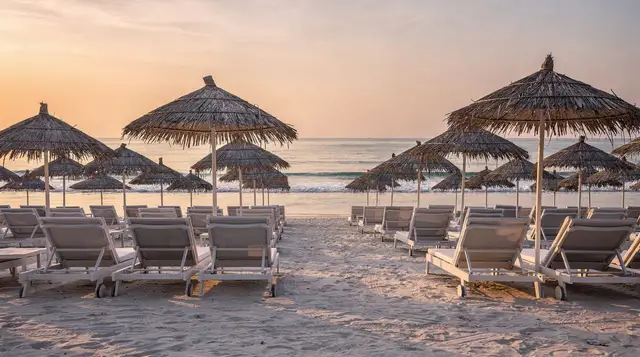
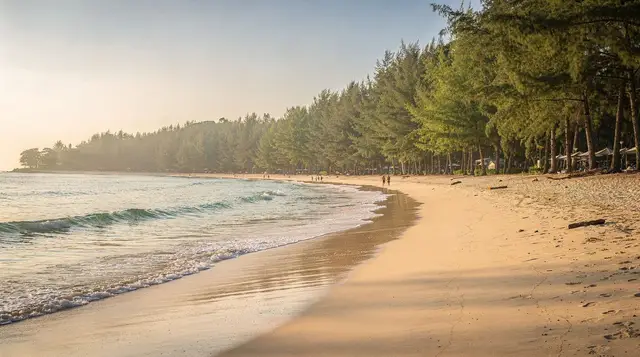
Chalong isn’t a place you go to relax on sand. It’s a working boat terminal and, a few minutes inland, the island’s busiest temple — the two together make it one of the most visited spots in south Phuket despite having no beach to speak of.
The junction everything in south Phuket funnels through
Chalong sits inland from the coast between Rawai and Kata Beach, built around a large roundabout that most traffic heading south has to pass through. That makes the Chalong roundabout one of the worst traffic bottlenecks on the island during peak hours, particularly mid-morning when day-trip vans are heading to the pier and mid-afternoon when they’re coming back. Build in extra time if you’re travelling through around 9-10am or 3-4pm, especially if you have a boat to catch — operators generally ask you to arrive well before departure precisely because this stretch of road is unpredictable.
The area around the roundabout has grown into a sprawl of dive shop offices, boat charter agents, car and motorbike dealerships and mid-range restaurants — functional rather than scenic, and mostly there to serve the pier traffic and the resident expat population rather than sightseers passing through.
Chalong Pier: where the day trips leave from
Chalong Pier (also called Ao Chalong) is the main departure point on Phuket for organised boat trips — Phi Phi, Coral Island, Racha Islands, James Bond Island, diving day trips and multi-day liveaboards all load passengers here, alongside Rassada Pier closer to Phuket Town. If your hotel is anywhere in the south of the island, chances are your tour van drops you at Chalong before you board.
The pier itself is unglamorous — a working jetty with a car park, ticket counters and a row of stalls selling drinks and snacks rather than anything resembling a tourist attraction. Arrive at the time your tour operator specifies rather than early; there’s little reason to linger, and the car park gets congested in the 30 minutes before each major departure wave. Toilets and basic snacks are available at the pier, but don’t expect much beyond that — bring water and sun protection with you rather than assuming you can buy it there.
For a full breakdown of which islands depart from where, see island hopping from Phuket, and for the boat-type trade-offs, speedboat vs longtail boat.
Chalong Pier vs Rassada Pier
The two piers cover overlapping but not identical routes, and getting this wrong is a common reason people miss their boat. Rassada Pier, closer to Phuket Town, tends to handle more of the Phi Phi and Krabi-direction ferry and speedboat traffic, while Chalong handles more of the day-trip and diving departures south and east of the island. The split isn’t absolute and changes by operator and season — always check the pier name printed on your ticket rather than assuming, and if you’re being picked up by a tour van the driver will handle the routing for you regardless.
Diving out of Chalong
Chalong is also the default base for Phuket’s dive operators — most beginner courses, fun dives and liveaboard departures use the pier or a dive shop within a few minutes of it, since it’s close to the main dive sites at Racha Noi, Racha Yai, the King Cruiser wreck and, further out, the Similan Islands. If you’re planning to get certified or want a multi-day course rather than a single introductory dive, this is where most of it happens:
3-day PADI open water diver certification Exclusive 3-day open water learn-to-dive courseA standard open-water certification course runs three days, combining classroom or e-learning theory, confined-water pool sessions and four open-water dives, and costs meaningfully less in Phuket than in most western countries — one of the reasons the island has become such a common place for people to get certified on holiday. For the broader picture on whether diving or snorkelling suits your trip better, see scuba diving in Phuket for beginners, diving season in Phuket, king cruiser wreck dive guide and snorkelling vs diving.
Wat Chalong: Phuket’s most visited temple
A short drive from the pier, Wat Chalong is the largest and most visited Buddhist temple on the island, built around a multi-tiered golden chedi said to house a relic of the Buddha. The temple complex dates back over a century and is closely tied to two revered monks credited with helping mediate a 19th-century tin-miners’ rebellion, which is part of why it holds particular significance for Thai visitors rather than being purely a sightseeing stop.
It draws both Thai worshippers and tour groups in roughly equal numbers, which means it’s rarely quiet but also rarely feels artificial — active worship happens alongside the sightseeing, and it’s common to see locals making merit, lighting incense and adding gold leaf to statues while a tour group photographs the chedi a few metres away.
A few practical points that matter more here than at quieter temples:
- Dress code is enforced, not just suggested: shoulders and knees covered for both men and women, or you’ll be asked to rent a wrap at the entrance.
- It’s usually visited as part of a combined tour with the Big Buddha viewpoint and Phuket Old Town, since all three sit within a 20-30 minute loop.
- Free to enter, though there are donation boxes throughout and a small fee for some inner rooms.
- Weekday mornings are noticeably calmer than weekends and the middle of the day, when the tour bus groups tend to arrive in waves.
See our dedicated Wat Chalong visiting guide and temple etiquette in Thailand for the full rundown before you go.
Getting to Chalong
| Method | Cost | Time from Phuket Town | Notes |
|---|---|---|---|
| Grab | Around 150-250B (4-7 USD) | 15-20 minutes | Cheapest reliable option |
| Metered/tourist taxi | 300-450B (9-13 USD) flat rate | 15-20 minutes | Fixed rate at most stands |
| Tour van (pre-booked) | Included in tour price | Varies by hotel pickup | Standard for pier departures |
| Self-drive scooter | 200-300B/day (6-9 USD) rental | 20-25 minutes | Watch the roundabout in peak hours |
From Kata Beach or Rawai, Chalong is a much shorter hop — 10-15 minutes by Grab for around 100-150B (3-4 USD). From Patong, expect closer to 30 minutes and 300-400B (9-11 USD) depending on traffic through the roundabout. Our getting around Phuket guide covers the island-wide transport picture in more detail, and scooter rental in Phuket if you’d rather drive yourself.
Restaurants and daily life around Chalong
Away from the pier and the temple, the Chalong area is mostly residential and functional — a mix of Thai eateries, dive shop cafes and a handful of restaurants that cater to the sizeable population of long-term foreign residents and dive instructors based nearby. It’s not a dining destination the way Phuket Old Town is, but it’s a reasonable, inexpensive place to eat if you’re passing through before or after a boat trip. Don’t plan a special trip here purely to eat — this is a stop to fuel up before or after the pier or the temple, not a culinary destination in its own right.
Liveaboards and multi-day dive trips
Beyond single-day dive trips, Chalong is also where most Similan Islands liveaboard boats load passengers, typically for overnight or multi-night trips running from around October or November through April, when the Similan and Surin marine parks are open. These are a different booking category from a day trip — you’re committing to a boat for two or more nights, sharing cabins, and following a fixed itinerary of dive sites rather than choosing on the day. If a single day of diving from Chalong leaves you wanting more, a liveaboard is the natural next step rather than repeating day trips on consecutive days. See our Similan liveaboard guide for how to choose between operators and cabin classes.
A base for boat owners and long-term residents
Beyond the tourist-facing pier operations, Chalong Bay is also where a meaningful number of private yacht and sailboat owners keep their boats long-term, drawn by the marina facilities and the bay’s relative shelter compared to more exposed anchorages elsewhere on the island. It’s part of why the area has a denser concentration of boat maintenance shops, chandlery stores and marine services than anywhere else on Phuket — useful context if the sheer number of “boat” and “yacht” businesses along the main road seems disproportionate to what look like fairly ordinary streets.
Chalong Bay Rum Distillery
A few minutes from the roundabout, Chalong Bay Rum runs a small-scale agricole-style distillery open for walk-in tours and tastings — one of the few genuine production tours on the island rather than a purely retail-focused stop. Visits typically run 30-45 minutes, covering the cane-to-bottle process and finishing with tastings, and it’s a reasonable add-on if you’re already in the area for the temple or the pier rather than a destination worth a special trip on its own. It’s often bundled with a Big Buddha or Wat Chalong half-day tour by local operators, since the three sit within a short drive of each other.
What’s overrated here
Chalong itself, as a destination independent of the pier and the temple, isn’t worth a dedicated stop — there’s no beach, no old town charm, and the roundabout area is mostly car dealerships, dive shop offices and mid-range restaurants catering to residents rather than sightseers. Some souvenir stalls near the temple oversell mediocre carved wood and jewellery at tourist prices; the actual value here is functional (getting on a boat, visiting one significant temple), not aesthetic. Don’t build a whole day around Chalong on its own — combine it with a pier departure or a temple loop, not as a standalone outing.
Where Chalong fits in a Phuket itinerary
Most visitors pass through Chalong at least twice without meaning to make it a “destination” in its own right — once heading to a boat trip, once visiting Wat Chalong as part of a temple loop with the Big Buddha and Phuket Old Town. If you’re building a 5-day or 7-day itinerary with a diving day and a culture day, Chalong will likely show up on both. It also pairs naturally with Rawai and Promthep Cape as a south-of-the-island half-day loop, and for a diving-focused week it’s effectively your daily starting point rather than a one-off stop.
Weather and seasonal practicalities
Chalong’s usefulness as a departure hub shifts noticeably with the season. From roughly November to April, seas are calmest and most day-trip and diving routes run without disruption, which is also when the pier is busiest and the roundabout traffic is at its worst. From May to October, the southwest monsoon brings rougher water and a higher chance of tours to more exposed destinations — the Similan Islands in particular — being cancelled or rerouted, since that marine park closes entirely for part of this period.
Closer, more sheltered routes like Coral Island tend to keep running through the rainy season with less disruption, though you should still expect the occasional cancelled or postponed departure and build flexibility into your schedule if a specific boat trip matters to your itinerary. See our Phuket monsoon season guide for the fuller picture on what does and doesn’t run in the off-season.
Frequently asked questions about Chalong
Is there a beach at Chalong?
No, not one worth visiting. The coastline near the pier is a working harbour rather than a swimming beach. For a beach, go to Nai Harn or Kata Beach, both a short drive away.
Do all Phuket island boat trips leave from Chalong Pier?
Most do, alongside Rassada Pier nearer Phuket Town — check the pier name printed on your ticket rather than assuming, since operators split departures between the two and getting this wrong means missing your boat.
How long does a Wat Chalong visit take?
Most visitors spend 30-45 minutes at the temple itself, longer if combined with the Big Buddha and Old Town on a half-day tour.
Is diving in Phuket suitable for complete beginners?
Yes — Chalong-based operators run introductory dives and full certification courses for people who have never dived before, typically with a half-day of pool or shallow-water training before the first open-water dive.
How much does it cost to get PADI certified in Phuket?
A standard three-day open-water course is generally cheaper here than in most western countries, though exact pricing varies by operator and season — check current rates directly with dive shops before booking, since course inclusions (equipment, certification fees, extra dives) vary.
Is Chalong a good place to stay?
It’s workable as a low-cost base with easy access to the south and to dive and boat departures, but it has none of the resort atmosphere of the west coast beaches. Most visitors pass through rather than stay here — see where to stay in Phuket for area-by-area guidance.
Can I book a boat trip directly at Chalong Pier without pre-booking?
It’s possible with some operators, particularly for shorter routes like Coral Island, but availability and pricing are far less predictable than booking in advance, especially in high season when boats fill up early. Pre-booking is the more reliable approach if you have a specific date in mind.
What’s the best time of year to dive from Chalong?
Roughly November to April, when seas are calmest and visibility is generally best, including for the Similan Islands season which runs within that window. Diving is still possible outside these months at some sites, but conditions are less predictable — see our diving season in Phuket guide for month-by-month detail.