Temple etiquette in Thailand
What should you wear to a Thai temple?
Shoulders and knees covered for everyone, regardless of gender, with shoes removed before entering any building housing a Buddha image. Loose, opaque clothing is safest; some temples lend sarongs at the entrance, but don't count on it and dress appropriately before you arrive.
Rules that apply everywhere, not just at famous temples
Thailand has tens of thousands of Buddhist temples, and the core etiquette rules are consistent across nearly all of them, whether it’s Wat Chalong, a small neighbourhood temple with no tourists at all, or a temple you stumble into unplanned on a scooter ride.
Learning the rules once and applying them everywhere is more useful than trying to look up site-specific guidance every time — the expectations barely change from temple to temple. That consistency is actually good news for visitors: unlike some etiquette questions that genuinely vary by region or venue, temple behaviour in Thailand is one of the more predictable things to prepare for in advance, and a single read of this guide should cover you for the rest of the trip.
Dress code
- Shoulders and knees covered. This applies to everyone, not just women — men in shorts and vest tops are turned away just as often. Loose trousers or a long skirt plus a T-shirt or shirt with sleeves is the safe baseline.
- Avoid overly sheer or tight clothing, even if it technically covers shoulders and knees; the spirit of the rule is modesty, not just literal coverage.
- Bring a scarf or light shawl as backup if you’re travelling in beachwear most of the day and might end up at a temple unplanned — it covers shoulders in seconds without needing a full outfit change.
- Some temples lend sarongs at the entrance for visitors who show up underdressed, but stock isn’t guaranteed and queues for the loan desk can eat into your visit — dressing correctly before you arrive is always the more reliable option.
Before you go inside
- Remove your shoes before entering any building that houses a Buddha image — this includes ordination halls, most chapels, and some viharas, though open-air grounds and courtyards are usually fine to walk in footwear. Watch for a shoe rack or a pile of sandals at the door as the visual cue.
- Check for signage or a monk’s instruction if you’re unsure whether a specific building requires shoe removal — it’s a small thing to ask and avoids an awkward correction.
- Wear socks you don’t mind showing, or slip-on sandals rather than trainers with laces — you’ll be removing and putting shoes back on repeatedly over a temple-heavy day, and complicated footwear slows that whole process down every single time, especially on a day covering several temples back to back.
Behaviour inside
- Never point your feet at a Buddha image or a monk. Feet are considered the lowest, least respectful part of the body in Thai culture. If you’re sitting on the floor, tuck your feet behind you or to the side rather than stretching them forward.
- Don’t touch or climb on Buddha statues, including for photos. This is treated as a serious breach, not a minor faux pas, and has led to real legal consequences for tourists in some documented cases.
- Keep your head lower than a monk’s where practical, and never touch a monk’s head, which is considered the most sacred part of the body.
- Women should not touch monks or hand objects to them directly. If you need to give a monk something, place it down for him to pick up, or have a male companion hand it over instead.
- Speak quietly and avoid loud laughter inside enclosed prayer spaces, even if the outer grounds are busy and noisy.
- Turn phones to silent, and think twice before video-calling or playing media audibly anywhere near an active shrine.
Photography: what’s generally fine, and what isn’t
Photographing temple architecture, grounds and Buddha images from a respectful distance is broadly accepted at almost every temple in Thailand, including working ones. Where it gets more sensitive is photographing monks or devotees up close without asking, or treating an active ceremony as a photo opportunity rather than something happening around you. If a ceremony is underway — chanting, an offering ritual, a procession — it’s better to observe quietly from the periphery than to move in for a better angle. Some temples restrict photography inside specific chapels or around particular relics; look for signage, and when in doubt, ask a monk or temple staff member rather than assuming it’s fine.
Respect for the monarchy: a related but distinct set of rules
Thai Buddhism and the Thai monarchy are closely intertwined in public life, and it’s worth understanding this even though it’s a separate topic from temple visiting specifically. Thailand has strict lèse-majesté laws that criminalise insulting the monarchy, and images of the King and royal family are treated with formal respect throughout the country, including inside many temples where royal portraits or donations are displayed.
Practical takeaways for visitors: don’t make jokes about the monarchy, don’t handle currency (which bears the King’s image) disrespectfully — stepping on a fallen banknote to stop it blowing away, for instance, is a genuinely offensive gesture — and stand for the royal anthem if it plays in a public space like a cinema. None of this requires deep study, just basic awareness that this is treated far more seriously in Thailand than casual remarks about public figures are in many other countries.
Amulets, offerings and merit-making — what visitors sometimes misunderstand
You’ll likely see small tables or counters near a temple entrance selling amulets, small Buddha images and other devotional objects — these aren’t souvenirs in the tourist-shop sense, even though visitors are welcome to buy them. Thai Buddhists collect and wear amulets for protection and merit, often blessed by a specific respected monk, and a serious collector’s market exists entirely separate from tourism.
As a visitor, it’s fine to browse or buy respectfully, but treating these items as novelty trinkets, haggling aggressively over price, or handling them carelessly reads as disrespectful in a way that’s easy to avoid simply by being deliberate. The broader concept behind all of this — merit-making, or tam bun — underlies most of what you’ll see happening at a temple: lighting incense, offering flowers, donating to a fund, even releasing caged birds or fish at some temples. Understanding that these are acts aimed at accumulating spiritual merit, not empty ritual, reframes a lot of what might otherwise look like unexplained background activity.
Meditation and monk-chat programs: a more structured way in
If you’d like a deeper engagement with a temple than a quick walk-through, some temples and cultural operators offer structured meditation sessions or informal monk-chat programs, where a monk speaks with small groups of visitors about Buddhist practice and answers questions. These tend to be more forgiving of a first-timer’s uncertainty than an unstructured visit, since a facilitator is actively guiding the etiquette in real time rather than leaving you to infer it from context. It’s a reasonable option for visitors who want to understand the “why” behind these rules, not just follow them.
If you’re travelling with children
Kids are generally welcome at Thai temples, and there’s no separate child-specific dress code beyond the same shoulders-and-knees rule applied sensibly — a T-shirt and shorts past the knee is fine for most children, though the same modesty principle applies as they get older.
The bigger consideration is behaviour rather than dress: running, loud play or touching statues is corrected the same way it would be for an adult, so it’s worth briefing kids beforehand on the basics (shoes off, quiet voices, no climbing) rather than managing it reactively once you’re inside. Genuinely long visits — multiple temples back to back — tend to test younger children’s patience more than any specific rule does, so pacing the day around their attention span is often more useful than any etiquette point on this page.
How this applies beyond Phuket
These core rules hold across Thailand, not just on this island — the same dress code, shoe removal and behavioural expectations apply at temples in Bangkok, Chiang Mai or anywhere else in the country. What varies more by location is enforcement: heavily touristed sites tend to have staff actively checking dress code at the entrance, while smaller or rural temples rely on visitors already knowing and following the rules unprompted, which is exactly the situation this guide is meant to prepare you for. Carrying a spare scarf or sarong in your day bag for the whole trip, not just on days you’ve planned a temple visit, is a small habit that pays off more than once on an island where you can end up near a temple unplanned.
Common mistakes first-time visitors make
- Assuming beachwear is fine “just for a quick look.” Even a brief, casual visit is subject to the same dress code as a longer one — temples don’t make exceptions for a five-minute stop.
- Sitting with feet pointed at a Buddha image without realising it, especially when settling onto the floor for photos or a rest.
- Climbing on or leaning against statues for photos. This has resulted in real fines and, in a small number of publicised cases, deportation or prosecution for tourists.
- Treating mortification rituals or intense ceremonies as spectacle first, religious practice second. See the Phuket Vegetarian Festival for a specific example where this distinction matters a lot.
- Walking through an active procession or ceremony path to get a better vantage point or a shortcut — this is both disrespectful and, at events involving fire or blades, genuinely unsafe.
- Assuming all temples are tourist attractions. Many are active places of worship first; treat an empty neighbourhood temple with the same basic respect as a famous one, even without other visitors around to set the tone.
What to bring for a temple visit
A lightweight scarf or sarong, closed or easily removable shoes rather than complicated lace-up boots, a small bag for carrying shoes if a rack isn’t available, and cash for optional donations, which are typically informal and left in a labelled box rather than requested directly. None of this needs to be elaborate — the goal is showing up prepared rather than needing to borrow or improvise on arrival, since a rushed last-minute cover-up at the entrance is rarely as comfortable or as neat as clothing chosen in advance — and it leaves you free to enjoy the visit rather than manage an outfit problem for the first ten minutes inside.
Building temple visits into a wider itinerary
Temple etiquette matters most in the moment, but it’s also worth thinking about upfront when planning which days to dedicate to culture versus beaches. Most visitors bundle Wat Chalong, the Big Buddha and Old Town into a single half- or full-day stretch rather than spreading them across a trip, which is reflected in how they appear together in most 3-day and 5-day Phuket itineraries. Packing appropriately for that day specifically — rather than assuming your beach outfit will do — is the single most common gap this guide is meant to close.
Big Buddha, Wat Chalong and town guided tourWhere these rules apply most visibly in Phuket
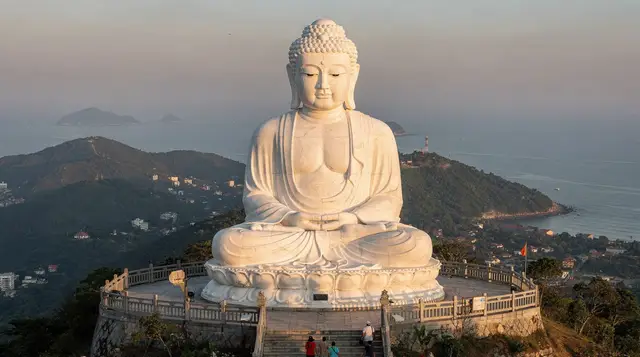
Wat Chalong is the temple where visitors most often encounter these rules in practice, given its high visitor volume, and the Big Buddha enforces dress code strictly given its status as an active pilgrimage site as much as a viewpoint. Smaller temples across Phuket Old Town and elsewhere on the island follow the same rules with less formal enforcement — which makes self-policing your own behaviour more important, not less. If your trip includes the Phuket Vegetarian Festival, be aware that shrine etiquette during that period carries extra layers beyond what’s covered here.
Frequently asked questions about temple etiquette in Thailand
What should I wear to visit a Thai temple?
Shoulders and knees covered, for all genders, with shoes removed before entering buildings that house a Buddha image. Loose, opaque clothing is the safest choice; don’t rely on borrowed sarongs being available.
Is it disrespectful to take photos inside a temple?
Photographing architecture and Buddha images from a respectful distance is generally fine at most temples. Photographing monks or active ceremonies up close without asking, or treating a ritual as a photo opportunity, is not.
Can women touch monks in Thailand?
No. Women should avoid physical contact with monks, including handing objects directly to them — place items down for the monk to pick up instead.
Why does respect for the monarchy come up in temple etiquette guides?
Thai Buddhism and the monarchy are closely linked in public life, and Thailand’s lèse-majesté laws treat disrespect toward the King and royal family as a serious offence — awareness of this extends naturally into how visitors are expected to behave more broadly, including at temples.
What happens if I accidentally break a temple rule as a tourist?
Minor mistakes — like briefly pointing your feet the wrong way — are usually met with a polite correction rather than serious consequence. More serious breaches, like climbing on statues, have led to real fines or prosecution in documented cases, so it’s worth taking the core rules seriously rather than assuming leniency.
Do these rules apply at every temple, or just famous ones like Wat Chalong?
They apply everywhere, including small neighbourhood temples with no tourist infrastructure. The lack of signage or enforcement at a quiet temple doesn’t lower the expectation.
Is it okay to visit a temple during an active ceremony?
Generally yes, as a quiet observer from the periphery, but don’t walk through the ceremony path or treat it as a spectacle — some events, like Phuket’s Vegetarian Festival processions, require extra caution and distance for safety as well as respect.
tours.culture-temples
Verified deep-linked GetYourGuide tours. Book through these links and we earn a small commission at no cost to you.
These are our own photographs of Phuket, not the operator's pictures of this tour — open the tour page to see those.