Snorkelling vs diving in Phuket
Should I snorkel or dive in Phuket?
Snorkel if you want to see the reef without training, certification or a big time commitment; dive if you want to reach deeper, more intact coral and wrecks, are comfortable with equipment, and are willing to spend a day (or several) getting certified first.
The honest trade-off, not a sales pitch
Every dive shop in Phuket has an incentive to upsell snorkellers into a “discover scuba” taster or a full course, and every boat operator selling snorkel trips has an incentive to make it sound like you’re not missing much by staying on the surface. Both are wrong often enough that it’s worth working through the actual differences rather than trusting whichever brochure you picked up first. The short version: snorkelling and diving overlap less than people expect, because most of what makes coral reefs visually striking — depth, structure, the fish that stay lower in the water column — sits below where a snorkeller comfortably free-dives.
What you actually see, realistically
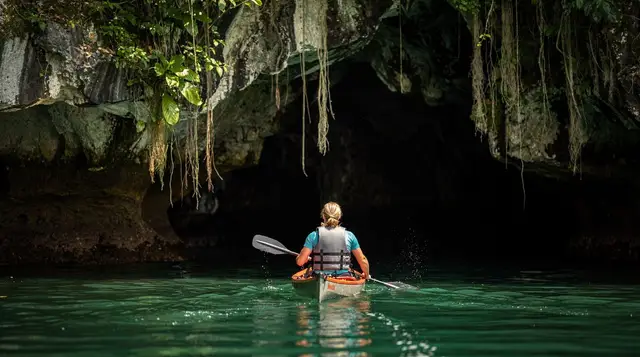
Snorkelling keeps you at the surface, looking down through 1–4 metres of water at whatever’s shallow enough to see clearly — reef flats, shallow coral gardens, and fish that live near the surface like sergeant majors, parrotfish and the occasional turtle.
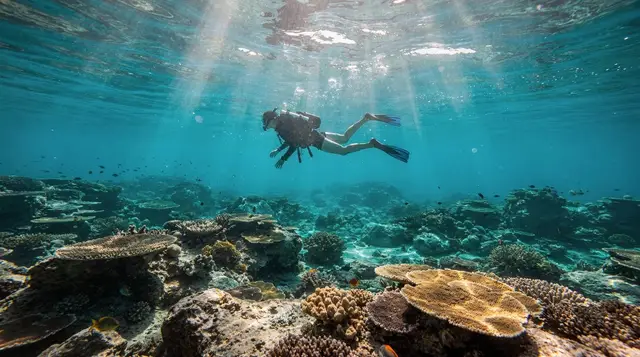
Diving takes you to 5–30 metres depending on the site and your certification, where the coral is typically denser and less sun-bleached, and where you’ll encounter species that rarely come shallow: moray eels tucked into crevices, leopard sharks resting on sand, and at wrecks like the King Cruiser, structure that simply isn’t visible from the surface at all. If seeing a wreck, a resting shark or genuinely dense coral matters to you, diving delivers something snorkelling structurally can’t.
Certification, time and cost
| Snorkelling | Discover Scuba (taster) | Open Water certification | |
|---|---|---|---|
| Training needed | None | 30–60 min briefing | 3 days |
| Cost | 1,500–3,500 B ($43–100) per trip | 3,500–5,500 B ($100–157) | 12,000–16,000 B ($340–455) |
| Depth reached | Surface, 1–4m | Up to ~12m with instructor | Up to 18m independently |
| Certification gained | None | None | PADI Open Water (lifetime) |
A Discover Scuba session is the honest middle ground worth knowing about: no course required, an instructor stays with you the whole dive, and you get a genuine (if shallow and supervised) taste of what diving feels like before committing three days and a real budget to certification. It’s a reasonable way to find out if diving is for you before booking the PADI Open Water course.
Discover scuba diving at Racha YaiFitness, comfort and who should skip which
Snorkelling requires basic swimming comfort and the ability to float and breathe through a tube without panicking — genuinely accessible to most people, including many non-swimmers with a life jacket, though not a great fit for anyone who panics in open water. Diving adds equalisation (clearing pressure in your ears as you descend), buoyancy control, and comfort breathing through a regulator, which some people take to immediately and others find unexpectedly stressful on a first attempt.
Neither activity is inherently more dangerous when done correctly with a reputable operator, but diving has more that can go wrong if training or equipment checks are skipped — which is part of why certification exists in the first place, not just industry gatekeeping.
If you have ear, sinus or certain heart or lung conditions, check with a doctor before diving specifically — pressure changes at depth are the relevant risk, and this doesn’t apply to snorkelling at the surface.
Where each one is actually good in Phuket
Best for snorkelling: Racha Islands, Coral Island (Koh Hae), and the shallower stops on a Phi Phi day trip — see best snorkelling spots in Phuket for the full rundown, including which beaches you can snorkel from directly without a boat at all.
Best for diving: Racha Islands again (genuinely works for both), the King Cruiser wreck and Shark Point for something different from reef diving, and the Similan Islands for the clearest water and most intact coral, seasonal closure permitting — see diving season in Phuket for when that window is actually open.
Doing both on the same trip
Plenty of boats run mixed trips where snorkellers and divers share the same boat and roughly the same stops, with divers going deeper while snorkellers stay at the surface nearby. It’s a genuinely good option for mixed groups — a couple where one person is certified and the other isn’t, or a family with kids too young to dive. Check specifically that the operator supports both activities on the same trip before booking; some dive-focused boats don’t carry snorkel gear or a second guide for surface supervision.
Racha Island snorkelling boat tourBudget for a wider Phuket trip
If diving or snorkelling is one part of a longer trip rather than the whole point, it’s worth sanity-checking the spend against everything else — accommodation, food, transport — using the Phuket trip budget guide. A single snorkel day trip is a modest add-on; a full Open Water course plus gear rental for the rest of the trip is a more meaningful line item, especially if you’re also considering island hopping from Phuket or Coral Island separately.
A note on beach safety either way
Whether you’re snorkelling off a boat or wading in from a west-coast beach to reach shallow reef, check the flag system before going in the water, especially during the southwest monsoon months. Red flags mean dangerous conditions and rip currents that have caused real drownings on Phuket’s west coast — see Phuket beach safety and riptides before assuming calm water just because it’s sunny on the beach.
So which one, actually
Pick snorkelling if you’re short on time or budget, travelling with kids or non-swimmers, or simply want a relaxed day on the water without training. Pick diving if you’re drawn to wrecks, deeper reef, or the specific feeling of breathing underwater, and you’re willing to spend the time and money on proper certification rather than a rushed taster. Neither is the objectively “better” choice — they’re different activities that happen to share a boat and a coastline.
Equipment: what’s yours, what’s rented
Snorkel trips almost always include mask, snorkel and fins in the price, though the quality varies — budget trips sometimes hand out worn, ill-fitting masks that leak, which ruins the experience far more than the reef itself ever would. If you snorkel more than once a trip, bringing your own well-fitted mask is a genuinely worthwhile upgrade; a leaking mask is the single most common complaint from first-time snorkellers, and it’s almost always a fit problem rather than a fear-of-water problem.
Diving involves considerably more gear — BCD, regulator, weights, tank, wetsuit — nearly always included in the trip or course price and fitted by the dive shop rather than something a casual traveller would own. If you dive regularly elsewhere in the world, some divers do travel with their own mask, regulator and computer for comfort and familiarity, but this isn’t necessary for an occasional Phuket trip.
Physical after-effects worth knowing about
Snorkelling has essentially no lingering physical effects — you can swim, fly or dive again immediately afterward. Diving is different: because of nitrogen absorbed under pressure, there’s a mandatory surface interval before flying (typically at least 12–24 hours after a single dive, longer after multiple dives or a decompression dive), which matters directly if your Phuket trip ends with a flight shortly after a final dive day. Plan your last dive day with this in mind rather than discovering the constraint at the airport. This isn’t a concern for snorkelling at any point in a trip, including the day of a flight.
A word on marine life expectations either way
Neither snorkelling nor diving in Phuket delivers the density of marine life you’d see on a top-tier reef system elsewhere in the world, and it’s worth setting that expectation honestly rather than promising a wildlife spectacle. What Phuket does deliver reliably is accessible, close-to-shore reef and island access without a long flight or liveaboard commitment, which is a genuine trade-off in its own right — convenience and cost against the absolute best reef conditions globally. Anyone who has snorkelled or dived at a genuinely world-class destination before should adjust expectations accordingly; anyone trying either activity for the first time is likely to find Phuket a perfectly good — sometimes excellent — introduction.
Group trips with mixed experience levels
Families and groups with a wide range of comfort and experience levels are one of the more common real-world cases behind this decision, and the honest answer is that you don’t have to pick one activity for the whole group. A parent who dives and a child who’s too young to be certified, or a couple where one person gets seasick easily and the other wants to go deep, can genuinely both be accommodated on the right boat — it just takes checking specifically that a trip supports both rather than assuming. Booking platforms don’t always make this obvious from the listing title alone, so a direct question to the operator before paying is worth the extra step.
What first-timers consistently get wrong
The most common mistake with snorkelling is skipping the practice float-and-breathe check in shallow water before heading to the actual reef — a leaking mask or unfamiliar breathing rhythm is far more manageable to sort out standing in waist-deep water than thirty metres from the boat. The most common mistake with a first dive, even a supervised Discover Scuba session, is over-breathing from nerves in the first few minutes, which burns through air faster than expected and can cut a first dive shorter than it needed to be. Both are entirely normal, entirely fixable with a moment to settle, and neither should be read as a sign the activity “isn’t for you” based on one shaky start.
Cost over a full trip, not just a single day
A single day of either activity is a modest line item in a Phuket trip budget, but the comparison changes if you’re considering multiple outings. Three snorkel day trips cost roughly the same as one certification course, which then unlocks every subsequent dive at a lower per-trip cost than an equivalent snorkel trip in most cases, since dive-focused boats often bundle more into the price. If you already know you’ll want to dive again on a future trip — elsewhere in Thailand or further afield — getting certified in Phuket, where training conditions are generally good and course prices are competitive regionally, is a reasonable one-time investment rather than a cost specific to this single visit.
The view from a boat crew’s perspective
Boat crews and instructors who run mixed snorkel-and-dive trips day after day tend to have a clear-eyed, unsentimental view of both activities that’s worth borrowing: snorkelling is genuinely enjoyable and doesn’t need to be treated as diving’s lesser cousin, and diving isn’t automatically “better” just because it’s more technical. The two activities suit different people, different budgets and different amounts of available time, and a crew that’s spent years watching both groups get real enjoyment out of the same reef from different depths generally does not push you toward the more expensive option just because it’s more expensive.
If you’re still undecided, try both on the same trip
For anyone genuinely torn between the two, there’s a low-risk way to settle it without over-committing: book a snorkel day first, then add a Discover Scuba session later in the same trip if the reef from the surface leaves you wanting to see more of it up close. This sequencing also has a practical benefit — a snorkel day gets you comfortable in open water and around a boat before you add equipment and breathing technique to the mix, which tends to make a first Discover Scuba session less overwhelming than jumping straight into diving cold.
The bottom line for planning purposes
Neither activity requires a large amount of advance planning in Phuket — both are widely available, bookable a day or two ahead in most cases, and forgiving of a loosely planned trip. The one exception is a full Open Water course during peak weeks in December and January, which is worth booking a little further ahead given demand. Everything else covered here, from a single snorkel trip to a Discover Scuba taster, can reasonably be decided once you’re already on the island and have a feel for the weather and how the rest of the trip is going.
Frequently asked questions about snorkelling vs diving in Phuket
Can a non-swimmer go snorkelling in Phuket?
Yes, with a life jacket and a boat crew that supports beginners — many Phuket snorkel trips are set up for exactly this. Diving requires more baseline water comfort since you’re managing equipment and breathing techniques.
Is Discover Scuba the same as being certified?
No. It’s a one-off supervised taster dive with an instructor, capped at a shallower depth, and doesn’t grant any certification. You’d need the full Open Water course to dive independently afterward.
Do snorkellers and divers see the same reef?
Partially. Shallow reef flats overlap, but the densest coral, wrecks and species like resting sharks and moray eels sit deeper than most snorkellers reach.
Which is cheaper, snorkelling or diving?
Snorkelling, by a wide margin, for a single day out. Diving becomes a bigger cost mainly if you get certified, which is a one-time expense that then makes every future dive trip cheaper per outing.
Can I snorkel and dive on the same boat trip?
Often yes, if you check with the operator first — mixed trips exist specifically for groups where not everyone dives. Not every boat supports it, so confirm before booking.
Is it worth getting certified just for one Phuket trip?
If you’re only diving once, Discover Scuba is a lower-commitment way to try it. Full certification makes more sense if you’re planning multiple dive trips on this visit or expect to dive again elsewhere in the future.
tours.diving-snorkeling
Verified deep-linked GetYourGuide tours. Book through these links and we earn a small commission at no cost to you.
These are our own photographs of Phuket, not the operator's pictures of this tour — open the tour page to see those.