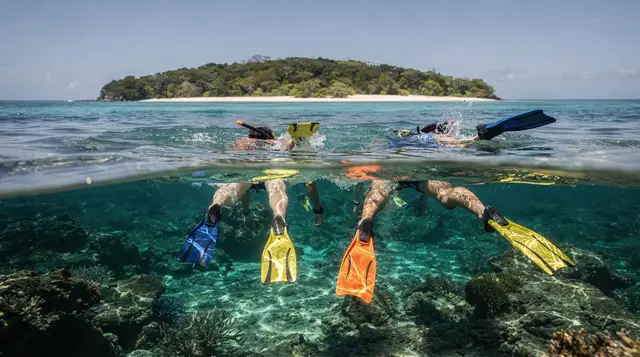
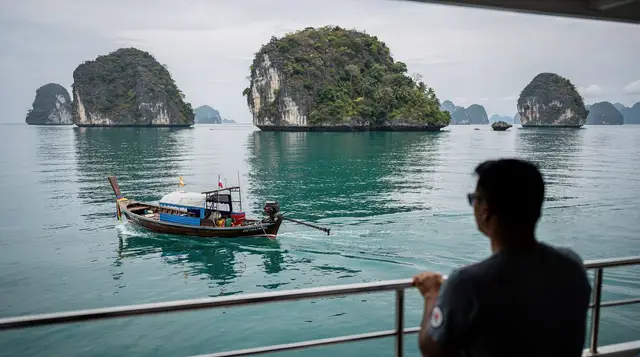
Private longtail boat hire in Phuket
Is it worth hiring a private longtail boat in Phuket?
Yes, for short hops to nearby islands like Coral Island or a stretch of coastline you want to explore at your own pace, and it's often cheaper per person than you'd expect if you're a small group. It's the wrong choice for long open-water crossings — to Racha, Similan, or Phi Phi — where a speedboat is faster, safer in rough weather, and not necessarily more expensive once you split the cost.
A longtail is a negotiation, not a fixed-price ticket
Renting a longtail boat directly from a pier in Phuket works nothing like booking a tour online. There’s no printed price list, no queue, and no guarantee that the first number you’re quoted has anything to do with what the boat actually costs to run. It’s a conversation with a boat owner or broker standing at the pier, and the price you end up paying depends on your negotiation, the season, how many other tourists are around, and — bluntly — how confident you look. This guide covers how that negotiation actually goes, what a fair price looks like, and the one thing a lot of first-timers get wrong: assuming a longtail can take them anywhere a speedboat can.
Where to hire one
The main piers where you can walk up and hire a longtail directly are Rawai Pier and Chalong Pier on the south coast, with a smaller cluster at Ao Yon near Cape Panwa. Rawai is the more informal, lower-pressure option — a row of boats moored just offshore with their owners sitting in the shade nearby — while Chalong is bigger, busier, and shares space with the speedboat operators running organised day trips, which means more competition but also more people trying to sell you a package instead of a plain boat rental.
If you’re staying on the west coast, some longtails also work directly off the beach at Kata Beach or Patong for short coastal trips rather than island crossings — useful for a quick trip along the coastline rather than out to open water. For anything involving an island, though, Rawai and Chalong are where the real fleet is.
How the negotiation actually works
Prices are quoted per boat, not per person, which is exactly why a longtail makes the most financial sense for a group of four to eight — split five or six ways, a boat that sounds expensive at first suddenly looks like one of the cheapest ways to see the water around Phuket. Boat owners will usually name a price first; treat it as an opening offer, not a fixed rate, and expect the real price to land 20-40% below the first number for a standard route once you’ve had a short back-and-forth. Going with a local Thai friend or having a hotel/guesthouse call ahead on your behalf tends to get a noticeably better starting price than walking up alone and asking in English.
A few things worth confirming out loud before you hand over any money: exactly which stops are included, how long you’ll spend at each one, whether fuel and any park or landing fees are part of the quoted price, and what time you’re expected back at the pier. Longtail owners are generally straightforward about this once asked directly, but a vague agreement is where misunderstandings — and arguments about extra charges at the end — tend to come from.
a private longtail boat tour to Coral Island is a good benchmark if you’d rather have a fixed, pre-agreed price and a known departure time instead of negotiating at the pier yourself — useful if haggling isn’t something you want to spend part of your holiday doing.
What a fair negotiation actually sounds like
A typical exchange at Rawai or Chalong Pier starts with you asking “how much to Coral Island, half day, for four people” and the boat owner naming a number — say 3,000 B. Rather than accepting or walking away, a reasonable counter is something like “how about 1,800 B” and letting the conversation settle somewhere in between, often around 2,000-2,200 B for that route and group size. Staying friendly and unhurried gets better results than an aggressive opening lowball; boat owners deal with tourists all day and respond better to a relaxed back-and-forth than to a hard bargaining tone.
It also helps to have a rough idea of the fair price range before you start — the table below — so you know whether an opening quote is reasonable or clearly aimed at a first-time visitor. If a price feels wildly out of line with what’s typical, it’s fine to simply thank the owner and walk a few boats down; there’s rarely only one longtail willing to take the trip you want.
Typical prices by route and duration
| Route | Duration | Typical price (per boat) |
|---|---|---|
| Short coastal hop or fishing spot | 1-2 hours | 800-1,500 B (~$23-43) |
| Coral Island (Koh Hae) return | Half day (3-4 hours) | 1,500-2,500 B (~$43-70) |
| Coral Island with extra stops | Full day (6-7 hours) | 2,500-4,000 B (~$70-115) |
| Multiple nearby islands, custom route | Full day | 3,500-6,000 B (~$100-170), highly variable |
These are per-boat prices for a standard longtail carrying up to around 6-8 people; expect to pay more in December-January high season and less if you’re negotiating on a quiet weekday in low season. a half-day private longtail island tour and a full-day version of the same trip are worth comparing against a pier negotiation if you want a nicer boat with cushioned seating and a fixed itinerary rather than the more basic wooden longtails that dominate the walk-up market.
What a longtail can’t do
This is the part most first-time renters get wrong. Longtail boats are shallow-draft, open, and built for calm, close-to-shore water — not for the longer open-water crossings to places like Racha Island, the Similan Islands, or Phi Phi.
Some operators will still offer to take you that far, especially in flat, calm-season conditions, but it’s a genuinely rougher and slower ride than a speedboat covering the same distance, and during the southwest monsoon (roughly May-October) many boat owners will refuse those longer crossings outright once the wind picks up, regardless of how much you’re offering to pay. Read our monsoon season guide for how that seasonal pattern affects boat trips generally.
The practical rule: for anything within about an hour’s calm-water run of the pier — Coral Island, a stretch of coastline, a quiet cove for a swim — a longtail is a genuinely good, often cheap option. For Racha, Similan, or Phi Phi, book a speedboat trip instead; see our speedboat vs longtail boat comparison for the full breakdown of when each makes sense, and our Racha Island day trip guide for how that particular route is normally run.
Longtails for a specific stretch of coast, not just islands
Not every longtail trip has to be about reaching an island at all. Hiring one for an hour or two to cruise a stretch of coastline — past Promthep Cape toward Nai Harn, or along the cliffs south of Chalong — gives you a completely different view of Phuket than the road does, and it’s one of the cheaper “activities” you can do on the island given how little it costs split between a few people. It’s also a reasonable way to reach small coves and beaches that are awkward or impossible to get to by road.
A sunset cruise is one of the more popular short-hire options: an hour or two on the water as the light drops, timed to pass a scenic stretch of coast without the fixed schedule or crowd of a bigger organised sunset tour. It’s a low-key way to fill an evening without committing to a full-day itinerary, and it’s usually one of the cheaper negotiations at the pier given the short duration involved.
Beyond Phuket: Koh Yao and Phang Nga Bay
If you’re staying near Chalong or planning a trip toward Phang Nga Bay, private longtails based out of Koh Yao Noi are a well-regarded way to see the limestone karsts and hidden lagoons at a slower pace than a big group speedboat tour allows. a private longtail island-hopping tour from Koh Yao covers this area properly if Phang Nga Bay and James Bond Island are on your list. See our Phang Nga Bay sea canoe guide and James Bond Island tour guide for how that whole area is typically visited.
Longtail vs speedboat: a straight comparison
Both boat types get hired privately in Phuket, and it’s worth knowing which suits your trip before you commit to a pier negotiation.
| Longtail | Private speedboat | |
|---|---|---|
| Best range | Short, close-to-shore hops | Longer open-water crossings |
| Typical price | 800-4,000 B per boat, half to full day | 8,000-25,000 B+ per boat |
| Speed | Slow, exposed to swell | Faster, more stable in moderate chop |
| Booking method | Negotiate directly at the pier | Usually booked online in advance |
| Character | Informal, flexible, closer to the water | More structured, better for longer distances |
If your plan involves Racha, the Similans, or Phi Phi, skip the longtail negotiation entirely and book a speedboat trip instead — see our Racha Island day trip guide and island hopping from Phuket guide for how those are normally organised. For everything closer, a longtail is worth the negotiation.
Common pier tactics worth knowing about
A handful of patterns come up often enough at Rawai and Chalong that it’s worth recognising them in advance. Some owners will quote a low headline price and then mention “extra” charges once you’re already on the boat — for fuel beyond a certain distance, for waiting time at a stop, or for a life jacket. Agreeing the full scope of the trip and the total price out loud before boarding, rather than just the headline number, avoids most of this. Others will push a longer, more expensive itinerary than you asked for, framing it as a better deal — it’s fine to simply restate what you actually want and let them requote.
None of this makes longtail hire risky or something to avoid; it’s a normal, low-stakes local negotiation once you know the pattern, and most boat owners are straightforward once a price is agreed. It’s simply a different transaction than booking a fixed-price tour online, and treating it that way avoids most of the friction.
Safety basics worth checking before you board
Ask for life jackets before you get in the boat — reputable operators carry them as standard, but it’s worth confirming rather than assuming, especially on older wooden longtails. Check that there’s some form of shade or shelter if you’re out for several hours in the middle of the day, since a longtail offers a lot less protection from sun than a covered speedboat. And agree your return time clearly: longtail owners are generally reliable about this, but a vague “we’ll head back when you’re ready” arrangement can turn into a longer wait than you expected if the owner has another booking lined up.
How this fits into a broader Phuket trip
A private longtail rental works best as one component of a longer stay rather than your only boat activity — pair it with an organised day trip to somewhere further out, like island hopping from Phuket, and use the longtail for the closer, more flexible parts of your itinerary. See our Phuket trip budget guide for how boat costs typically fit into a daily spend, and our getting around Phuket guide for transport once you’re back on land.
Treat a longtail hire as one of the more spontaneous, low-planning parts of a Phuket trip rather than something to lock in weeks ahead — unlike a Similan or Phi Phi day trip, there’s rarely a need to book in advance, and deciding the morning of, once you’ve checked the weather and how you’re feeling, works perfectly well.
If you’re staying in Rawai or Chalong specifically, a longtail hire is one of the easiest half-day activities to arrange on short notice, since both piers are within walking distance of most guesthouses in the area — no need to book anything before you arrive, just walk down and start the conversation. Visitors based further away on the west coast, around Patong or Kata, will spend more of their day just getting to and from the pier, which is worth factoring in when you’re deciding whether a longtail trip or a hotel-pickup speedboat tour is the better use of a day.
Frequently asked questions about private longtail boat hire in Phuket
How much does it cost to hire a private longtail boat in Phuket?
Roughly 800-1,500 B (about $23-43) for a short one-to-two-hour trip, up to 2,500-4,000 B (about $70-115) for a full day with multiple stops, priced per boat rather than per person.
Can a longtail boat take me to Phi Phi or the Similan Islands?
Not realistically. Those are longer open-water crossings better suited to a speedboat, and most longtail owners will decline the trip outright once conditions get rough, particularly during the southwest monsoon.
Do longtail prices include fuel and park fees?
Not always — this varies by operator and route, so confirm exactly what’s included before you agree a price, rather than assuming fuel and any landing fees are bundled in.
Is it better to book a longtail online or negotiate at the pier?
Negotiating at the pier can get you a lower price if you’re comfortable haggling, but booking a fixed-price tour online removes the uncertainty and guarantees a set itinerary and departure time, which suits travellers who’d rather not spend part of their day negotiating.
How many people can a longtail boat carry?
Most standard longtails comfortably carry 6-8 passengers, which is exactly why the per-boat pricing makes them cost-effective for small groups rather than solo travellers or couples.
Are longtail boats safe in Phuket?
Generally yes for their intended routes — short, close-to-shore hops in calm water — provided life jackets are worn and the operator isn’t pushing into open water in poor conditions. They’re not the right choice for longer, rougher crossings regardless of how experienced the boatman is.
tours.islands-boat-trips
Verified deep-linked GetYourGuide tours. Book through these links and we earn a small commission at no cost to you.
These are our own photographs of Phuket, not the operator's pictures of this tour — open the tour page to see those.