A week in Phuket on a budget
Phuket without a private driver
Phuket is not a cheap Thai destination compared with the north of the country, but it is meaningfully cheaper than its reputation once you swap private transfers for songthaews, taxis for shared minivans, and beach-club loungers for a towel on the sand. This itinerary is built around that swap: one guesthouse base, public and shared transport by default, and group tours instead of private charters wherever a group option exists.
The logic of the week is simple: spend where the experience is genuinely better, and refuse to pay for convenience you do not need. A boat day to the islands is worth real money because you cannot reach the reef any other way. A taxi ride across town is not, because a songthaew or a shared van will get you there for less, even if it takes a little longer. If you are still deciding how long to stay, how many days in Phuket helps you judge whether a full week suits your budget, and the 7-day itinerary shows the same week at a more comfortable level of spending if you want to compare.
Before you go: packing and paperwork
A budget trip is easier when the small things are sorted before you land. Pack light, since a guesthouse room rarely has space for more than a backpack and a small bag, and bring a reusable water bottle, a quick-dry towel for the free beaches, reef-safe sunscreen and a rain layer. The Phuket packing list covers the details. Check entry rules in the Thailand visa guide for Phuket, and take out cover through travel insurance for Thailand before you leave, because the one expense that wrecks a budget is an uninsured medical bill. A local SIM or eSIM also saves money by letting you use Grab and maps without hunting for wifi; see Phuket SIM card and eSIM for the options.
Day 1: Arrival by shared transport
Skip the private airport transfer and take the Airport Smart Bus or a shared minivan into town — it costs a fraction of a private taxi and only adds thirty to forty minutes. Base in Rawai or a guesthouse street just off Phuket Old Town: both have a genuine cluster of budget rooms, unlike the resort-dominated west coast. See getting around Phuket for songthaew routes and fares from day one.
Once you have dropped your bag, resist the urge to do too much. Arrival days are where budget travellers overspend: tired, hungry and unsure of prices, it is easy to accept the first taxi offer or sit down at the first restaurant with an English menu. Instead, walk a couple of streets away from the main road, look for the stall or small shop where local people are eating, and have a simple first meal there. Ask the guesthouse owner which songthaew stops are nearest and where the local market is; they are usually happy to point you to the places they use themselves. An early night after a long flight is also the cheapest thing you can do.
Day 2: Phuket Old Town on foot, for free
Old Town costs nothing beyond food: walk Thalang Road, Soi Romanee and Dibuk Road, photograph the shophouse facades and street art, and duck into any of the small museums that charge a token entry fee. Eat at the stalls rather than the sit-down restaurants aimed at tour groups — a plate of noodles or a rice dish runs 40-80 B (about 1-2.50 USD), a fraction of a restaurant price for the same food, often better.
Old Town street food walking tourIf you would rather go it alone, the Phuket Old Town walking route gives you a sensible order for the streets, and the Phuket street art guide explains what to look for on the walls. The shophouses themselves are worth a slow look; the Sino-Portuguese architecture guide tells you why they look the way they do. For lunch, the Phuket street food guide and Thai dishes to try in Phuket will help you order with confidence, which is half the battle when a menu has no English. Old Town is also where you can see the broader picture of Phuket Old Town as a place to linger rather than a box to tick.
Keep the pace slow in the heat. Walk in the morning, take a long lunch somewhere shaded, and then head back to the guesthouse or into a café for the hottest part of the afternoon. Cafés are cheaper than they look if you order one drink and stay a while, and the coffee and cafes guide points to good ones. In the evening, markets are the budget traveller’s best friend: see Phuket night markets and food for how to eat a full meal from several stalls without spending much.
Day 3: Songthaew to a west-coast beach
Beaches are free. Take the songthaew from Ranong Road in Old Town to Kata Beach or Karon — the fare is a small flat rate per person, far less than a taxi for the same route, though services thin out after early evening, so plan your return before dark. Bring your own towel and skip the paid sunbed row unless the shade is worth it to you.
Choosing between the beaches matters more than it seems. Kata is the easiest base for a first free beach day because it has a proper stretch of sand and plenty of cheap places to eat just behind it, while Karon is longer and often feels less busy. Patong vs Kata vs Karon sets out the differences, and best beaches in Phuket widens the choice if you want something quieter. Read Phuket beach safety and riptides before you swim, and pay attention to the flags, because free beaches rarely come with the same supervision as a hotel pool. If you want to keep costs down further, quiet beaches in Phuket are often the ones with the fewest vendors and no pressure to buy anything. Pack a lunch or buy from the small stalls away from the front row, where prices are noticeably friendlier than at the beachfront restaurants.
Day 4: Big Buddha and Wat Chalong by group tour
Both temples are free to enter (donation-based), but getting there independently by songthaew involves more than one change. A half-day group tour covering Big Buddha, Wat Chalong and a stop in Old Town is the better value option at this budget level than arranging your own transport twice.
Big Buddha and Old Town half-day tourWhichever way you go, dress properly. Shoulders and knees should be covered at both sites, and shoes come off at temple entrances; the temple etiquette guide explains the rules, and the dedicated Big Buddha guide and Wat Chalong visiting guide cover what you will find at each. Because entry is donation-based, the spend here is optional, which makes this one of the cheapest culturally rich days of the week. Bring water, since there is little shade at the Big Buddha viewpoint, and keep a small amount of cash for donations and a cold drink afterwards. The area around Chalong also has local restaurants that cost far less than the tourist places near the viewpoint, so it is worth eating there before heading back.
Day 5: Racha Island, on the shared boat
Snorkelling at Racha Island is one of the best value days in this itinerary — a shared big-boat trip is a fraction of a private charter’s cost and still gets you the same clear water. National park and pier fees are collected in cash on the day, typically 400-600 B (about 12-18 USD); factor that into the “cheap tour” price before you book.
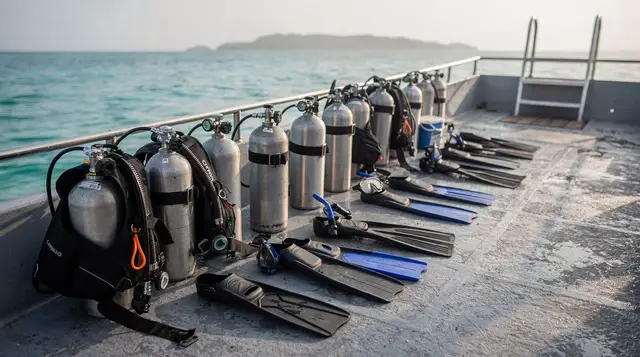
Racha Island snorkelling boat tourTake a few simple things to make the day count: a rash vest or a thin long-sleeved top, a dry bag for your phone, and sun protection that does not harm the reef. If you are unsure about the water, snorkelling vs diving in Phuket explains what to expect, and the Racha Island day trip guide describes the bays you are likely to visit. Choose a shared boat over a private hire: speedboat vs longtail boat shows why the big boat is the economical choice, and best snorkelling spots in Phuket is useful if you want to compare Racha with other places. Sea conditions change with the season, so check Phuket weather month by month before fixing the day, and keep this one flexible so you can move it if the weather turns.
Day 6: Rawai seafood market and Chalong Pier
Walk Rawai’s seafood market in the late afternoon: buy fish, prawns or squid by weight at the market stalls, then have it cooked to order at one of the restaurants facing it — you pay market price for the seafood plus a modest cooking charge, which comes in well below any seafood restaurant’s menu price for the same dish. If the timing works, a Phi Phi day trip by group speedboat from Chalong is the one splurge worth considering this week.
Phi Phi island hopping day trip by speedboatIf the budget is tight, skipping Phi Phi is a perfectly good choice, and spending the day at the seafood market and a free beach instead leaves you just as happy. For anyone weighing it up, the Phi Phi day trip guide and island hopping from Phuket explain what the trip involves and how to pick a sensible operator. Phi Phi Islands has the wider background on the place itself.
The evening is a good time to see the rest of Rawai. Watch the longtail boats come in, sit on the seafront and let the food do the work. The Rawai seafood market guide is worth reading first so that you know how to weigh, bargain and pay without being overcharged.
Day 7: Free morning and departure
Keep the last morning unscheduled — a last walk, a last market breakfast — and take the shared minivan or Airport Smart Bus back to HKT rather than booking a private transfer for a single one-way trip; see Phuket airport transfers for both options.
Pack the night before and leave the guesthouse with enough time in hand that you are not tempted by a rushed taxi. If you want to bring something home, shop at the markets rather than the airport: Phuket souvenirs, what to buy and bargaining in Phuket markets tell you what is worth carrying and how to pay a fair price. The Phuket airport guide covers what to expect on the way out, so there are no surprises at the terminal.
Where to stay on a budget
Rawai and the streets around Phuket Old Town have the island’s real concentration of budget guesthouses and small hotels, with Old Town adding walkability to restaurants and transport hubs. Patong has budget rooms too, but its prices climb fast in high season and its late-night noise is not ideal if you are trying to keep costs — and energy — under control; see where to stay in Phuket for the full neighbourhood comparison.
What a budget week actually costs
| Cost item | Daily range |
|---|---|
| Guesthouse room | 500-900 B (15-26 USD) |
| Street food, 3 meals | 200-350 B (6-10 USD) |
| Local transport (songthaew/shared van) | 100-250 B (3-7 USD) |
| Total per person, per day | 1,300-1,900 B (40-55 USD) |
Add the Racha Island day (around 1,500-2,200 B / 43-63 USD including park fees) and the Phi Phi day trip if you take it (around 2,000-2,800 B / 57-80 USD including fees) as one-off costs on top of the daily figure. See the full Phuket budget breakdown and is Phuket expensive for how this compares to other parts of Thailand.
Avoiding the traps that inflate a budget trip
Tuk-tuks in Phuket charge tourist-only rates with no relationship to distance — a short hop can cost more than a half-day songthaew pass — so use Grab, a metered taxi, or the songthaew network instead. Never hand over your passport as a deposit for a scooter or jet ski; the jet-ski deposit scam, where damage is invented after the fact, is well documented on the island. See Phuket scams to avoid and the jet-ski scam guide before renting anything.
Frequently asked questions about a budget Phuket trip
Is Phuket cheaper than Bangkok or Chiang Mai?
No — Phuket generally runs more expensive than northern and central Thailand for accommodation and tours, though street food and songthaew transport stay close to mainland prices; see is Phuket expensive for specifics.
Can I get around Phuket without renting a scooter?
Yes, using songthaews between the main beaches and Old Town, Grab or metered taxis for anything a songthaew doesn’t reach, and group tours for islands and temples — this itinerary does exactly that.
Are group boat tours safe?
Yes, when booked through a reputable operator with life jackets provided and a clear departure point; the main downside versus a private charter is a fixed schedule and a shared boat, not safety.
Is it worth renting a scooter to save money?
Only if you hold a valid motorcycle licence and your travel insurance covers it — many policies exclude scooter accidents without one, which turns a saving into a large risk; see scooter rental in Phuket before deciding.
What is the single best money-saving tip for Phuket?
Eat where the songthaew drivers eat. Street stalls and market food courts with high turnover are both the cheapest and generally the safest food on the island — a rare case where budget and quality point the same direction.
Trip-planning essentials on GetYourGuide
Verified deep-linked GetYourGuide tours. Book through these links and we earn a small commission at no cost to you.
These are our own photographs of Phuket, not the operator's pictures of this tour — open the tour page to see those.