Phuket vs Bali
Should I go to Phuket or Bali?
They're in different countries, so the honest comparison isn't beach-for-beach but trip-for-trip. Phuket (Thailand) has stronger diving and island-hopping infrastructure, a bigger nightlife scene in Patong, and generally easier direct flight access from more regions. Bali (Indonesia) is known for its rice-terrace and volcanic interior, a strong surf culture around Uluwatu and Canggu, Hindu temple culture rather than Buddhist, and a large long-stay and digital nomad community centred on Canggu and Ubud.
Two different countries that end up on the same shortlist
Phuket and Bali show up side by side on more “best Southeast Asia beach destination” lists than almost any other pairing, which is a little odd once you remember they’re in two different countries — Phuket is part of Thailand, Bali is part of Indonesia — with different currencies, different dominant religions, and genuinely different landscapes. The comparison still makes sense, because both are large, well-developed tropical islands with strong tourism infrastructure, good flight access, and a reputation as an easier, more first-timer-friendly entry point into their respective countries. But it’s worth comparing them as two different kinds of trip rather than two versions of the same beach holiday.
The basics, side by side
| Phuket | Bali | |
|---|---|---|
| Country | Thailand | Indonesia |
| Currency | Thai baht (THB) | Indonesian rupiah (IDR) |
| Dominant local religion | Buddhism | Hinduism (unusual within mostly-Muslim Indonesia) |
| Main airport | Phuket International (HKT) | Ngurah Rai International (DPS) |
| Landscape | Beaches, limestone islands, mangrove coast | Beaches, volcanic interior, rice terraces, surf coast |
| Known for | Island hopping, diving, nightlife | Surf culture, temples, rice terraces, long-stay/digital nomad scene |
| Entry requirements | Check current rules for your nationality before travel | Check current rules for your nationality before travel |
Entry requirements for both destinations change periodically and differ by nationality — always verify current visa and entry rules directly with the relevant embassy or official immigration source before booking, rather than relying on a blog post’s numbers.
Culture and temples: Buddhist vs Hindu, and it shows
Thailand is overwhelmingly Buddhist, and Phuket’s temple culture reflects that directly — Wat Chalong and the Big Buddha are the island’s two most-visited religious sites, both free to enter with a donation expected, both requiring covered shoulders and knees. a half-day city tour covering the Big Buddha and Old Town is a straightforward way to see both in one trip.
Bali, despite sitting within Muslim-majority Indonesia, is predominantly Hindu, and its temple architecture, ceremonies and daily offerings reflect a genuinely different religious tradition — Balinese Hindu culture is visibly woven into daily life there in a way that’s distinct from Thai Buddhist practice. Neither is “more authentic” than the other; they’re simply different cultural traditions, and both reward visitors who take temple etiquette seriously rather than treating a temple as a photo backdrop. See our temple etiquette in Thailand guide for what that means specifically on the Phuket side.
Landscape: beaches and islands vs volcanoes and rice terraces
Phuket’s terrain is coastal and low-lying — beaches, limestone island outcrops offshore, and a comparatively flat, developed interior. Its strength is what surrounds it: the Phi Phi Islands, Phang Nga Bay, the Similan Islands — a genuinely large cluster of boat-accessible islands within a few hours of the coast.
Bali’s geography is different in kind, not just degree — a volcanic interior, terraced rice paddies climbing the hillsides around Ubud, and a coastline that varies from black volcanic sand beaches to the surf breaks around Uluwatu and Canggu. If island-hopping and boat-day-trip variety is the priority, Phuket has the stronger offering. If dramatic land-based scenery — volcanoes, rice terraces, waterfalls in a jungle interior — is what you’re after, Bali’s interior generally delivers more of it in less travel time.
Diving and marine life: both strong, different in style
Both destinations have serious diving reputations, but built around different marine environments. Phuket’s diving centres on the Similan Islands and the wreck sites closer to shore, with a wide network of dive schools and liveaboard operators covered in our scuba diving for beginners guide. a Racha Island snorkeling boat tour is the easiest good-water day trip from Phuket for non-divers.
Bali’s diving is generally built around different draws — including well-known manta ray and mola mola (sunfish) encounters around its offshore islands — a different kind of marine wildlife experience than Phuket’s reef and wreck diving. Divers with a specific target (a wreck, a particular fish species) should research the specific site rather than the island as a whole, since both destinations cover a range of very different dive conditions across their various sites.
Nightlife: Phuket’s Patong has no real Bali equivalent in scale
Bangla Road in Patong is one of the most concentrated nightlife strips in Southeast Asia, and nothing in Bali matches its specific density and intensity, though Bali’s Kuta and Seminyak areas have their own substantial club and bar scenes aimed at a similar audience. Bali’s nightlife culture tends to spread across more distinct neighbourhoods with more varied character — Canggu’s beach clubs, Seminyak’s bars, Kuta’s clubs — rather than concentrating in one strip the way Phuket’s does. Travellers specifically chasing a Bangla-Road-style night out will find Phuket delivers it more directly; travellers who want nightlife spread across a wider range of settings and atmospheres may prefer Bali’s more varied scene.
Long-stay travel and remote work
Bali has built a genuinely large reputation as a long-stay and digital nomad hub — Canggu and Ubud in particular — with an established ecosystem of co-working spaces, long-stay villas and a large resident international community built up over more than a decade. Phuket has a smaller but real version of the same scene, and it’s growing, but it doesn’t yet match Bali’s scale or the density of long-stay-specific infrastructure. Anyone planning a multi-month stay built around remote work should weigh this difference seriously — it affects everything from villa rental markets to the social scene you’ll find on arrival.
Muay Thai and Balinese culture as a spectator activity
One genuinely Thailand-specific experience Bali has no equivalent for is Muay Thai. a live Muay Thai fight night at Bangla boxing stadium is one of Phuket’s most distinctive evening activities, covered in full in our Muay Thai in Phuket guide. Bali’s equivalent cultural spectacles run more toward traditional Balinese dance performances and temple ceremonies rather than a comparable combat sport tradition — different in kind, not a like-for-like substitute either way.
Animal welfare: the same caution applies to both
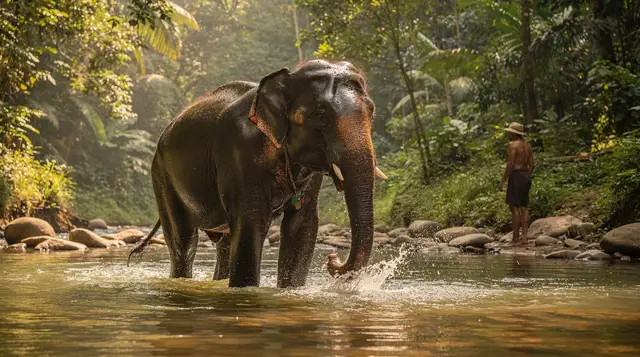
Both destinations have well-documented animal tourism problems, and the same rule applies in either country: choose observation-only elephant sanctuaries, never a riding or performance venue. an ethical elephant sanctuary tour with transfer from Patong is Phuket’s recommendable version of this experience; our ethical elephant sanctuaries guide explains how to tell a genuine sanctuary from a repainted riding camp, and the same checklist is worth applying to any animal encounter offered in Bali as well.
Food and drink
Thai and Indonesian cuisine are genuinely different culinary traditions, and both islands showcase their country’s food well. Phuket has its own distinct regional dishes on top of standard Thai fare — moo hong, mee Hokkien and other Phuket-specific plates covered in our Thai dishes to try in Phuket guide — alongside a huge range of international restaurants in the bigger tourist towns.
Bali’s food scene runs from traditional Indonesian dishes like nasi goreng and babi guling to Canggu and Ubud’s well-known cluster of health-focused cafés, smoothie bowls and vegan restaurants that helped build the island’s wellness reputation. Neither is better; they’re simply different national cuisines, and a trip to either is a reasonable way to get a first real introduction to Thai or Indonesian food respectively.
Getting around each island
Phuket and Bali share the same basic transport reality: no meaningful public transport network, so most visitors rely on rented scooters, app-based rides (Grab in Phuket, Grab or Gojek in Bali) and hotel- or tour-arranged transfers. Phuket’s more compact size and its ring of connected coastal roads make cross-island journeys relatively predictable, covered in our getting around Phuket guide. Bali is larger and its traffic, particularly around the southern tourist hubs and en route to Ubud, has a well-earned reputation for congestion that can make journeys take considerably longer than the map distance suggests — worth building extra time into any Bali itinerary that crosses the island.
A first week in each
A first week in Phuket typically splits fairly evenly between beach time on the home coast, one or two island day trips (Phi Phi or the Similans depending on season), an evening in Patong, and a half-day covering the Big Buddha and Old Town — a rhythm our how many days in Phuket guide sets out in more detail.
A first week in Bali more commonly splits geographically — a few days in the south around Seminyak or Canggu for beaches and nightlife, then a move inland to Ubud for rice terraces, temples and a slower pace, sometimes finishing with a couple of days on a smaller offshore island like Nusa Penida. The Bali structure involves more internal relocation across the week; the Phuket structure more commonly stays based in one town with day trips radiating out from it.
Safety and swimming conditions
Both islands have monsoon-affected coastlines with a genuine drowning risk during rougher-sea periods, and both have specific beaches known for stronger currents that catch inexperienced swimmers off guard — Phuket’s west-facing beaches during the roughly May-to-October monsoon, and parts of Bali’s south coast, including some of its well-known surf breaks, at various points through the year.
The same basic rule applies on either island: red or black flags mean don’t swim, regardless of how the water looks, and it’s worth checking local conditions on arrival rather than assuming a beach is safe by reputation alone. Our beach safety and riptides guide covers what to look for on Phuket’s coastline specifically.
Best time of year to visit each
Phuket’s clearest dry-season window runs roughly November to April, covered in our best time to visit Phuket guide, with the reverse monsoon period from May to October bringing rougher seas and more rain to the west coast.
Bali’s dry season runs on a broadly similar overall pattern to Phuket’s, typically April to October, since both sit within the same general Southeast Asian monsoon system, though Bali’s varied terrain means mountainous interior areas like Ubud see more cloud and rain than the drier southern beach zones even within the dry season. Neither destination has a single “worst” month across the board, so it’s worth checking the specific region you’ll be spending most time in on each island rather than the country-wide average.
If you can only pick one
For a genuinely first trip to Southeast Asia with limited time, the practical case for Phuket is mostly about friction: easier flights, a more compact area to cover, and infrastructure built around first-time visitors over several decades. Bali rewards a bit more planning — working out how to split time between the south coast and Ubud, understanding a different currency and culture — but pays that planning back with a landscape and cultural texture that’s genuinely distinct from anywhere in Thailand. Neither choice is wrong; it mostly comes down to whether you’d rather your first Southeast Asia trip be the easier one or the more varied one.
Verdict by traveller type
Families: Phuket, for the depth of dedicated family infrastructure — water parks, an aquarium, calmer beaches within easy reach of livelier ones. See our Phuket with kids guide.
Couples: Close call. Bali’s rice-terrace and volcano scenery suits a slower, more scenic honeymoon; Phuket’s island-hopping variety suits couples who want more activity packed into a shorter trip.
Party-focused travellers: Phuket, for Bangla Road’s concentrated scale — though Bali’s Canggu and Seminyak scene is a real alternative with a different, more spread-out character.
Divers: Both strong, but for different marine environments — Phuket’s reef and wreck diving around the Similans versus Bali’s pelagic encounters further offshore. Pick based on the specific marine life or site you want to see.
Budget travellers: Broadly comparable day-to-day; Phuket’s advantage is usually cheaper, more direct flight access from a wider range of departure cities, which matters more to overall trip cost than daily spend.
First-time visitors to Southeast Asia: Phuket, mainly for flight access and the ease of a first landing — a genuinely major international airport with a long list of direct routes, and English-language tourist infrastructure built up over decades. Our how many days in Phuket guide is a useful next read.
Frequently asked questions about Phuket vs Bali
Is Phuket or Bali cheaper?
Day-to-day costs are broadly comparable in both destinations. The bigger cost difference for most travellers is flight access — Phuket’s airport has more direct routes from more regions, which often makes the overall trip cheaper to reach.
Do Phuket and Bali use the same currency?
No. Phuket uses the Thai baht (THB); Bali uses the Indonesian rupiah (IDR). They are different countries with entirely separate currencies, visa rules and entry requirements.
Which is better for diving, Phuket or Bali?
Both have strong diving reputations built around different marine environments — Phuket’s reef and wreck sites near the Similan Islands, versus Bali’s offshore pelagic encounters. Choose based on what you specifically want to see.
Is Bali part of Thailand?
No. Bali is a province of Indonesia. Phuket is part of Thailand. They are frequently compared as beach destinations but are different countries entirely.
Which has better nightlife, Phuket or Bali?
Phuket’s Patong has the more concentrated, higher-intensity nightlife strip in Bangla Road. Bali’s nightlife is more spread across distinct neighbourhoods with a different, more varied character.
Is Phuket or Bali better for a digital nomad or long stay?
Bali generally has the more established long-stay and remote-work ecosystem, particularly around Canggu and Ubud, though Phuket has a smaller and growing version of the same scene.
Do I need a visa for Phuket or Bali?
Requirements vary by nationality and change periodically for both Thailand and Indonesia. Always check current rules directly with the relevant embassy or official immigration source before booking your trip.
Popular Phuket experiences on GetYourGuide
Verified deep-linked GetYourGuide tours. Book through these links and we earn a small commission at no cost to you.
These are our own photographs of Phuket, not the operator's pictures of this tour — open the tour page to see those.