Sea kayaking in Phuket
Is sea kayaking in Phuket worth doing?
Yes, but manage expectations: most Phang Nga Bay kayak tours use a local paddler to steer you into limestone sea caves while you sit as a passenger, not a self-paddled trip. If you specifically want to paddle yourself, mangrove kayaking at Koh Yao Yai or a jungle-to-sea route is the better fit.
Who’s actually holding the paddle
Book a “sea kayaking” tour out of Phuket and there’s a good chance you will not paddle much at all. The classic Phang Nga Bay format puts two people in an inflatable canoe with a local guide sitting at the back, and it’s the guide who does almost all the paddling — steering the boat through narrow limestone tunnels into hidden lagoons called hongs, timed to the tide because some entrances are only passable for an hour or two either side of low water.
You sit, duck your head under low rock ceilings on the guide’s instruction, and take photos. It’s genuinely spectacular and worth doing, but it’s closer to a guided boat ride through a cave than a paddling sport, and that’s worth knowing before you book something described as “kayaking” expecting a workout.
If you want to actually paddle — real strokes, your own pace, arms doing the work — that exists too, just in a different setting: mangrove channels around Koh Yao Yai, or combined jungle-and-sea routes that mix hiking with self-directed paddling. Both types are covered below.
The hong-cave format: what it actually involves
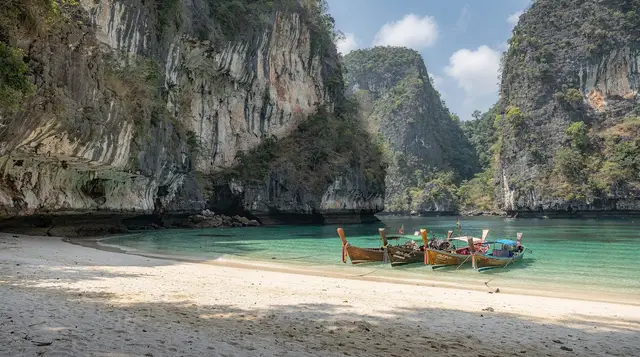
Phang Nga Bay’s limestone islands are riddled with hongs — Thai for “room” — collapsed cave systems that opened into hidden circular lagoons ringed by sheer cliffs, often with mangroves growing inside, invisible from the open water outside. The only way in is a low, narrow tunnel that a normal boat can’t fit through, which is exactly why kayaks and canoes became the standard way to reach them.
A typical day starts with a longtail or larger boat transfer from a pier, most commonly Chalong Pier, out to the bay near James Bond Island. Kayaks or inflatable canoes are lowered from the mothership, a guide-paddler joins each boat, and you’re taken through two or three hong entrances over a few hours, often finishing with lunch on board and a stop to see James Bond Island itself.
Phang Nga Bay kayaking and cave tour with lunchJames Bond Island combined with kayaking
Several operators pair the hong-cave paddle with a stop at Koh Tapu — the thin limestone pillar made famous by “The Man with the Golden Gun” — plus a snorkel stop and lunch, turning it into a full-day trip rather than a kayaking-only outing. It’s a reasonable way to see the bay’s headline sights in one go if you don’t want to book the James Bond Island tour separately.
James Bond Island kayak tour with snorkeling and lunchTwilight and starlight paddles
A different version of the same hong format runs at dusk or after dark, timed so you paddle into the lagoons as the light fades and, on the right nights, see bioluminescent plankton glow in the water when you disturb it with a paddle stroke. It’s a genuinely different atmosphere from the daytime version — quieter, fewer boats — but the plankton glow depends on conditions (a moonless night and the right plankton bloom) and isn’t guaranteed on every departure.
Starlight hong sea cave and glowing plankton by kayakFor anyone who actually wants to paddle: mangrove kayaking
Koh Yao Yai, a quieter island between Phuket and Krabi Railay, runs a genuinely self-paddled mangrove kayaking route through tidal channels lined with dense mangrove forest — no cave tunnels, no guide doing the steering, just you working the paddle through calm, sheltered water for two and a half to six hours depending on the package. It’s a slower, quieter day than the Phang Nga Bay hong circuit, better suited to anyone who wants the exercise and the independence of actually driving their own boat, and the mangrove ecosystem itself — nursery habitat for fish, crabs and juvenile marine life — is worth the trip on its own terms.
The original mangrove forest kayaking tourJungle-to-sea: kayaking combined with a hike
A smaller number of operators run a combined route that mixes a jungle trek with a self-paddled sea-kayak leg, giving you both a walking and a paddling component in one outing rather than a boat-transfer day. It suits travellers who find a full day of sitting on a tour boat between short kayak bursts a bit passive and want more physical activity worked into the itinerary — a jungle-to-sea package like this typically runs a half day and mixes a rainforest trail with a self-paddled coastal or estuary leg rather than the cave-and-lagoon format of Phang Nga Bay.
Casual kayak rental, no tour required
Away from the organised hong-cave circuit, several calmer beaches rent simple sit-on-top kayaks by the hour for guests who just want to paddle a short distance off the sand — no guide, no cave tunnels, no fixed itinerary. Nai Harn, Rawai and the sheltered lagoon at Bang Tao are the most reliable spots for this, since all three sit in relatively protected water for much of the year.
Expect to pay roughly 200–400 baht (about $6–$11) per hour, often through a beachfront vendor or your hotel’s watersports desk rather than a pre-bookable platform. This is a genuinely different activity from the tours above — closer to a beach amenity than an excursion — and it’s the simplest option if you just want twenty minutes on the water without committing to a half-day or full-day booking.
One caution worth stating plainly: this casual, unguided version is only sensible in calm conditions. From roughly May through October, the southwest monsoon brings rougher seas and a real risk of rip currents to Phuket’s west-coast beaches, the same conditions that drive the red-flag warnings and drowning statistics covered in the beach safety and riptides guide. A vendor renting kayaks on a rough, red-flagged day at Nai Harn or Bang Tao is prioritising a sale over your safety — skip it and stick to the organised, guided tours in Phang Nga Bay instead, where conditions are more sheltered and a guide is present throughout.
Hong tours vs. mangrove kayaking
| Phang Nga Bay hong tour | Koh Yao Yai mangrove kayaking | |
|---|---|---|
| Who paddles | Mostly the guide | You |
| Setting | Limestone caves and hidden lagoons | Tidal mangrove channels |
| Physical effort | Low — mostly sitting | Moderate — genuine paddling |
| Highlight | Hidden hongs, James Bond Island | Wildlife, quiet water, independence |
| Typical length | Half day to full day | 2.5–6 hours |
What to look for when booking a hong-cave operator
Not all Phang Nga Bay kayak tours are equal, and the differences matter more than the marketing photos suggest. Group size is the biggest factor: a mothership carrying 40–60 people means long waits for your turn in a kayak and a rushed few minutes inside each hong before the next group arrives, while a small-group operator carrying 15–20 gives you more time paddling and less time queuing on deck. Ask how many kayaks the boat carries and how many guests are booked per departure before you commit.
The canoe itself is usually a two-person inflatable rather than a rigid sea kayak — sturdier around rock walls but slower and less manoeuvrable than what serious paddlers might expect, which is part of why the guide does most of the steering in tight tunnel entrances. Finally, check whether the itinerary names specific hongs rather than a vague “several caves” — operators who specify Hong Ao Phang Nga, Hong Klum or similar are generally more transparent about the actual route than ones who keep it deliberately unspecific.
What to bring and what to expect
Wear quick-dry clothes and reef-safe sunscreen or a rash guard rather than thick lotion — you’ll get splashed and, on the hong tours, occasionally soaked ducking under low tunnel ceilings. Closed-toe water shoes help on wet boat decks and muddy mangrove banks. Life jackets are provided and worn throughout on every version of this trip. Motion sensitivity is rarely an issue in the kayaks themselves since the water inside the bay is sheltered, but the boat transfer out to the islands can have some swell depending on the day, so anyone prone to seasickness should treat the transfer, not the paddling, as the part to prepare for.
Best time to go
November through April is the calm, dry-season window and the most reliable time for both hong tours and mangrove paddling — flat water, clear tide predictions and minimal chance of a cancelled departure. From roughly May through October, Phang Nga Bay itself stays relatively sheltered compared to the open west coast (it’s a bay ringed by islands, not exposed sea), but rain and the odd rough day do happen; see the monsoon season guide for what to expect if you’re travelling in that window.
Tides matter more than season for the hong-cave format specifically — some entrances are only passable within a narrow window either side of low tide, which is why operators run fixed departure times rather than flexible ones.
Who should skip the hong tours
If your main goal is a genuine paddling workout, the standard hong-cave format will disappoint you — book the mangrove kayaking or jungle-to-sea option instead, both of which put the paddle in your hands. Anyone with claustrophobia should also think carefully about the low, narrow cave tunnels some hongs require passing through; ask the operator in advance which specific hongs are on the day’s itinerary and how tight the entrances are. If open, deep water and a faster pace is more your interest, the calm, sheltered bays here are the wrong match — look at jet-skis or big game fishing instead.
Photography on the water
Phone photography works fine for most of the hong-cave tours since the water inside the bay is generally calm, but bring a waterproof case or pouch regardless — splashes happen even on a good day, and a dropped phone in a limestone lagoon isn’t coming back. For anyone serious about capturing the twilight or starlight version, a small action camera with a wrist strap handles low light better than most phones and survives an accidental dunk. Guides are usually happy to take a photo of you inside a hong if you hand over your phone at the right moment — worth asking early rather than fumbling for it mid-tunnel when the canoe is moving.
Pairing a kayak day with the rest of your trip
Because most Phang Nga Bay kayak tours run a half day rather than a full one, it’s easy to pair one with something else on the same day without an exhausting schedule — a morning kayak tour with an afternoon by the pool, or vice versa if your tour runs a sunset or twilight departure. Travellers building a longer stay around the island’s water activities sometimes stack this alongside a scuba diving day or a snorkelling trip earlier or later in the same week, since all three draw on the same general Andaman conditions without competing for the same day.
Frequently asked questions about sea kayaking in Phuket
Do I need kayaking experience for a Phang Nga Bay tour?
No. On the standard hong-cave format, a guide-paddler does almost all the steering, so no prior kayaking skill is needed. For the self-paddled mangrove or jungle-to-sea options, basic fitness helps but no technical experience is required — guides give a short briefing before you start.
Will I actually get to paddle on a Phang Nga Bay kayak tour?
Occasionally, on straighter stretches outside the tunnel entrances, but the guide handles the technical steering through the narrow, low cave passages. If self-paddling matters to you, choose the Koh Yao Yai mangrove tour instead.
What is a “hong” exactly?
A hong is a collapsed limestone cave system that opened into a hidden lagoon, accessible only through a low, narrow tunnel passable by kayak. Phang Nga Bay’s islands have dozens of them, and the tunnel entrances are often only passable within a window around low tide.
Is the bioluminescent plankton guaranteed on a twilight tour?
No. The glow depends on a plankton bloom being present and conditions being dark enough — ideally a moonless night — to see it clearly. Operators run the tours regardless because the paddle itself and the dusk atmosphere are worthwhile even without the plankton effect.
How long do sea kayaking tours in Phuket last?
Phang Nga Bay hong tours typically run half a day to a full day including boat transfer and lunch. Koh Yao Yai mangrove kayaking runs 2.5 to 6 hours depending on the package chosen.
Can beginners and kids do the hong-cave kayak tours?
Yes — since the guide does most of the paddling and steering, these tours suit most ages and fitness levels. Check the minimum age with the specific operator, as it varies, and note that ducking under low tunnel ceilings isn’t ideal for anyone very uncomfortable in tight spaces.
Is Phang Nga Bay kayaking better than James Bond Island by speedboat alone?
They’re not really competing options — most kayak tours already include a stop at James Bond Island as part of the itinerary. If you want to see the island without the kayaking component, look at the standalone James Bond Island tour guide for boat-only options.
Can I rent a kayak without booking a tour at all?
Yes, at a handful of calmer beaches — Nai Harn, Rawai and Bang Tao are the most reliable — where vendors rent simple kayaks by the hour for casual paddling close to shore. It’s a different, much simpler activity than the guided Phang Nga Bay tours and doesn’t reach the hongs or James Bond Island.
Is sea kayaking a good activity for someone who can’t swim?
Life jackets are compulsory and worn throughout every version of these tours, which covers most of the practical risk, but a non-swimmer should still tell the operator in advance, especially for anything beyond the calm, sheltered hong-cave format. Casual unguided beach rental is a poorer choice for a non-swimmer than a guided tour with a life jacket and a guide close by at all times.
tours.water-sports
Verified deep-linked GetYourGuide tours. Book through these links and we earn a small commission at no cost to you.
These are our own photographs of Phuket, not the operator's pictures of this tour — open the tour page to see those.