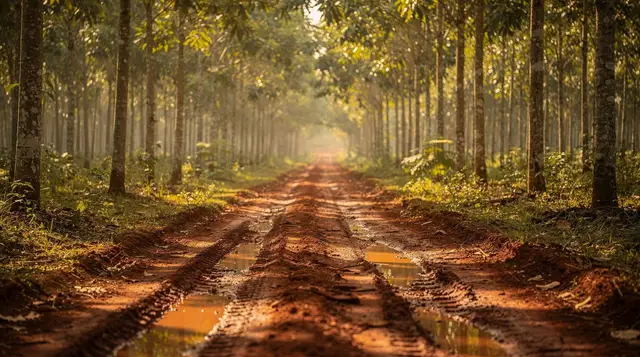
Jungle trekking in Phuket
Is there real jungle trekking on Phuket itself?
Yes, at Khao Phra Thaeo National Park in the island's northeast, though the trails are short and moderate rather than a wilderness expedition. For a bigger rainforest experience, most operators run day trips to Khao Sok on the mainland, roughly 2.5–3 hours each way.
Two different trips under one label
“Jungle trekking” gets used for two genuinely different experiences around Phuket, and mixing them up leads to disappointment either way. The first is trekking on Phuket itself, centred on Khao Phra Thaeo National Park in the northeast — real rainforest, but a small protected pocket with short, well-marked trails rather than an expedition. The second is a day trip off the island to Khao Sok National Park on the mainland, one of the oldest rainforests in the world, with taller canopy, more wildlife, and a much longer travel day attached. Decide which one you actually want before you book — the marketing photos for both look similar, but the trails and time commitment don’t.
Khao Phra Thaeo: what’s actually on Phuket
Khao Phra Thaeo protects one of the last patches of primary rainforest on the island, and its main draws are the Bang Pae and Ton Sai waterfalls, connected by trails through genuinely dense forest — vines, buttress roots, the occasional monitor lizard crossing the path. The walking itself is moderate: uneven ground, roots, and humidity that makes even a short trail feel longer than its distance suggests, but nothing that requires technical hiking experience. Expect 1–3 hours of walking depending on which loop you take, with the Bang Pae waterfall trail being the shorter, more accessible option and routes toward Ton Sai extending further into the reserve.
Phuket jungle trekking experience at Khao Phra ThaeoLeeches, and how to deal with them
Say this plainly because most listings don’t: in the wet months, land leeches are common on the Khao Phra Thaeo trails, and on the wetter Khao Sok routes too. They’re harmless — no venom, no disease risk in Thailand — but the sensation and the small bleeding bite afterward genuinely put some first-time trekkers off. Tucking trousers into socks, wearing closed shoes rather than sandals, and applying insect repellent to ankles and lower legs cuts the problem down substantially. In the November–April dry season, leeches are far less of an issue, which is one more reason trekking here skews toward the dry months even though the forest itself stays green year-round.
The gibbon connection
Khao Phra Thaeo is also home to the Gibbon Rehabilitation Project, which rescues gibbons from the illegal pet trade and prepares them for release. Many trekking itineraries combine a forest walk with a stop here — worthwhile, but go in understanding the one hard rule: you don’t touch or feed the animals. The entire point of the project is minimising human contact so the gibbons stay releasable, and a legitimate operation will enforce that even if a chatty guide seems relaxed about everything else.
Khao Sok: the bigger rainforest trip
For travellers who want taller canopy, more wildlife sightings, and a genuine sense of scale, day trips to Khao Sok National Park on the mainland are the usual answer — but be realistic about the logistics. It’s roughly 2.5–3 hours each way from most Phuket hotels, which means a single-day trip is a long day: early pickup, several hours of trekking and often a Cheow Lan Lake boat segment, then the drive back, arriving well after dark. Operators who are upfront about this timing are the ones worth booking; anyone promising a relaxed full Khao Sok experience in a single day from Phuket is understating the drive.
Khao Sok private day trekking with jungle dinner and night safariShould you stay overnight in Khao Sok instead?
If Khao Sok is genuinely the priority — rather than a box to tick alongside your Phuket trip — one night at a floating raft house or jungle lodge changes the experience completely. It turns a rushed there-and-back into an actual two-day visit with a proper night safari, an early lake departure before the day-trip crowds arrive, and no 2am return drive. Not every visitor has the extra day to spare, but anyone weighing it should know the option exists and genuinely improves the trip.
Sunset and viewpoint treks closer to town
For a shorter, lower-commitment option, several operators run sunset trekking tours up viewpoint trails closer to the built-up west coast — a few hours of walking timed to finish at a hilltop or ridge view as the light drops. These aren’t deep rainforest in the Khao Sok sense, but they combine light trekking with one of the better sunset spots on the island, and they fit into an evening rather than eating a full day.
Phuket viewpoints sunset trekking tourJungle-to-sea combinations
A few operators run routes that pair a forest trek with a kayak or sea-canoe segment, walking through jungle to reach a hidden cove or mangrove channel that’s only accessible this way. It’s a good option if you want variety in a single outing rather than committing a whole day to trekking alone, and it tends to appeal to travellers who’d otherwise struggle to choose between a jungle day and a water day.
Jungle-to-sea kayaking and trekking adventure in PhuketWhat trekking costs
Entry to Khao Phra Thaeo National Park runs a modest fee, typically in the range of 200 THB (about $6) for foreign visitors, paid in cash at the gate — separate from any guided tour price. A guided half-day trek with transfer from a west-coast hotel usually lands somewhere around 1,200–2,000 THB (roughly $35–$56) per person depending on the operator and whether the gibbon centre stop is included. Khao Sok day trips cost considerably more once you factor in the long transfer, lake boat segment and lunch, typically 2,500–4,500 THB (about $70–$125) per person — a fair price for the distance covered, but worth comparing against an overnight package if you’re weighing the two.
Getting there without a tour
Khao Phra Thaeo is reachable independently by rental car or scooter from most west-coast resorts in 30–45 minutes, and self-driving works fine if you’re comfortable navigating without a guide — the park has marked trailheads and basic signage at the entrance. Khao Sok is a different proposition: at 2.5–3 hours each way on mainland roads, self-driving is possible but adds a level of route-finding and long-distance driving most visitors would rather hand off to a tour operator or private transfer, especially if the day already includes a lake crossing.
Trekking with kids
Khao Phra Thaeo’s shorter waterfall trails are manageable for older children who can handle uneven ground and a couple of hours of walking in humidity, and the gibbon centre stop tends to be the highlight for younger visitors regardless of trail length. Khao Sok’s longer treks and full-day format are a harder sell for young kids — the drive alone eats a large chunk of a child’s patience before the trekking even starts. If you’re planning family jungle time, a shorter Khao Phra Thaeo outing paired with the Gibbon Rehabilitation Project is the more realistic option than a full Khao Sok day with young children in tow.
How trekking compares with other Phuket adventure activities
Jungle trekking is quieter and lower-impact than most of the island’s other adventure options — no engine noise, no rapids, just walking pace through forest. If you’re weighing it against something more physical, ATV riding and white water rafting both deliver more adrenaline but far less of the forest itself; trekking is the better choice for travellers who actually want to notice the canopy, the sound of the stream, or a hornbill overhead rather than treat the jungle as scenery for a faster activity.
Guides: worth the extra cost?
Independent hiking on Khao Phra Thaeo’s marked trails is straightforward without a guide, but a guide adds real value on the wildlife side — spotting a gibbon call’s direction, identifying birdlife, knowing which sections run wetter and leech-heavier on a given day. For Khao Sok specifically, a guide is close to essential: trail markings are sparser, the terrain is more remote, and the night safari component depends entirely on a guide’s spotlighting skill and local knowledge of where animals tend to be active.
Safety basics on the trail
Stick to marked trails on both Khao Phra Thaeo and Khao Sok rather than wandering off in search of a better photo — it’s easy to lose the path in dense forest, and rescue in these areas can take hours. Tell someone your planned route and return time if you’re trekking independently rather than on a guided tour. The general precautions in our Phuket safety guide apply here too, and the same macaque caution that applies at Big Buddha and elsewhere on the island holds in the forest — see our note on monkeys in Phuket for what to do if one gets close.
What to bring
- Closed shoes with grip — sandals are a liability on wet roots and rocks
- Insect repellent, applied to ankles specifically against leeches
- A light rain layer even in dry season; forest canopy holds humidity and afternoon showers arrive fast
- A reusable water bottle; Khao Phra Thaeo has limited facilities once you’re past the entrance
- Cash in small notes for the national park entrance fee, charged separately from most tour prices
Wildlife you might actually see
Manage expectations here: Khao Phra Thaeo and Khao Sok host hornbills, gibbons (heard more often than seen in the wild, versus the rehabilitation centre where sightings are guaranteed), macaques, and a wide range of insects and reptiles, but large mammal sightings are rare and not something any honest operator should promise. The forest itself — canopy, waterfalls, the sound of it — is the main reason to go, with wildlife as a possible bonus rather than the guarantee some tour descriptions imply.
Best time to go
November through April is more comfortable for trekking on both Phuket and the mainland — drier trails, far fewer leeches, and waterfalls that, counterintuitively, run lower than in the wet season. If seeing the waterfalls at full force matters more to you than trail comfort, the monsoon months deliver dramatically fuller cascades at Bang Pae and Ton Sai, at the cost of muddier trails and a higher leech count.
What the walk actually feels like, hour by hour
A typical Khao Phra Thaeo trek starts at the park entrance with a short, relatively flat stretch to the lower falls, where most casual visitors turn back — this section alone takes maybe 20–30 minutes each way and is manageable in ordinary trainers. Push further toward the upper trails and Ton Sai, and the path steepens, narrows and gets noticeably muddier underfoot even in dry season, with roots forming natural steps that demand more attention to footing than the lower section.
Humidity builds through the walk regardless of trail difficulty; most visitors are visibly sweating within the first fifteen minutes, which is normal and not a sign you’re pushing too hard. Rest stops near the falls themselves double as swimming breaks when water levels allow, a genuinely welcome cooldown partway through a longer loop.
Photography in dense forest
Deep canopy cuts a surprising amount of light even at midday, which catches out visitors used to shooting in open, bright conditions elsewhere on the island. A phone camera in low-light or “night” mode handles the shaded trail sections better than the default setting, and waterfall shots benefit from bracing against a rock or tree rather than trying to hand-hold a slower shutter speed. Save battery for the falls themselves and the gibbon centre — those are the shots most visitors actually want afterward, more than the trail sections in between.
Footwear, one more time
It’s worth repeating separately from the general packing list: proper closed-toe shoes with actual tread matter more on these trails than almost anywhere else on a typical Phuket itinerary. Wet rock near the falls, root systems that shift underfoot, and mud on the upper Khao Phra Thaeo sections all punish sandals or worn-out trainers. A pair of trail shoes or older sneakers you don’t mind getting muddy is the single most useful packing decision for this activity.
Frequently asked questions about jungle trekking around Phuket
Is Khao Phra Thaeo worth it if I’m also doing Khao Sok?
They serve different purposes — Khao Phra Thaeo is a short, convenient trek on the island itself, while Khao Sok is a bigger day-trip commitment to the mainland. If time is tight, pick one rather than trying to fit both into a short stay.
How difficult is jungle trekking around Phuket?
Moderate rather than technical. Expect uneven, root-covered ground and humidity that makes the pace feel slower than the distance suggests, but no climbing or scrambling on the standard tourist trails.
Are there leeches on these trails?
Yes, especially in the wet season (roughly May to October) on both Khao Phra Thaeo and Khao Sok trails. They’re harmless but off-putting to some. Closed shoes, tucked-in trousers, and repellent on the ankles reduce the problem significantly.
Can I see gibbons in the wild while trekking?
Wild gibbon sightings are uncommon; you’re more likely to hear their calls than see one. For a guaranteed sighting, the Gibbon Rehabilitation Project within Khao Phra Thaeo is the reliable option, under strict no-touch, no-feed rules.
Is a Khao Sok day trip from Phuket too long to be worth it?
It’s a genuinely long day — around 5–6 hours of driving on top of the activities. It’s still worth doing if Khao Sok is a priority, but travellers who want a relaxed pace should seriously consider one overnight instead of a single rushed day.
What should I wear for jungle trekking in Phuket?
Closed-toe shoes with grip, trousers or long shorts tucked into socks against leeches, and a light rain layer. Cotton alone gets uncomfortably damp fast in this humidity — quick-dry fabric is more comfortable.
tours.adventure
Verified deep-linked GetYourGuide tours. Book through these links and we earn a small commission at no cost to you.
These are our own photographs of Phuket, not the operator's pictures of this tour — open the tour page to see those.