Monkeys in Phuket — safety, bites and where they gather
Are monkeys in Phuket dangerous?
They can be — long-tailed macaques at spots like Monkey Hill and the Big Buddha car park are habituated to tourists, bite and scratch when provoked or when food is involved, and any bite carries a real rabies risk in Thailand that needs immediate medical attention.
They look photogenic from a distance — that’s the problem
Phuket’s long-tailed macaques are wild animals that have learned humans mean food, and that combination is what causes almost every bad encounter on the island. They aren’t naturally aggressive toward people who leave them alone, but decades of tourists hand-feeding them at a handful of well-known spots have taught troops at those specific locations to approach, grab and sometimes bite when they expect a snack and don’t get one fast enough. The risk isn’t evenly spread across the island — it’s concentrated at a small number of locations where feeding has become routine, which makes it easy to manage once you know where they are.
Where monkeys concentrate
Monkey Hill, on the approach road up toward the Big Buddha near Chalong, is the most reliably monkey-dense spot on the island — troops line the roadside and parking areas, accustomed to cars slowing down and passengers tossing food out the window. The Big Buddha car park itself and the walking paths up to the statue carry a similar risk, since vendors and visitors alike have fed monkeys there for years despite signage asking people not to.
Smaller troops also turn up around forested edges near Wat Chalong and pockets of Khao Rang in Phuket Old Town, though at lower density and with less habituation than the Big Buddha area. Away from these specific spots — most beaches, most of the resort strip, most of the interior road network — monkey encounters are uncommon.
Why they bite and scratch
Almost every documented monkey bite in Phuket follows one of a few patterns: a tourist holds food visibly (a plastic bag, a banana, an open snack) and a monkey grabs for it directly; a tourist tries to take a photo too close and the monkey reads the approach as a threat; someone attempts to pet or touch a monkey, especially a juvenile, and an adult intervenes aggressively to protect it; or a monkey steals an item — sunglasses, a phone, a bag — and scratches or bites when the owner tries to grab it back. None of these require bad luck so much as a predictable mistake, which is also why they’re avoidable.
Macaques also read direct eye contact and bared teeth (including a friendly human smile, unfortunately) as a challenge or threat rather than a greeting, which surprises visitors who don’t know the body language doesn’t translate the way it does between people.
Rabies risk — the part that actually matters
Thailand is a rabies-endemic country, and monkey bites and scratches are treated as a genuine medical exposure, not a minor scrape. Any bite or scratch that breaks the skin — even a shallow one — needs immediate first aid (wash thoroughly with soap and running water for several minutes, then apply antiseptic) followed by prompt medical evaluation, ideally the same day, at a hospital rather than a pharmacy.
Bangkok Hospital Phuket and Vachira Phuket Hospital both stock rabies post-exposure prophylaxis and are used to treating tourist monkey encounters; most Phuket hospitals do. Post-exposure treatment is a course of vaccine doses over roughly two to four weeks, and starting it promptly is what makes it effective — don’t wait to see if symptoms develop, because by the time they do, treatment is far less effective.
Travellers doing an extended Southeast Asia trip, or anyone planning time in rural areas or around wildlife beyond a single Phuket stop, should consider pre-exposure rabies vaccination before departure; it simplifies and shortens the post-exposure regimen if a bite does happen. Check travel insurance for Thailand covers this kind of treatment before you need it, since costs at private hospitals for a full vaccination course aren’t trivial.
How to avoid a bad encounter
- Never feed monkeys, even ones already being fed by other tourists — it’s the single behaviour that trains a troop to associate people with food, and it’s illegal to feed wildlife inside national park areas.
- Keep bags zipped and food out of sight — a plastic bag alone can trigger a grab attempt, whether or not there’s food inside it.
- Don’t make direct eye contact or smile with bared teeth — both read as aggression to a macaque; a neutral, calm approach is safer than either ignoring them completely or staring.
- Give troops a wide berth, especially around Monkey Hill and the Big Buddha car park — walk the far side of the road or path if monkeys are gathered near it.
- Never try to pet, touch or get close to a baby monkey — this is the fastest way to trigger a defensive response from nearby adults.
- If a monkey grabs an item, let it go — sunglasses and hats aren’t worth a bite; report the theft to venue staff rather than chasing the animal.
- Keep small children close and holding hands near known monkey areas — they’re at eye level with monkeys and more likely to be approached directly.
What to do if you’re bitten or scratched
Wash the wound immediately and thoroughly with soap and running water for at least several minutes — this single step meaningfully reduces infection and rabies transmission risk before you reach a hospital. Apply an antiseptic if you have one, then go to a hospital (not just a pharmacy) the same day for assessment and to start post-exposure treatment if indicated.
Don’t wait to see whether symptoms appear; rabies has no reliable early warning and is close to universally fatal once symptoms begin, which is exactly why prompt treatment matters more than almost anything else covered in this guide. Keep your travel insurance details and passport on hand, since hospitals will need them, and note roughly where and when the bite happened in case it’s relevant to treatment decisions.
Insurance and hospital costs
A rabies post-exposure course at a private hospital in Phuket typically costs somewhere in the range of 5,000–15,000 THB (roughly $140–430) depending on the number of doses required and whether immunoglobulin is also needed for a more serious bite, and public hospitals are generally cheaper but involve longer waits.
Confirm that your travel insurance for Thailand covers animal bite treatment specifically before you need it — some budget policies exclude wildlife-related injuries or treat them as a pre-existing risk if you visited a known monkey area, so read the policy wording rather than assuming. Keep the receipt and any medical report from the hospital; insurers generally require both to process a claim.
What tour guides and drivers do not always tell you
Some tuk-tuk and taxi drivers stop deliberately at Monkey Hill because tourists enjoy the photo opportunity, sometimes without much warning about the risk involved, and a few even sell bags of fruit or peanuts at the roadside specifically for feeding the troops — money that directly funds the exact behaviour that causes bites.
Politely declining the fruit and asking the driver to keep moving is a reasonable response if you’d rather not stop at all. Organised half-day tours that include Big Buddha in a wider Old Town and temple itinerary usually move through the car park briskly with a guide who understands the risk, which is generally safer than a self-driven stop where nobody is managing the group’s behaviour around the troop.
Visiting Big Buddha or Monkey Hill anyway
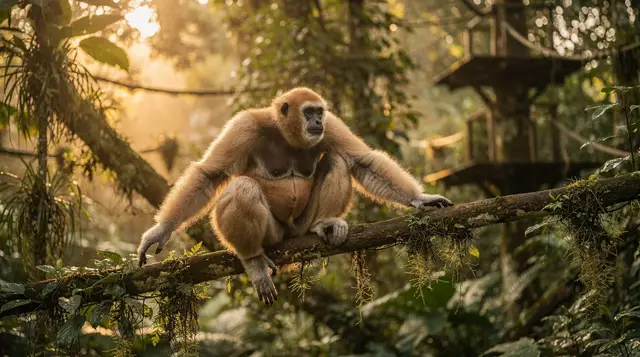
Half-day city tour with Big Buddha and Old TownNeither spot needs to be avoided outright — the Big Buddha itself is one of Phuket’s most visited viewpoints and worth the trip, covered fully in the Big Buddha guide, and Monkey Hill is mostly a drive-through rather than a destination. The sensible approach is treating the monkeys as wildlife to observe from a reasonable distance rather than photo props, exactly the same rule that applies at the Gibbon Rehabilitation Project further north, minus that project’s controlled boardwalk setting.
If you’re combining a Big Buddha visit with Wat Chalong and Phuket Old Town in a single half-day, as most guided tours do, the monkey exposure is brief — a few minutes in the car park — and easily managed with the rules above.
Reading macaque body language
A little body-language literacy goes further than most safety lists suggest. A macaque with its mouth slightly open but teeth not fully bared, sitting relaxed with other troop members, is generally not signalling aggression toward you specifically. A monkey that fixes its stare, bares its teeth fully, or lunges forward half a step is giving a clear warning — the correct response is to look away, back away slowly without turning your back entirely, and avoid sudden movement.
Screaming, running or waving arms tends to escalate rather than de-escalate a macaque that’s already agitated, since fast movement reads as either prey behaviour or a challenge. If a troop is feeding on something on the ground, give the whole group extra space rather than walking through the middle of them, even if the direct path looks shorter.
Who should be most careful
Families travelling with young children should be the most deliberate about keeping distance and hand-holding near Monkey Hill and the Big Buddha car park, since kids are more likely to approach out of curiosity and are at greater physical risk from a bite given their size. Anyone travelling without comprehensive travel insurance should sort that out before arrival — a rabies post-exposure course at a private hospital is a real, avoidable expense if you’re uninsured and unlucky. Photographers chasing a close-up monkey shot should use a zoom lens rather than proximity; there is no photo worth a bite.
A quick pre-trip checklist
Before a day that includes Monkey Hill or the Big Buddha car park, run through a short mental checklist: bags zipped and food out of sight, phone secured rather than held loosely, sunglasses pushed up or stowed rather than perched where a swipe is easy, children within arm’s reach, and a plan to keep walking rather than stopping to feed or photograph up close if a troop is actively agitated. None of this requires special equipment or preparation — it’s a five-second habit that removes almost all of the realistic risk, and it applies whether you’re passing through by car, tuk-tuk, or on foot as part of a walking tour.
What locals do differently
Long-term residents and expats who drive the Chalong-to-Big Buddha road regularly tend to do a few things visibly differently from first-time tourists: windows up when passing Monkey Hill rather than down for a photo, nothing edible left visible on a dashboard or in a door pocket, and a steady, unhurried pace rather than stopping abruptly where a troop is gathered. None of it is complicated, and copying the habit costs nothing.
The bottom line
None of this should put you off visiting the Big Buddha or driving past Monkey Hill — both are genuinely worth seeing, and the vast majority of visitors pass through without incident. The risk is real but narrow: it’s concentrated at a couple of well-known spots, driven almost entirely by feeding and close contact, and almost entirely avoidable by keeping food out of sight and distance from any troop that looks agitated. Treat the monkeys the same way you’d treat any wild animal you’re glad to see but have no interest in touching, and the encounter stays what it should be — a memorable, harmless part of the day.
A note for photographers
If a close-up monkey shot matters to your trip, a telephoto lens or a phone’s zoom function from a safe distance gets a comparable result to standing within arm’s reach, without the risk. Early morning at Monkey Hill, before the heat sets in and before the heaviest traffic passes through, tends to give calmer, more naturally posed troops than the midday rush when cars are stopping and starting constantly. Patience from a distance consistently produces better photos than a rushed close approach — the animals relax once they stop expecting an interaction, and that’s when the more interesting behaviour, like grooming or juveniles playing, actually happens.
Frequently asked questions about monkeys in Phuket
Where in Phuket are monkeys most common?
Monkey Hill on the road up to the Big Buddha, and the Big Buddha car park and walking paths themselves, are the two locations with the highest concentration of habituated, food-conditioned macaques.
Is it safe to feed monkeys in Phuket?
No. Feeding trains monkeys to associate people with food and directly increases the risk of bites and scratches for everyone who visits afterward, including you on a return trip. It’s also prohibited in national park areas.
What should I do if a monkey bites me?
Wash the wound thoroughly with soap and running water immediately, then go to a hospital the same day for evaluation and rabies post-exposure treatment if indicated. Don’t wait to see if symptoms develop.
Do all monkey bites require rabies treatment?
Any bite or scratch that breaks the skin should be medically evaluated in Thailand given the country’s rabies risk; a doctor will assess the specific exposure and recommend treatment, but self-diagnosing as “probably fine” isn’t safe.
Can monkeys steal my belongings?
Yes — sunglasses, hats, phones and food are common targets, especially at Monkey Hill and the Big Buddha car park. Keep bags zipped and let go of anything a monkey grabs rather than trying to retrieve it.
Are the monkeys at the Gibbon Rehabilitation Project the same risk?
No — that site is specifically designed to keep visitors at a distance from all animals via a boardwalk, and gibbons there aren’t habituated to close human contact the way roadside macaque troops are.
Should I get a rabies vaccination before visiting Phuket?
It’s worth considering, especially for longer trips or if you plan time in rural or wildlife-heavy areas, since pre-exposure vaccination simplifies treatment if a bite happens. Check with a travel health clinic before departure.
tours.nature-wildlife
Verified deep-linked GetYourGuide tours. Book through these links and we earn a small commission at no cost to you.
These are our own photographs of Phuket, not the operator's pictures of this tour — open the tour page to see those.