ATV and quad biking in Phuket
Is ATV riding in Phuket safe?
It can be, but injuries happen every season — mostly wrist and ankle fractures from riders who've never handled an ATV before. Pick an operator that gives a real briefing, wear the helmet properly, and go slow on your first laps regardless of what the group ahead of you is doing.
Who this is actually for
ATV riding around Phuket is marketed as an easy adrenaline add-on — something to slot between the beach and dinner. For a first-timer with a decent briefing and a cautious pace, that’s a fair description.
What the brochures don’t say is that the machines are automatic-clutch quads built for tourists rather than proper off-road ATVs, the tracks are working plantation roads rather than a purpose-built circuit, and the accident rate — mostly low-speed tip-overs, not high-speed crashes — is high enough that every hospital near Kathu and the inland plantations sees a steady trickle of ATV wrist and ankle injuries through the dry season. None of that means skip it. It means go in with realistic expectations about what you’re riding and where.
What the ride actually covers
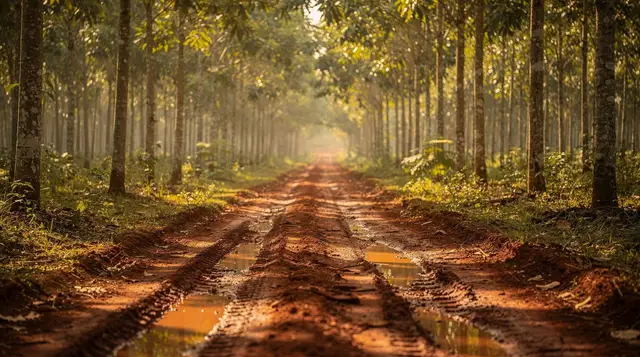
Most operators run their circuits through rubber and palm plantations in the hills around Kathu and Chalong, sometimes extending into red-mud jungle tracks that turn genuinely slick after rain. A typical session runs 30–60 minutes of riding time bookended by a safety briefing, gear-up, and photo stop, though “adventure combo” packages that bolt on ziplining or a Big Buddha visit run considerably longer. The scenery — jungle canopy, plantation rows, occasional ridge views over the west coast — is a real reason to go, not just filler between obstacles.
Phuket ATV mangrove, jungle and hidden beach tourThe state of the tracks, honestly
This is the detail most listings gloss over: the tracks are graded dirt, not asphalt, and their condition swings hard with the weather. In the dry months (roughly November to April) they’re dusty but predictable — ruts and washboard sections, but no standing water. Through the monsoon, the same tracks turn to soup in places, with mud deep enough to bog a quad or send an inexperienced rider sliding sideways at walking pace. Operators don’t close for rain the way boat tours sometimes do; a rainy-day session usually just means a muddier, slower, messier ride, and a higher chance of the tip-overs that account for most injuries here.
Helmets, gear and what’s actually provided
A proper operator hands you a full-face or open-face helmet, gloves, and sometimes a bandana or buff for dust. Wear the helmet done up, not perched — riders regularly take it off for photos mid-track and that’s when a stray branch or a following quad becomes a real hazard. Closed shoes are non-negotiable; flip-flops on foot pegs is a fast way to lose a toenail on a stalled machine. Long trousers help against mud spray and branch scratches more than they help against anything serious. Bring sunglasses or riding goggles — dust in the eyes on a dry-season track is the single most common minor complaint from riders.
What happens if you go down
Low-speed tip-overs are the dominant accident type, not high-speed collisions — a quad catches a rut, the rider oversteers, and it rolls onto its side at 10–15 km/h. Most of these end in bruises and a dented ego. The injuries that send people to a clinic are usually a hand or wrist caught under the frame, or an ankle twisted trying to jump clear. Guides generally stop the group and check on a downed rider before continuing, but you’re on a working dirt track, not a padded course — assume any fall costs you time, mud, and possibly a scrape, and ride within what you can actually control.
Insurance — read this before you book
This is the part worth taking seriously. Some cheap, unlicensed roadside ATV operators (as opposed to the established tour companies bookable in advance) carry no accident insurance for riders at all, and a few have a documented pattern of pressuring injured tourists to cover their own medical costs or sign liability waivers on the spot. Book through an established operator with stated insurance coverage, keep your own travel insurance for Thailand current, and confirm — before you sign anything — whether the tour’s insurance covers ATV-specific injuries, since some general tour policies exclude “extreme sports” categories that ATV riding can fall under.
Phuket quad bike tour with Big Buddha visitATV combined with other adventure activities
Because the plantation areas near Kathu and Chalong sit close to several other adventure operators, many tours bundle ATV riding with ziplining, a shooting range stop, or a visit to Big Buddha on the same half-day. These combo packages can be good value if you actually want two or three activities, but they also compress each one into a shorter slot — if ATV riding is the main event for you, a dedicated 1-hour session beats a 20-minute slice of a four-activity combo.
Phuket ATV and zipline adventure tourATV vs quad bike vs go-kart, briefly
“ATV” and “quad bike” are used interchangeably by nearly every operator in Phuket — both terms describe the same four-wheeled, automatic-clutch machine, so don’t expect a meaningful difference between listings using one word or the other. Go-kart combos are a different activity entirely: karts run on a flat paved circuit, no mud, no plantation trail, and a much lower injury profile, which makes them a reasonable substitute if you want the speed sensation without the off-road risk.
Phuket go-kart, ATV and shooting range comboWhere operators are based
Most ATV parks sit inland, around Kathu, Chalong and the hills toward Khao Phra Thaeo National Park, which means transfer time matters. From Patong or Karon, expect 20–30 minutes each way; hotel transfer is standard on booked tours and worth taking rather than arranging your own transport, since these venues aren’t set up for casual drop-in visits without a booking.
Age, size and who should skip it
Most operators set a minimum age around 8–10 for passenger seats on tandem quads and a solo-driving minimum around 16, though policies vary and some require an adult on the same machine for younger riders. Pregnant travellers, anyone with a recent back or wrist injury, and riders who’ve had more than one beer at lunch should sit this one out — the machines are forgiving at low speed, but a distracted or impaired rider is exactly the profile behind most of the falls guides describe afterward.
What ATV tours actually cost
Prices vary by session length, machine type and whether transfer and add-ons are included. As a rough guide: a solo 1-hour ride on a standard automatic quad runs somewhere around 900–1,500 THB (about $25–$42), tandem passenger seats add a smaller supplement, and combo packages bundling zipline, shooting range or a Big Buddha stop typically land in the 1,800–3,500 THB (about $50–$100) range depending on how many activities are stacked in. Hotel transfer, insurance and a bottle of water are usually included in listed prices from established operators; photo packages, extended riding time and fuel surcharges on longer circuits are the most common extras that get added on site, so ask what’s covered before you pay a deposit.
Comparing ATV riding with jungle trekking
If you’re deciding between a few adventure activities for a single day, it’s worth knowing how ATV riding stacks up against jungle trekking — the two get bundled together in marketing but deliver a genuinely different experience. Trekking is quieter, slower, and puts you closer to the forest itself: birdsong, canopy, the chance of a wildlife sighting.
ATV riding is louder, faster and more physical, with the forest as a backdrop to the ride rather than the main focus. Travellers who want a workout and an adrenaline story tend to prefer ATV; those who want to actually notice the jungle usually prefer trekking. Doing both across a trip, rather than choosing one, is a reasonable way to get both experiences without either feeling rushed.
Photos, phones and what actually survives the ride
Mud, dust and vibration are hard on electronics, and it’s worth thinking through camera logistics before you set off rather than mid-ride. Phones in a pocket without a secure zip are a real loss risk on a bumpy plantation track — a dropped phone on a muddy trail is genuinely difficult to spot and retrieve. If photos matter to you, either accept the operator’s paid photo package (staff usually shoot from fixed points along the route) or use a strapped action camera rather than trying to hold a phone one-handed while riding. Riding one-handed to take a photo is also one of the more common causes of the low-speed tip-overs described earlier, so it’s a safety issue as much as a gear one.
Environmental impact, briefly
ATV tracks through plantation and jungle areas do cause visible erosion and rutting over time, particularly on routes run at high volume through the peak dry-season months. It’s not a reason to avoid the activity outright — these are working plantation roads already altered by agriculture, not untouched wilderness — but it’s worth choosing an operator that sticks to established tracks rather than one that markets “off-trail” or “no rules” riding, since that kind of unrestricted riding does more lasting damage to the surrounding forest floor and any nearby waterways.
Combining ATV with a beach stop
A few operators route their circuits to finish near a quieter cove or hidden beach rather than looping back to the same starting point — a genuinely nice way to end a muddy, sweaty ride with a swim. If that’s part of what you’re booking, check whether swimwear and a rinse-off facility are actually available on site, since not every operator’s “hidden beach” stop includes changing facilities.
Booking tips
- Book through a listed operator with reviews rather than a roadside sign — the insurance and machine-maintenance gap between the two is real.
- Ask directly whether the price includes hotel transfer; some listings quote a lower headline price that excludes it.
- If you’re prone to motion discomfort or have wrist problems, ask for the shorter circuit option rather than the extended jungle route.
- Photos taken by the operator’s staff mid-ride are usually a paid add-on, not included — confirm before assuming you’ll get free shots.
Weather planning around the season
Because the tracks respond so directly to rainfall, it’s worth thinking about ATV riding differently depending on when you’re travelling. In peak dry season (roughly January to March), expect dusty, firm ground with predictable grip — the trade-off is more airborne dust, which affects riders further back in a group more than the leader. In the shoulder months either side of the wet season, tracks alternate between firm and soft within the same ride as showers pass through.
During the heart of the monsoon, June to September, assume genuine mud on most circuits and adjust your expectations for a slower, messier, more physical ride rather than a fast dusty one. Neither extreme is a reason to skip the activity — operators run year-round — but knowing which version of the ride you’re signing up for helps set the right expectations.
A realistic half-day plan
If ATV riding is one of two or three things you want to do in a day rather than the only activity, it slots most naturally into a morning slot, before the midday heat peaks and while the tracks (in dry season) are still relatively cool and firm. A common pairing is ATV riding followed by lunch and an afternoon at a nearby beach to rinse off the mud and cool down — Kata and Karon are both a reasonably short drive from the main inland ATV parks. If you’re combining it with Big Buddha on the same day, note that both involve winding hill roads, so back-to-back activities on unfamiliar terrain add up to a more physically tiring day than either alone.
A quick note on group bookings
Larger groups — bachelor parties, family reunions, corporate outings — are common at ATV parks, and operators generally handle them well with staggered starts so the whole group isn’t queuing at once. If you’re booking for six or more people, ask whether the operator runs a private session rather than merging your group into a shared time slot with strangers; it costs more but gives more control over pacing, especially useful if skill levels within your group vary widely.
Frequently asked questions about ATV and quad biking in Phuket
Do I need a driving licence to ride an ATV in Phuket?
No local licence is required for tourist ATV tours — operators run a short briefing and let you ride within the plantation area under guide supervision. You do need to be within the operator’s minimum age and, on some machines, height requirements.
Is ATV riding included in standard travel insurance?
Not always. Some policies classify ATV riding under “extreme sports” or “hazardous activities” and exclude it by default. Check your travel insurance for Thailand policy wording specifically for ATV or quad biking before you book.
What should I wear for an ATV tour?
Closed shoes, trousers or long shorts, and clothes you don’t mind getting muddy — especially in the monsoon months. The operator provides the helmet; bring your own sunglasses or goggles for dust.
How long does an ATV tour in Phuket last?
Riding time on a standard tour is typically 30–60 minutes, with briefing and photos adding another 20–30 minutes. Combo packages with zipline or shooting range add-ons run 2–3 hours total.
Can beginners do ATV riding in Phuket?
Yes — the machines are automatic, and guides brief every group before starting, regardless of experience. Most injuries happen to first-timers who go faster than their comfort level allows in the first ten minutes, so pace yourself rather than matching the group.
Is ATV riding worth doing if I’ve already done ziplining?
They’re different enough to justify both if you have the time and budget — ziplining is fixed-line and largely passive once you’re clipped in, while ATV riding is active, hands-on control over rough terrain. If you only have time for one, ATV gives more of a workout and a muddier, more memorable story.
tours.adventure
Verified deep-linked GetYourGuide tours. Book through these links and we earn a small commission at no cost to you.
These are our own photographs of Phuket, not the operator's pictures of this tour — open the tour page to see those.