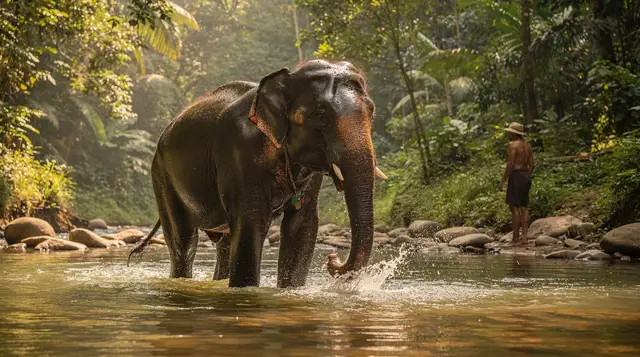
Khao Phra Thaeo National Park
Is Khao Phra Thaeo National Park worth visiting?
Yes if you want Phuket's last substantial patch of original rainforest and don't mind that the waterfalls run low or dry for much of the dry season — visit June through November for real water, and expect leeches on the trails during that same wet window.
Phuket’s last real rainforest
Most of Phuket’s original forest cover disappeared over the past century to rubber plantations, tin mining and, more recently, resort development, which makes Khao Phra Thaeo unusual: a roughly 23 square kilometre non-hunting wildlife sanctuary in the island’s north-central interior near Thalang that still holds something close to the primary rainforest that once covered the whole island.
It isn’t a beach day or a headline attraction — there’s no dramatic viewpoint or Instagram-famous shot waiting at the end — and that’s precisely its value. It’s the place to go if you want an actual forest walk under a real canopy rather than a landscaped nature trail, with two named waterfalls, marked hiking routes and a resident population of wildlife that’s genuinely hard to find anywhere else on the island.
Bang Pae and Ton Sai: two waterfalls, two different visits
The park has two main waterfall access points, and they serve different purposes. Bang Pae Waterfall, in the park’s southeastern corner, is the easier of the two to reach and sits right next to the trailhead for the gibbon rehabilitation project, which makes it the natural pairing for most visitors — waterfall and gibbon centre in the same short outing. Ton Sai Waterfall, deeper into the park’s interior, requires more of an actual hike to reach and sees noticeably fewer visitors as a result, which is either the appeal or the drawback depending on how much company you want on the trail. Both are genuinely waterfalls only in the wet season — see below.
The dry season problem nobody mentions on the photos
This is the detail that causes the most disappointment: the photos you’ll see promoting Khao Phra Thaeo almost always show the wet-season waterfalls in full flow, and a large share of visitors show up in the dry months to find a trickle over bare rock, or in the driest stretch of the year, nothing running at all. Roughly December through May is the dry season across Phuket, and both Bang Pae and Ton Sai can run very low or dry completely during the driest weeks, typically February through April. This isn’t a maintenance issue or bad luck — it’s the normal seasonal cycle for a tropical rainforest stream with no reservoir behind it, and no amount of good timing within the dry season will produce a strong flow.
When to actually go for real water
Roughly June through November — Phuket’s wet season — is when both waterfalls run with genuine volume, sometimes powerfully after heavy rain. September and October tend to be the wettest months and the most reliable for a strong flow, though also the months with the most rain to hike through. If seeing real waterfalls is the point of your visit rather than just a forest walk, plan around this window rather than the dry, sunny months that suit the rest of a Phuket itinerary better.
Trails, difficulty and what to expect underfoot
Marked trails range from short, easy walks to Bang Pae’s viewing area — manageable in sandals if the ground is dry — to longer forest routes deeper into the park that require real hiking shoes, water, and a couple of hours minimum. The terrain is humid, often muddy even outside the heaviest rain, and shaded almost entirely by canopy, which keeps temperatures more bearable than an open trail but doesn’t reduce the humidity. Signage is present but not extensive; a guide is worth having for anything beyond the short Bang Pae walk, both for route-finding and for pointing out wildlife that’s easy to miss without local knowledge.
Jungle trekking experience at Khao phra taewLeeches: the wet-season reality
Land leeches are genuinely present on Khao Phra Thaeo’s trails during the wet season, especially after rain, and this deserves a direct mention rather than a footnote — they’re a real, if harmless, nuisance rather than a rumour. They attach painlessly, feed briefly, and leave a small bleeding spot that stops on its own; they don’t transmit disease in Thailand and the bite itself isn’t dangerous, just unpleasant to discover.
Long trousers tucked into socks, closed shoes rather than sandals, and insect repellent applied to footwear and lower legs specifically all reduce how many find a way on. If one does attach, don’t panic-pull it off — a fingernail slid under the mouthparts or a dab of salt or repellent gets it to release cleanly, and pulling straight off can leave mouthparts embedded.
Wildlife you might actually see
The park protects langurs, macaques, several hornbill species, and smaller mammals and reptiles typical of Thai lowland rainforest, though genuine wildlife sightings on a short visit are opportunistic rather than guaranteed — this isn’t a safari with predictable game-drive spotting.
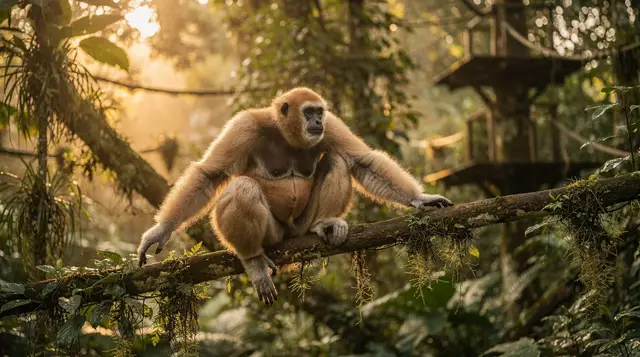
The one near-certain wildlife encounter is at the gibbon rehabilitation project next to Bang Pae, where formerly captive gibbons rescued from the illegal pet trade are held in a supervised setting as part of a long process toward eventual release — worth the short stop even if you don’t have time for a longer forest hike, and worth noting that guests never touch or interact directly with the gibbons there, which is the entire point of the project.
Guided rainforest hike with lunchHow it compares to Phuket’s other waterfalls
Khao Phra Thaeo isn’t the only waterfall option on the island, but it’s the most substantial one precisely because it sits inside genuine protected forest rather than a small isolated pocket of trees. For a broader comparison of what else is out there and how each stacks up in the dry season, see the Phuket waterfalls guide — most of the island’s other named falls share the same dry-season limitation described above, since none of them are fed by anything larger than seasonal rainfall. If waterfalls specifically are the draw rather than the forest itself, it’s worth reading that comparison before committing a half day to any single one during the dry months.
A quieter alternative to Phuket’s other jungle activities
Khao Phra Thaeo is a genuine national park trail, which puts it in a different category from the commercial jungle experiences elsewhere on the island — the ATV routes, zipline courses and packaged “jungle trekking” combo tours that pair a short forest walk with an adventure-park activity. For a comparison of those more commercial options, see jungle trekking in Phuket. Khao Phra Thaeo is slower, quieter and less produced than most of those, with no zipline platforms or ATV engines to break the quiet — the appeal here is the forest itself, not an adrenaline add-on.
Snakes, insects and other things worth knowing
Beyond the leeches, standard tropical-forest caution applies: stick to marked trails rather than pushing into undergrowth, watch where you place hands and feet on rocky sections near the waterfalls, and don’t reach into gaps in rock or fallen wood. Venomous snakes are present in Thai forests generally, Khao Phra Thaeo included, but encounters on marked, well-walked trails are rare — most snake activity happens away from foot traffic, and none are aggressive toward humans without being provoked or stepped on.
Mosquitoes are a more realistic daily nuisance than snakes; repellent covers both concerns at once. If you’re combining this trip with monkey encounters in Phuket elsewhere on the island, note that Khao Phra Thaeo’s macaque population is genuinely wild and shyer than the habituated troops at Monkey Hill or the Big Buddha — sightings are a bonus here, not a guaranteed close encounter, and that’s a good thing for both the animals and your bag of snacks.
Fitting Khao Phra Thaeo into a wider Phuket itinerary
Most visitors treat this as a half-day addition to a longer stay rather than a standalone reason to visit the island, and it fits naturally into itineraries of five days or longer where there’s room for a non-beach day without feeling like time is being taken from the coast. If you’re planning how to structure a longer trip and deciding which inland detours are worth the time, the how many days in Phuket guide covers where a stop like this reasonably fits against beach time, island day trips and everything else competing for a limited number of days.
Getting there and what it costs
Khao Phra Thaeo sits near Thalang, roughly 20–30 minutes’ drive from Phuket’s main west-coast resort areas depending on traffic, and there’s no public transport route that makes sense for most visitors — a rental scooter, taxi, Grab, or a guided tour with transfer are the realistic options. Entrance to the national park area itself is a modest fee, typically in the range of 200 baht (about $6) for foreign adults, less for children, paid at the park entrance; a guided trekking tour bundles this in with transfer, guiding and sometimes lunch for a higher combined price. Bring cash — card payment isn’t reliably available at the park gate.
What the park protects and why it still exists
Khao Phra Thaeo owes its survival largely to its designation as a non-hunting area decades ago, which restricted logging and development inside its boundaries while the rest of Phuket’s forest cover was cleared around it for rubber plantations and, later, tourism infrastructure. It’s a genuine remnant of what naturalists call primary lowland rainforest — forest that was never fully cleared and regrown, unlike the secondary growth that covers most of the island’s other green spaces. That distinction matters for the canopy structure and the species it can support, including the gibbons whose rehabilitation project depends on having real forest habitat nearby to eventually release animals into, not just a patch of managed parkland.
What to pack
- Closed hiking shoes, not sandals, especially in the wet season
- Long, light trousers to reduce leech contact
- Insect repellent applied to footwear and ankles
- A dry bag for your phone if visiting in the wet season
- Water — humidity inside the forest is high even when it isn’t actively raining
- Cash for the park entrance fee
Timing your visit within the day
Early morning is the better window regardless of season — cooler temperatures make the humidity more bearable, wildlife (birds especially) is more active before the midday heat, and the park is quieter before day-tour groups arrive at Bang Pae. Aim to arrive within an hour or two of opening if the forest itself, rather than just a quick waterfall photo, is the priority. Afternoon visits are still worthwhile but expect more heat, less wildlife activity, and a busier trailhead around the gibbon project as tour groups cycle through on their own schedules.
Who should skip it
If you’re visiting Phuket in the driest stretch of the year — roughly February through April — and specifically want to see waterfalls, adjust expectations or pick a different month; you’ll likely find dry or near-dry rock rather than the flowing water in the photos. Anyone with mobility limitations should stick to the short, level Bang Pae approach rather than the longer interior trails, which involve real uneven, muddy terrain. And if the idea of leeches is a hard no regardless of how harmless they are, visit in the drier months instead, even knowing the waterfalls will be underwhelming — it’s a reasonable trade-off to make consciously rather than being surprised by either issue.
Frequently asked questions about Khao Phra Thaeo National Park
Is Khao Phra Thaeo National Park worth visiting in the dry season?
For the forest itself and the gibbon project, yes. For the waterfalls specifically, not really — expect a trickle or nothing at all from roughly February through April, the driest stretch of the year.
Do I need a guide to visit Bang Pae Waterfall?
No, the short walk to Bang Pae is manageable independently with a rental scooter or taxi. A guide becomes more useful for the longer interior trails toward Ton Sai Waterfall or for spotting wildlife you’d otherwise miss.
Are the leeches at Khao Phra Thaeo dangerous?
No. They’re a genuine nuisance during the wet season but don’t transmit disease and the bite itself isn’t harmful — just an unpleasant surprise the first time. Long trousers and repellent on footwear reduce how many attach.
How much does it cost to enter Khao Phra Thaeo National Park?
Around 200 baht (about $6) for foreign adults at the park entrance, paid in cash, with a lower fee for children. Guided tours that include transfer and trekking cost more as a bundled package.
Can I combine Khao Phra Thaeo with the gibbon rehabilitation project in one visit?
Yes, and most visitors do exactly this — the gibbon project sits directly next to the Bang Pae Waterfall trailhead, so both fit naturally into the same short outing.
What’s the best month to see the waterfalls at full flow?
September and October tend to be the wettest and most reliable months for strong water at both Bang Pae and Ton Sai, though the broader June–November wet season generally offers real flow.
How long does a visit to Khao Phra Thaeo take?
A short visit to Bang Pae Waterfall and the adjacent gibbon project takes roughly two to three hours including travel. A longer interior trek toward Ton Sai Waterfall needs a half day or more, especially with a guide covering more ground.
Are there snakes at Khao Phra Thaeo National Park?
Yes, as in any Thai forest, but encounters on marked trails are uncommon and none are aggressive without provocation. Stay on the path, watch your footing near rocky sections, and don’t reach into gaps in rocks or fallen branches.
Is Khao Phra Thaeo better than the commercial jungle trekking tours elsewhere in Phuket?
It depends on what you want. Khao Phra Thaeo is a genuine, quieter national park experience with no zipline or ATV add-ons. The commercial jungle trekking packages elsewhere combine a shorter forest walk with adventure-park activities — see jungle trekking in Phuket for that comparison if an adrenaline element matters more to you than forest quiet.
tours.nature-wildlife
Verified deep-linked GetYourGuide tours. Book through these links and we earn a small commission at no cost to you.
These are our own photographs of Phuket, not the operator's pictures of this tour — open the tour page to see those.