Phuket’s oldest district, well inland from the beach crowds
Thalang covers the northern third of Phuket island, well away from the west-coast beach strip that most itineraries revolve around. It’s the historic heart of Phuket in the most literal sense — Thalang was the island’s original administrative centre before Phuket Town took over that role, and the district’s name still appears everywhere on the island: Thalang Road in Phuket Old Town is named after it, which causes a fair amount of confusion, since that street is nowhere near the district itself. This page is about the district in the north, not the shophouse street downtown.
Most visitors reach Thalang either on the way to or from Phuket International Airport, which sits inside the district’s boundaries, or on an organised day tour that bundles the Two Heroines Memorial with the national park and one of the wildlife projects nearby. Very few travellers base themselves here for a whole stay — there’s no beach and the tourist infrastructure is thin compared with the coast — but as a half-day stop woven into an airport transfer or a north-island loop, Thalang offers a side of Phuket that has nothing to do with sand or nightlife.
The Two Heroines Memorial
Near the district’s main roundabout stands the Two Heroines Memorial, a bronze statue of Thao Thep Kasattri and Thao Sri Sunthon, the sisters credited with rallying Phuket’s defenders against a Burmese invasion in 1785. According to the story told locally, the two women organised the island’s women to dress as soldiers and reinforce the visible troop numbers, helping repel the siege at Thalang before reinforcements arrived. Whatever the precise historical accuracy of the details, the memorial is one of the island’s genuine civic landmarks — Phuket people, not just the tourism board, treat 13 March as a real day of commemoration each year, with a fair held near the statue.
The memorial itself takes only a few minutes to see: a large roundabout statue, a small surrounding plaza, sometimes a food vendor or two. It’s not a destination in its own right so much as a stop worth folding into a wider loop through Thalang, since it sits directly on the main road most north-island tours already use.
Khao Phra Thaeo National Park
The district’s larger draw is Khao Phra Thaeo National Park, a stretch of rainforest that is often described as the last significant patch of primary, undisturbed forest left on Phuket island. Most of the island’s original jungle was cleared over the centuries for tin mining and rubber and coconut plantations; Khao Phra Thaeo survived largely because its terrain was too steep and difficult to clear. The result is a genuinely different landscape from the rest of Phuket — tall old-growth canopy, streams, and a noticeably cooler, damper air under the trees.
Bang Pae Waterfall, inside the park, is the most visited spot: a series of pools and cascades reachable by a short, well-marked walking trail from the car park. Like most of Phuket’s waterfalls, it runs fullest in the rainy season, from roughly June to October, and can slow to a modest trickle during the driest months of the year. There are also longer, rougher trails deeper into the park for visitors who want more than a short walk to a waterfall, though these are less maintained and better suited to a guided hike than a solo wander, given how easy it is to lose the path in dense forest.
For a broader look at the island’s waterfalls, including how Bang Pae compares with Kathu Falls in the district south of here, see our Phuket waterfalls guide. And if hiking beyond the short waterfall trail interests you, our jungle trekking guide covers what to expect and what to bring.
The Gibbon Rehabilitation Project
Inside Khao Phra Thaeo, next to Bang Pae Waterfall, the Gibbon Rehabilitation Project runs a small visitor centre and rescue facility for white-handed gibbons that were kept illegally as pets or used as photo props for tourists elsewhere in Thailand — a practice that is illegal but still turns up, particularly around Patong’s beach strip and Bangla Road, where photo touts sometimes use drugged or restrained animals. The project rehabilitates confiscated and surrendered gibbons with the eventual goal of releasing suitable animals back into protected forest.
Entry is by donation rather than a fixed ticket price, and the visit is modest in scale: a short walkway past enclosures, informational panels explaining each animal’s story, and usually a chance to hear the gibbons’ distinctive calls if you’re there at the right time of day, typically in the earlier morning hours. It is not a wildlife park in the theme-park sense — there’s no show, no feeding demonstration built for spectacle — and that restraint is part of the point. If you’ve seen or been offered a “photo with a gibbon” anywhere else on the island, this is the organisation working against exactly that trade, and a donation here does more good than the photo op ever would.
Ethical elephant sanctuaries near Thalang
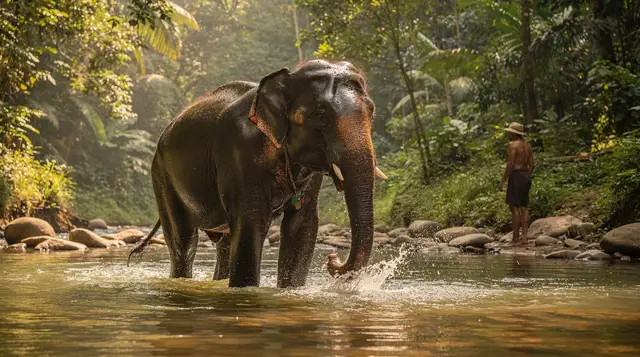
Phuket’s shift away from elephant riding toward observation-only sanctuaries has put several ethical operations within reach of Thalang, typically arranged as a half-day or full-day visit with hotel pickup available from anywhere on the island, including the north. These visits centre on feeding, walking alongside and sometimes bathing elephants rather than riding them — riding puts damaging weight on an elephant’s spine and is a practice this guide will not recommend or link to anywhere on the site.
Book a zipline and ethical elephant sanctuary comboFor visitors who’d rather split the two activities, or who are short on time and want the wildlife encounter without the adrenaline add-on, a standalone elephant sanctuary visit works just as well:
See the elephant sanctuary canopy walkway tourBefore booking any elephant activity anywhere on the island, it’s worth reading our full guide to ethical elephant sanctuaries in Phuket, which explains what genuinely ethical practice looks like versus the marketing language that gets attached to operations that still allow riding.
Wat Phra Thong, the half-buried Buddha
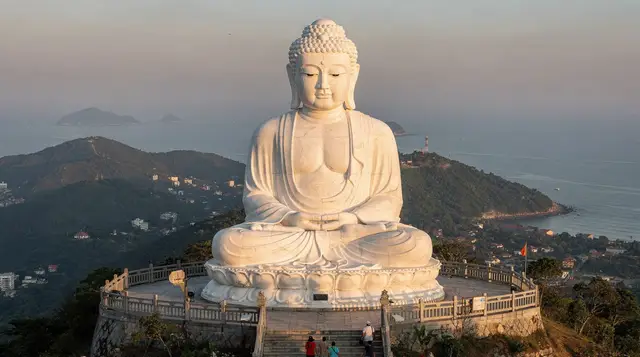
Thalang’s best-known temple is Wat Phra Thong, built around a large gilded Buddha image that emerges from the ground only from the chest upward — the lower half remains buried, and local tradition holds that every past attempt to dig it out has ended badly for whoever tried, from injury to sudden illness.
Whether or not you take the legend literally, the temple’s layout, built specifically around the half-buried statue rather than a conventional freestanding image, makes it a genuinely unusual stop among Phuket’s temples, most of which follow a far more standard design. It sits directly on Thalang’s main road, making it an easy add to a loop that also covers the Two Heroines Memorial and Khao Phra Thaeo, and unlike the national park sights, a visit here takes only fifteen to twenty minutes.
Temple etiquette applies here as it does everywhere in Thailand: shoulders and knees covered, shoes off before entering the main hall, and a generally quiet, respectful tone, since this remains an active place of worship rather than a museum piece. If temple visits are new to you, our guide to temple etiquette in Thailand covers the basics before you go.
Other sights and the district’s quieter pace
Beyond Wat Phra Thong, Thalang holds a scattering of smaller sights that rarely make it onto a first-time itinerary: older temples away from the main road, back roads running through rubber and pineapple plantations, and a generally slower pace than anywhere on the coast. This isn’t a district built around a checklist of attractions — it rewards travellers who are already passing through, whether en route to or from the airport or looping back from Nai Yang or Mai Khao further north, rather than those making a dedicated trip solely to see it.
The 1785 siege, in more detail
The story behind the Two Heroines Memorial is worth a little more context than the statue alone provides. In 1785, a Burmese army landed on Phuket — then still commonly known by its older name, Thalang, after the district that was the island’s administrative seat at the time — following the death of the local governor and while his successor had not yet arrived.
With the island’s formal leadership absent, Thao Thep Kasattri, the late governor’s widow, and her sister Thao Sri Sunthon organised the defence themselves, reportedly directing local forces to dress a portion of the island’s women as soldiers to inflate the apparent size of the garrison facing the besieging army. The defenders held out for roughly a month before the Burmese force withdrew, and the sisters were later given noble titles in recognition of their role.
The episode is taught in Thai schools as a story of civic resilience, and it is genuinely embedded in local identity here in a way that goes beyond a tourist landmark — the anniversary of the siege’s end, observed locally each March, draws a real community fair around the memorial rather than a staged event for visitors. That distinction is part of what makes Thalang worth a stop for travellers interested in Phuket’s history beyond its beaches: this is a place locals mark for themselves, not one built for an audience.
Getting to Thalang
Thalang sits roughly 25 to 40 minutes by car from the main west-coast beach towns, and considerably closer — often under 15 minutes — from the airport or from Nai Yang and Mai Khao beaches in the island’s north. A rental scooter or a hired car with driver both work well; public songthaews run along the main road but with limited and unpredictable frequency, which makes them a poor fit for a half-day itinerary with several stops. See our getting around Phuket guide for how self-driving compares with hiring transport for a day like this.
Is Thalang worth the detour?
For a beach-only trip, Thalang is skippable — there’s no coastline here, and everything described on this page is inland, natural or historical rather than resort-adjacent. But it’s a genuinely good half day for anyone who wants to understand the island beyond its beaches, particularly if wildlife and nature interest you more than another afternoon on the sand. Combining the Two Heroines Memorial, Bang Pae Waterfall and the gibbon project into a single loop takes a well-organised half day, and pairing that with an elephant sanctuary visit stretches naturally into a full one.
It also makes practical sense on arrival or departure days, since the airport sits inside the district: a flight that lands early or leaves late leaves a window that’s otherwise dead time, and Thalang’s sights are close enough to fill part of it without derailing the rest of your trip. For itinerary ideas that work this district in without sacrificing beach time, see our 7-day Phuket itinerary or our guide to Phuket’s best day trips.
When to visit
Thalang’s outdoor sights are far more weather-dependent than a beach day, where a passing shower barely changes the plan. Khao Phra Thaeo’s trails turn muddy and slippery during the rainy season, roughly June through October, and the gibbon centre’s outdoor walkway is more pleasant to visit in dry, cooler conditions.
That said, the rainy season is also when Bang Pae Waterfall runs at its fullest, so there’s a genuine trade-off between comfortable walking conditions and a more dramatic waterfall, depending on what matters more to you. The cooler, drier months from November through February are the easiest all-round window: comfortable hiking temperatures, a reasonable amount of water still in the falls from the tail end of the rains, and clear roads for the drive out from the coast.
Frequently asked questions about visiting Thalang
Can I visit Thalang on the way to or from the airport?
Yes, and it’s one of the more practical uses of the district for most travellers. The Two Heroines Memorial and Wat Phra Thong both sit close to the main road linking the airport to the rest of the island, and either can be added to an arrival or departure transfer with only a short detour, provided your flight timing leaves enough of a buffer.
Do I need a guide to visit the Gibbon Rehabilitation Project?
No. The visitor area is self-guided, with informational panels explaining the gibbons’ individual stories, though joining an organised tour that bundles the project with the national park and waterfall can simplify transport if you don’t have your own vehicle.
Is Khao Phra Thaeo National Park difficult to hike?
The short trail to Bang Pae Waterfall is easy and suitable for most fitness levels. The longer trails deeper into the park are considerably rougher, less well marked, and better suited to a guided hike than an independent one, given how easy it is to lose the path in dense forest.
Is there anywhere to stay in Thalang itself?
Very little in the way of tourist accommodation. Most visitors treat Thalang as a half-day stop from a beach-town base or as a transit point around flight times rather than somewhere to spend the night, since the district has none of the resort or guesthouse infrastructure found along the coast.
What should I wear to visit Wat Phra Thong?
Shoulders and knees covered, and shoes removed before entering the main hall, as at any active Thai temple. Loose, modest clothing packed for the day works fine — there’s no need for anything more formal than what you’d wear to any of the island’s temples.
Is Thalang worth visiting if I only have a short trip to Phuket?
If your trip is under four or five days and built mainly around the beach, Thalang can reasonably be skipped in favour of coastal time. On a longer trip, or one specifically built around Phuket’s history and nature rather than just its beaches, it earns a half day comfortably.