Travelling to Phuket with a baby
Is Phuket a good destination with a baby?
Yes, with caveats: pick a quiet, resort-heavy area away from Patong, arrange private transfers instead of a rental scooter, and confirm crib and formula availability with your hotel before you book — Phuket handles infants well once you plan around those three points.
The three decisions that shape the whole trip
Travelling with a baby to Phuket isn’t fundamentally different from travelling with a baby anywhere tropical, but three choices matter more here than they would on a short domestic trip: where you base yourself, how you get between places, and which resort actually delivers on paper promises like “baby-friendly.” Get those three right and the rest — food, health, sun — falls into place. Get them wrong and you’ll spend the trip fighting logistics instead of enjoying a beach with a baby, which is a genuinely nice thing to do once the friction is removed.
Choosing a base: quiet beats central
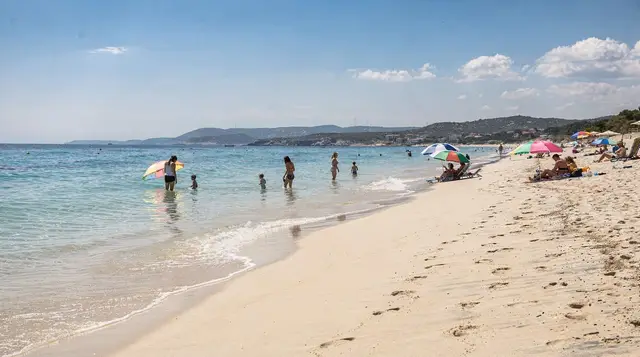
Patong is the wrong base with an infant, full stop — it’s built around nightlife, the beach itself is one of the busier and less protected stretches of sand on the island, and hotel noise at night is a real problem even several blocks back from Bangla Road. Bang Tao and Laguna is the most reliable alternative: a long, calm beach, large integrated resorts with proper family infrastructure, and enough restaurants within the development that you don’t need a vehicle for every meal.
Nai Yang and Mai Khao, both in the island’s quiet north near the airport, go further in the same direction — fewer crowds, flatter beach access, and a shorter transfer from HKT, which matters more than it sounds like it would when you’re carrying a car seat and a stroller through arrivals.
Kata and Karon sit in between: calmer than Patong, still walkable, with a reasonable spread of family-oriented hotels, and they’re a fair compromise if you want some restaurant variety without the isolation of the far north. Whatever you choose, read where to stay in Phuket and Phuket neighbourhoods explained before booking — the wrong soi (side street) in the right area can still mean a ten-minute walk to the nearest shop with a stroller.
Flights and the airport with an infant
Phuket International Airport (HKT) is a large, modern airport but it isn’t a fast one at peak arrival times — expect a queue at immigration that can run 30–60 minutes during the November–April high season. Bring anything you need for a feed or a change in hand luggage rather than checked bags; the walk from the gate to immigration is long. Most airlines allow a car seat and a folded stroller as extra checked items beyond the standard baggage allowance at no charge, but confirm this with your specific carrier before departure rather than assuming. See Phuket airport guide (HKT) for terminal layout and what’s actually available airside.
Once you land, skip the taxi queue. A pre-booked private transfer means a driver is waiting with a car seat if you’ve requested one, and you’re not negotiating a fare with a stroller and a crying baby in tow.
Private airport transfer with meet and greetFull detail on transfer options, including which resorts run their own shuttle, is in Phuket airport transfers.
Getting around without a scooter
Scooter rental is how most visitors get around Phuket, and it’s the one piece of standard Phuket advice you should ignore entirely with a baby. Thai law doesn’t require infant car seats on scooters — which tells you everything about how unsuitable they are — and the island’s road safety record is poor even for adult riders; see scooter rental in Phuket for the numbers. A hired car with a proper car seat, or a private driver booked by the day, is the only realistic substitute.
Private car or minibus rental with driverA driver for a full or half day removes the friction of finding parking, dealing with Phuket’s often confusing one-way system near the beaches, and driving yourself while jet-lagged. Getting around Phuket covers Grab, taxis and the practical gaps between beaches that make a private driver worth the cost with a baby along. Grab (the ride-hailing app) works reasonably well for shorter, spontaneous trips, though car seats aren’t guaranteed — bring a portable, lightweight seat if you’ll rely on it, covered in taxis, tuk-tuks and Grab in Phuket.
Where to sleep: what “baby-friendly” actually means
Hotel marketing uses “family-friendly” loosely; with an infant, the specifics matter more than the label. Before booking, confirm directly with the hotel: whether a cot or crib is provided free or charged, whether it’s a proper crib or a pack-and-play, whether bottle sterilising equipment is available on request, and whether the room has a genuine blackout option — critical for keeping a baby on any kind of nap schedule across time zones. Large resort chains in Bang Tao and on the west coast are generally the most reliable on all four points; smaller boutique properties in Phuket Old Town or Kata are more hit-or-miss and worth a direct email before you commit.
A villa with a private pool, increasingly common and often not much more expensive than a resort room for a family of three, solves several problems at once: no shared-pool safety concerns, a kitchen for preparing bottles or simple food, and a quiet, controlled space for naps. It’s the option worth pricing out if you’re staying more than four or five nights.
If you’re travelling with older children as well as a baby, Phuket with kids and the 5-day Phuket with kids itinerary cover the wider family logistics this guide doesn’t.
Health, pharmacies and hospitals
Phuket has good private hospital care by regional standards — Bangkok Hospital Phuket and Phuket International Hospital both have paediatric departments and are used to treating visiting infants for the usual travel complaints: heat rash, minor stomach upsets, ear infections. Pharmacies (marked with a green cross) are common near any tourist area and stock infant paracetamol, rehydration salts and basic supplies, though brand names differ from home — bringing a small supply of whatever your baby is used to avoids a stressful pharmacy visit at 2am.
Mosquito-borne illness is a real if generally low risk; use a baby-safe repellent (check the concentration and minimum age on the label before travelling) and dress your baby in light long sleeves at dawn and dusk, when mosquitoes are most active. Travel insurance for Thailand is worth confirming covers infants and any pre-existing conditions before you fly, not after something happens.
Sun, heat and swimming safety
Phuket sits close to the equator and the sun is stronger, faster, than most visitors expect — a baby can burn in minutes even under cloud cover. Direct sun exposure for infants under six months should be avoided entirely; use shade, a UV-rated pop-up tent on the beach, and lightweight UPF clothing rather than relying on sunscreen alone, since most sunscreen isn’t recommended for very young infants. Heat itself is the bigger daily issue: plan beach and outdoor time for early morning or late afternoon, and keep the middle of the day for an air-conditioned nap.
If you do go in the water, stick to resort pools or the calmest, most sheltered patches of beach — the west coast during the mid-May to mid-October monsoon carries a genuine drowning risk from rip currents even for confident adult swimmers, let alone anyone holding a baby; red flags on the beach mean stay out, not “be careful.” Phuket beach safety and riptides explains the flag system and where the west coast gets genuinely dangerous.
Food: what’s actually available
Thai food is often mild enough for a baby past six months once you ask for it without chilli, and most resort restaurants are used to the request. Steamed rice, plain grilled fish, and fruit — Phuket’s mango, papaya and banana are excellent and available everywhere — cover a lot of ground. Imported infant formula and jarred baby food are sold in the larger supermarkets (Tesco Lotus, Big C, Villa Market) in Phuket Town and near the main resort areas, but selection is narrower than at home; if your baby is on a specific formula brand, bring enough for the trip rather than assume it’s stocked locally. What to eat in Phuket covers the wider food scene for the rest of the family.
What to pack specifically for a baby
- A portable, lightweight travel car seat if you plan to use Grab or taxis rather than a booked private car for every trip
- A UV pop-up tent or large sun umbrella — hotel beach umbrellas often don’t tilt low enough for genuine infant shade
- Enough formula or a familiar baby-food brand for the length of the stay, plus a few days’ buffer
- A baby-safe, appropriately concentrated insect repellent and light long-sleeved layers for dawn and dusk
- A basic first-aid kit with infant paracetamol dosed for your baby’s weight, and any regular medication clearly labelled
- A lightweight stroller with good wheels — pavements near the beach roads are uneven and a heavy all-terrain stroller is often more hassle than it’s worth for a short trip
The general Phuket packing list covers everything else worth bringing regardless of age.
Getting the paperwork right before you fly
A few administrative details catch first-time parents off guard more than the trip itself. Most airlines require an infant’s own passport for international travel — there’s no “added to a parent’s passport” option most places issue anymore — so build passport processing time into your planning well ahead of the trip if your baby doesn’t already have one.
Depending on your nationality, Thailand’s visa exemption rules apply to infants the same way they apply to adults; check the specific requirement for your passport rather than assuming a baby is exempt from needing any documentation at all. See Thailand visa for Phuket for where to verify the current rule for your nationality rather than relying on general travel forums, which are often out of date.
If you’re travelling without the baby’s other parent, some immigration checkpoints — Thai and otherwise — ask for a notarised letter of consent from the absent parent. It’s rarely enforced in practice for entry into Thailand, but it’s a fast, low-cost thing to prepare in advance and considerably more stressful to sort out at a check-in counter if it’s ever requested.
Time zone and jet lag with a baby
Phuket runs on ICT (UTC+7), a significant shift from Europe or North America. Babies generally adjust faster than adults if you get them into strong daylight during Phuket daytime hours from day one rather than letting them nap through it, but expect two or three rough nights either way. Building in a slow first day or two — nothing scheduled, no long transfers — pays off more with an infant than with any other kind of traveller.
Professional photographer at your resortA short, resort-based photo session is worth considering for exactly this stretch of the trip: once your baby has settled into the light and the heat, a calm morning session at your own resort captures the trip without adding a transfer or a new environment to an already disrupted schedule.
What to skip with a baby
Boat trips to Phi Phi, James Bond Island or the Similan Islands look tempting in every brochure, but they involve long transfers, direct sun with limited shade on deck, choppy crossings in monsoon months, and often no realistic place to change or feed a baby comfortably for six to ten hours. These trips work far better once a child is old enough to handle the day and benefit from what’s on offer — treat them as a “later trip” activity rather than force one in now. The same logic applies to Khao Sok and Khao Lak day trips: both involve three-plus hours each way in a vehicle, which is a hard day for an infant with little payoff at the other end.
If a parent wants a couple of hours away from resort logistics while the other minds the baby during a nap window, a short in-resort spa treatment is the lowest-friction way to get it without leaving the property.
Private day spaFrequently asked questions about travelling to Phuket with a baby
Is Phuket safe for a baby?
Broadly yes, with the same precautions that apply to any tropical destination: sun protection, mosquito precautions, careful water safety on the west coast in monsoon months, and a private vehicle rather than a scooter. Choose a calm base like Bang Tao, Nai Yang or Mai Khao and the trip is manageable.
Do Phuket hotels provide cribs?
Most mid-range and upmarket resorts do, but availability and cost vary — confirm directly with the property before booking rather than assuming, and ask specifically whether it’s a proper crib or a pack-and-play if that distinction matters to you.
Can I get baby formula and nappies in Phuket?
Yes, at supermarkets like Tesco Lotus, Big C and Villa Market near the main resort areas, though the brand range is narrower than at home. Bring enough of your baby’s specific formula for the trip if they’re not flexible about switching brands.
Is it too hot for a baby in Phuket?
Not if you plan around it — keep outdoor time to early morning and late afternoon, use shade rather than relying on sunscreen for infants under six months, and treat the middle of the day as nap time in air conditioning.
Should I rent a scooter with a baby in Phuket?
No. There’s no legal or safe way to carry an infant on a scooter in Phuket, and the island’s road safety record makes this one of the clearest “don’t” decisions of the whole trip. Book a private car or driver instead.
How long should a first trip to Phuket with a baby be?
Long enough to absorb two or three days of jet-lag adjustment without losing the whole trip to it — five to seven days is a common sweet spot, giving a slow start and still leaving real time to enjoy the beach once your baby has settled into the new schedule.
Family-friendly tours
Verified deep-linked GetYourGuide tours. Book through these links and we earn a small commission at no cost to you.
These are our own photographs of Phuket, not the operator's pictures of this tour — open the tour page to see those.